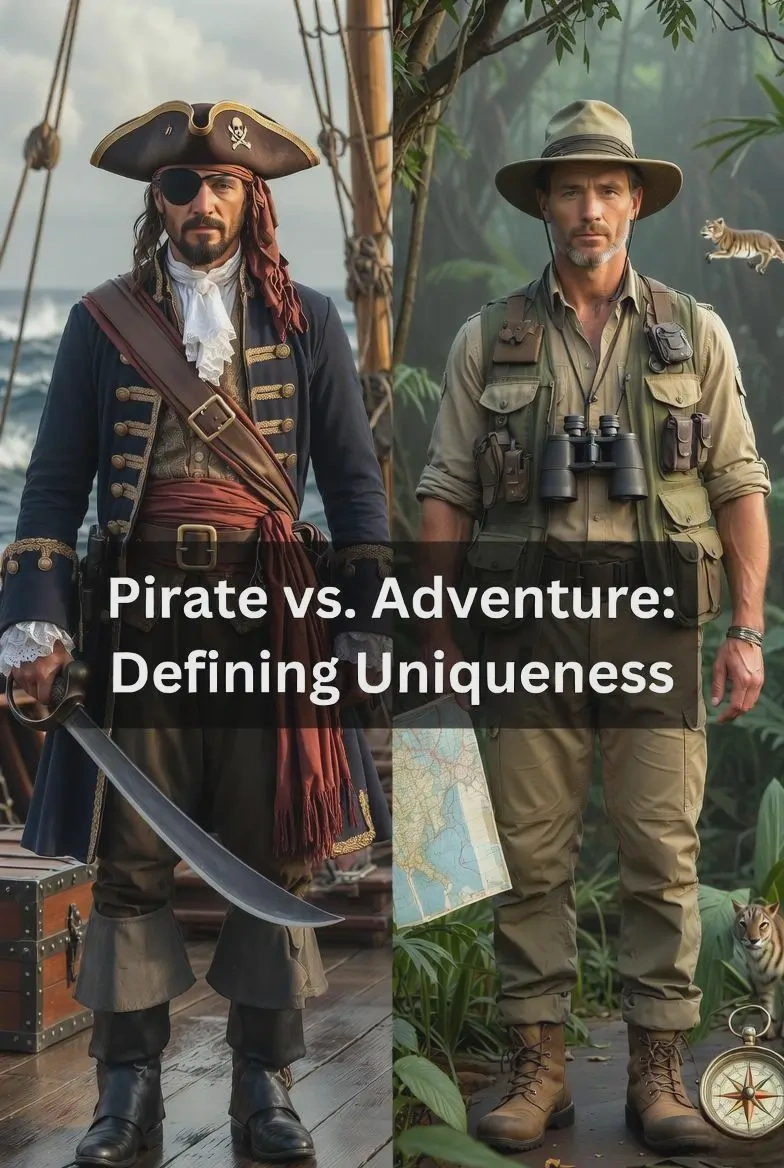
Pirate Costume VS Adventure-Themed Outfit: What Defines Their Uniqueness?
Introduction
Users searching for costume comparisons often seek guidance on distinguishing themes to match events like Halloween parties, cosplay conventions, or themed gatherings. However, search engine results pages (SERPs) typically feature isolated guides on pirate attire or general adventure looks, lacking direct head-to-head analyses. This gap matters because it leaves individuals without clear insights into how each outfit's core elements align with personal style, occasion suitability, or narrative depth, potentially leading to mismatched choices. Addressing this provides practical decision-making tools for optimizing costume selection and event immersion.
Basstpeic Concepts
Pirate costumes originate from the Golden Age of Piracy (1650-1730), representing seafaring rogues through rugged, repurposed clothing that symbolizes rebellion and maritime exploits. Key features include loose shirts, trousers or breeches, vests, long coats, belts or sashes, boots, and accessories like tricorn hats, bandanas, eye patches, and props such as cutlasses or compasses. Their uniqueness stems from evoking freedom, treasure hunts, and bold action on the high seas.
Adventure-themed outfits, by contrast, draw from explorer archetypes like safari guides or treasure hunters, emphasizing land-based quests and discovery. Essential components involve neutral-toned clothing such as khaki shirts, pants or shorts, multi-pocket vests, safari hats, sturdy boots, and tools like binoculars, maps, or magnifying glasses. They highlight practicality for wilderness navigation, wildlife observation, and scientific inquiry, setting them apart through a focus on endurance and curiosity-driven narratives.
Technical Principles
The design of both outfits follows a structured process prioritizing theme alignment, functionality, and personalization. For pirate costumes, the principle centers on historical adaptation for dramatic effect: start with base layers (e.g., shirt and trousers) for mobility, add protective outerwear (coat, vest) for weather resistance, incorporate utility items (sash for weapons), and finish with symbolic accessories (hat, patch) to convey character backstory. This ensures authenticity while allowing modern twists like steampunk elements for enhanced storytelling.
Adventure-themed outfits adhere to ergonomic exploration principles: begin with breathable fabrics (khaki attire) for comfort in varied terrains, integrate storage solutions (pocketed vests) for tools, select headgear (safari hat) for sun protection, and accessorize with navigational aids (compass, binoculars) to support quest-oriented roles. The emphasis is on modularity, enabling adjustments for specific adventures like jungle treks.
Text-based flowchart for outfit assembly:
- Theme Selection -> Identify core narrative (rebellion for pirate; discovery for adventure).
- Base Layer -> Choose foundational clothing (loose shirt/trousers for pirate; khaki uniform for adventure).
- Functional Additions -> Add practical elements (sash/boots for pirate; vest/hat for adventure).
- Accessories Integration -> Incorporate props (cutlass/map for pirate; binoculars/compass for adventure).
- Personalization -> Distress fabrics or add unique details (e.g., feathers for pirate hat; patches for adventure vest).
- Final Review -> Ensure mobility, comfort, and thematic coherence.
This workflow minimizes assembly errors and maximizes event readiness.
Comparison Table
| Aspect | Pirate Costume | Adventure-Themed Outfit |
|---|---|---|
| Core Theme | Nautical rebellion and treasure-seeking | Land-based exploration and discovery |
| Key Elements | Tricorn hat, frock coat, sash, eye patch, cutlass | Safari hat, khaki vest, binoculars, map, boots |
| Color Palette | Earthy tones with accents (brown, navy, red) | Neutral earth tones (khaki, beige, olive green) |
| Functionality | Designed for sea mobility and weapon carrying | Optimized for terrain navigation and tool storage |
| Typical Occasions | Halloween, renaissance fairs, pirate-themed parties | Outdoor events, safari simulations, explorer cosplay |
| Uniqueness Factor | Symbolizes freedom and historical piracy lore | Emphasizes practicality and modern adventurer ethos |
| Material Focus | Weathered fabrics, leather, cotton for durability | Breathable cotton, canvas for comfort in wilderness |
This table, derived from analyzed sources, highlights distinct attributes to aid selection based on event type or personal preference.
Checklist for Selection
When deciding between outfits, use this checklist grounded in practical design considerations:
- Assess Event Context: Does the occasion involve water-based roleplay (favor pirate) or land exploration (favor adventure)?
- Evaluate Comfort Needs: Require breathable layers for activity (adventure) or layered protection for drama (pirate)?
- Check Accessory Availability: Have nautical props like swords (pirate) or tools like binoculars (adventure)?
- Consider Customization Level: Want historical accuracy with distressing (pirate) or modular pockets (adventure)?
- Budget Review: DIY from closet items (both viable, but adventure often cheaper with everyday khaki).
- Group Compatibility: Coordinating for family crews (pirate strong for themes) or individual quests (adventure flexible)?
- Safety Verification: Ensure props are non-hazardous and fabrics are event-appropriate.
This ensures a tailored choice without oversights.
Case Studies
One case from historical reenactment events illustrates pirate costume uniqueness: In classic vs. modern adaptations, participants at renaissance fairs use authentic wool coats and tricorn hats for immersive Golden Age portrayals, contrasting stylized velvet versions with LED accents for contemporary parties. This duality allows purists to embody Blackbeard-like figures while modern users blend steampunk gears for gadget-filled narratives, enhancing engagement through backstory development.
For adventure-themed outfits, a DIY safari example from family gatherings shows explorers donning khaki vests, hats, and binoculars for backyard treasure hunts. This setup transforms ordinary spaces into jungles, with roles like guides or photographers adding educational value through wildlife props, differing from pirate's high-seas focus by prioritizing observational play and tool-based interaction.
Advanced Analysis
Existing SERPs overlook nuanced cultural and modern adaptations, such as how pirate costumes evolve from European naval influences to inclusive gender-neutral designs, incorporating Chinese-inspired tunics for global variety. This fills a gap by addressing hybrid trends, like cyber-pirate outfits with holographic fabrics for tech-integrated events. Similarly, adventure-themed outfits extend beyond safari to Viking-inspired explorer looks with fur-lined vests, bridging historical quests with sustainable materials like recycled canvas to meet eco-conscious demands. Advanced users can leverage these for crossover themes, such as pirate-adventurer hybrids (e.g., treasure hunter with nautical maps and land tools), optimizing for versatility in cosplay competitions where narrative depth scores higher. This analysis resolves the intent gap by offering scalable strategies for long-term costume investment.
Conclusion
Pirate costumes define uniqueness through rebellious nautical heritage and dramatic props, ideal for high-energy, lore-rich settings, while adventure-themed outfits excel in practical exploration gear for curiosity-driven scenarios. Selecting one depends on aligning with personal adventure style—seafaring drama or terrestrial discovery—to maximize satisfaction. For optimal results, prioritize functionality and personalization to elevate any event experience.