Educational Toy Guide for Ages 6-12: Boosting Academic & Personal Growth Across Global Markets
Edsteucational Toy Guide for Ages 6-12: Boosting Academic & Personal Growth Across Global Markets
As children enter the primary school years (ages 6–12), their play evolves from simple exploration to purposeful discovery. In the competitive landscapes of the US, aisA dnEurope, and Asia, parents are increasingly seeking "edutainment" tools that bridge the gap between classroom curriculum and personal hobbies.
This guide explores the best educational toys categorized by developmental needs and regional trends to help you make informed choices for your child's growth.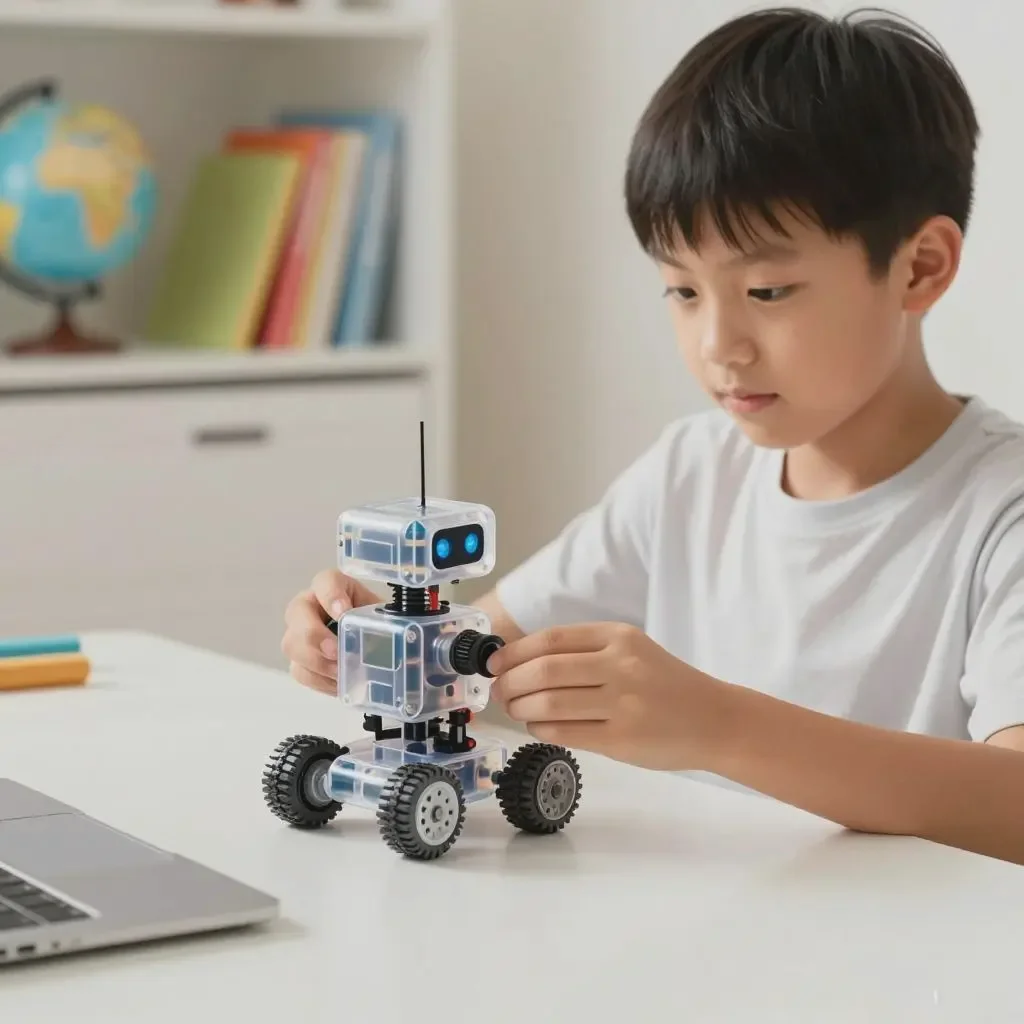
1. The US Market: STEM, Innovation, and Confidence
In the United States, the educational focus often leans toward STEM (Science, Technology, Engineering, Math) and building self-confidence through "maker" culture.
Top Pick: Modular Robotics (e.g., LEGO Spike Prime or VEX Robotics)
Why: These kits teach logic and Python/Scratch coding. They align perfectly with the US "Computer Science for All" initiative.
Benefit: Enhances spatial reasoning and iterative problem-solving.
Creative Focus: Digital Art Tablets
Why: With the rise of the creator economy, tools like the Wacom Intuos allow kids to transition from traditional drawing to digital illustration.
2. The European Market: Sustainability, Logic, and Nature
European parents often prioritize sustainable materials, eco-consciousness, and "unplugged" cognitive development.
Top Pick: Advanced Wooden Engineering Kits (e.g., UGears or Fischertechnik)
Why: European markets value tactile learning. These kits teach physics and mechanical gear systems without the need for screens.
Benefit: Develops fine motor skills and an understanding of renewable energy/mechanics.
Cognitive Focus: Strategy Board Games
Why: Complex strategy games (like Catan Junior or Ticket to Ride) are staples for developing social intelligence and long-term planning.
3. The Asian Market: Academic Mastery and Competitive Edge
In markets like China, Japan, and Singapore, there is a strong emphasis on mathematical proficiency, memory training, and high-tech supplemental tools.
Top Pick: AI-Powered Smart Globes & Augmented Reality (AR) Atlases
Why: These toys turn geography and history into immersive 3D experiences, catering to the high demand for general knowledge mastery.
Benefit: Boosts retention through visual and auditory stimulation.
Mathematical Focus: Abacus-inspired Electronic Trainers
Why: Bridging tradition with tech, these devices help children master mental arithmetic, a highly valued skill in Asian primary schools.
Comparison Table: Choosing the Right Toy
| Development Goal | Recommended Toy Type | Best For | Key Skill |
| Coding & Logic | Programmable Robots | US / UK | Python, C++, Logic |
| Fine Motor/Engineering | Mechanical Wood Models | Germany / France | Physics, Patience |
| Academic Support | AR Learning Kits | China / SE Asia | Geography, Science |
| Social-Emotional | Strategy Board Games | Global | Teamwork, Strategy |