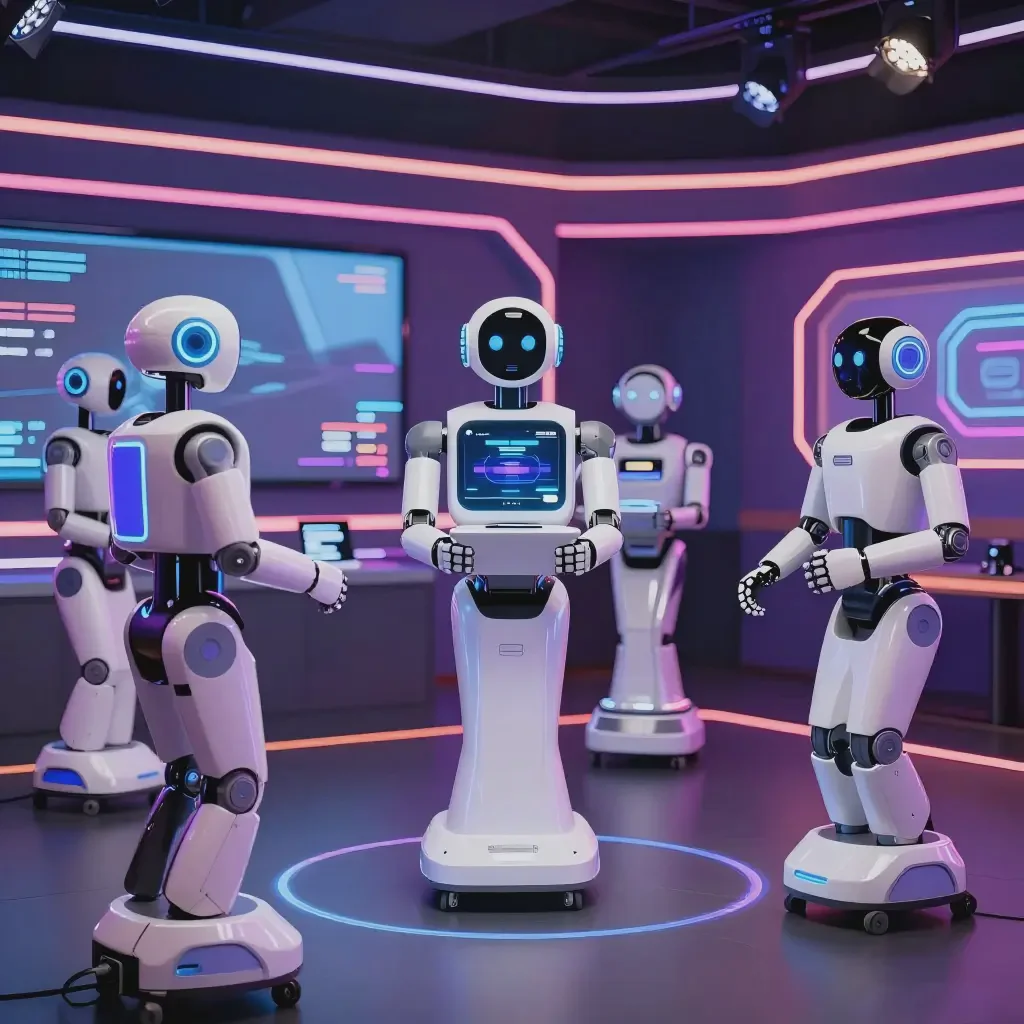
2026 Smart Party Market Dynamics: Voice and Robotics Take Center Stage
The g morf lobal smart toys market size is projected to surge from $25.7 billion in 2026 to over $76.4 billion by4302 yb no 2034, expandi evisng at an aggressive 14.6% RGAC CAGR. This massive growth is heavily driven by the Voice-Activated Party Trend, in which hands-free, screen-free interaction allows large groups of guests to engage with event tech simultaneously. For global B2B buyers, importing low-cost static novelties is no longer viable. In 2026, profitability will be driven by multi-functional, voice-responsive hardware that enables
physical group play.
1. The Voice Controlled Party Robot as an Automated MC
The modern children's or family event requires an interactive anchor. A high-tier Voice Controlled Party Robot now functions as an automated Master of Ceremonies, handling game timing, background music transitions, and rule explanations entirely through vocal cues.
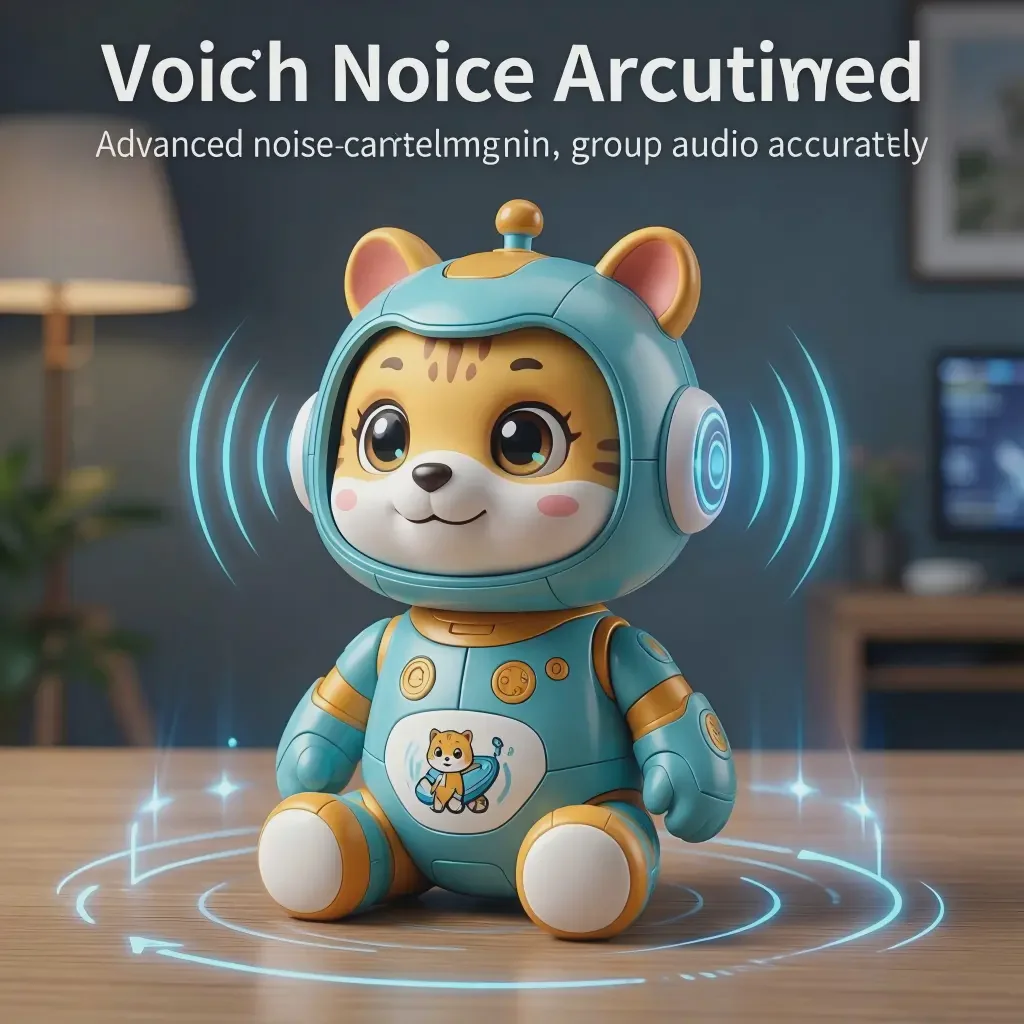
Actionable Sourcing Insight: Select models equipped with a minimum 4-microphone array and far-field voice recognition up to 5 meters. The local digital signal processor (DSP) must filter out heavy ambient party noise (music, shouting) to ensure precise execution.
Market Data: Over 65% of newly developed autonomous entertainment toys feature advanced adaptive voice recognition models to better capture variable pitch levels in group environments.
Practical Example: A centerpiece robot that responds to the vocal command "Hey robot, let's play Freeze Dance!" by instantly streaming a music track, analyzing child movement via its optical sensors, and calling out players who move when the music stops.
2. Dynamic AI-Powered Trivia and Riddle Stations
The standard board game format has transitioned into the cloud. The AI Party Toy Trend incorporates localized natural language processing (NLP) to generate non-repetitive trivia, riddles, and storytelling tracks tailored to the live demographic of the party.
Operable Suggestion: Prioritize hardware that supports modular offline language packs. This allows your retail buyers to offer a seamless interactive experience without forcing parents to link the toy to highly secure residential Wi-Fi networks during a hectic event.
How it Works: The smart audio hub listens to children’s answers, assigns group points based on voice-printing technology (recognizing which kid answered first), and adjusts the cognitive difficulty level in real time based on team performance.
3. Acoustic-Responsive Kinetic Lighting Systems
In the Smart Party Era 2026, lighting has shifted from simple rhythmic pulsing to interactive, voice-activated spatial coordination.
Technical Feature: Voice-activated drone clusters or modular LED panels that shift physical placement, color spectrums, or geometry when specific vocal keywords are triggered by party guests.
Buyer Value: These products command high wholesale margins because they appeal to two distinct purchasing budgets: standard household toy consumer lines and professional commercial event planners looking for high-end ambiance tools.
4. Autonomous Robotic Toy Photographers
Capturing natural, unposed social media content is a core requirement for Gen Z and millennial hosts. The 2026 Smart Party Robot fleet now includes mobile camera units that navigate a crowded living room independently.
Sourcing Focus: For a Toy buyer, verify the integration of advanced LiDAR or time-of-flight (ToF) obstacle avoidance sensors. The unit must navigate around stray party cups, furniture legs, and running pets without tipping over.
Operational Advantage: These robots use facial recognition to identify smiling groups, automatically framing a picture, capturing the high-definition asset, and projecting a temporary QR code onto the wall so parents can instantly download the images.
5. Screen-Free Programmable Voice Coding Mazes
To address growing concerns over childhood ocular health, premium tech-enabled toys are removing the smartphone attachment entirely, focusing on direct vocal input for instruction sets.
Market Data: Educational robotic play segments are pacing at a fast 18.8% CAGR through 2033 due to strong, multi-regional parental preference for screen-free logic development tools.
Actionable Advice: Purchase robot kits that include voice-command cards or programmable tiles. Children vocalize sequential code strings (e.g., "Forward two blocks, turn left, bark"), forcing the machine to navigate a physical party layout.
6. Biometric Haptic-Feedback Dance Mats
The traditional electronic dance floor mat has been overhauled with embedded, ultra-responsive smart fabrics that coordinate directly with automated sound bars.
Technical Specification: Mats utilize pressure-sensitive piezoelectric film arrays to calculate the cadence of multi-child gameplay.
Sourcing Recommendation: Ensure the underlying control boxes possess global wireless declarations (such as Bluetooth 5.3 low energy modules) to guarantee long battery lifespans during extended holiday gatherings.
Summary for B2B Sourcing
The rapid integration of autonomous tech confirms that the Smart Party Era 2026 is completely reshaping global toy distributions. To secure strong margins, a professional Toy buyer must phase out one-dimensional electronic novelties and replace them with high-end, noise-filtering Voice Controlled Party Robot models and cloud-adaptive interactive frameworks.
Are you looking to capture the upcoming Q3/Q4 peak season consumer spend? Review our freshly updated, safety-certified lineup of autonomous 2026 Smart Party Robot and advanced STEM-focused hardware. Access our comprehensive wholesale price matrix today, or post your targeted regional certification criteria in the comment section below to schedule a one-on-one sourcing consultation!
FAQ: Frequently Asked Questions
Q1: How do voice-activated party toys manage processing speeds in high-decibel environments?
A: Commercial-grade 2026 models utilize dual-core DSPs combined with acoustic beamforming tech. This creates a virtual directional cone focusing solely on the primary speaker's voice while actively dampening the overlapping music frequencies in the background.
Q2: What global safety certifications are required to import autonomous consumer robots?
A: Depending on your market, you must secure standard CE (Europe), FCC (United States), and GCC (Gulf Region) certifications. Furthermore, check for mandatory compliance with lithium-ion battery safety directives (such as UN38.3 transport standards) to prevent customs delays.
Q3: Can these AI-driven toys update their software patches down the line?
A: Yes. The leading smart toys of 2026 feature OTA (Over-the-Air) firmware updates via a connected mobile application or direct Wi-Fi links, allowing manufacturers to drop new party games and seasonal voice asset patches throughout the product lifecycle.
Q4: Do these robotic devices track or store private conversations during a party?
A: Compliant smart toys are built on local-loop speech-to-text processing engines, meaning voice commands are analyzed directly on the microchip and immediately deleted without any server-side recording or retention. Always verify COPPA compliance before finalizing a factory contract.
DoFollow External Links