Wholesale Party Supplies From China: The Complete Sourcing Guide
Whsreat this guide covers
Buying wholesale party supplies from China is not one decision, it is about eight of them, and they have to be made in the right order. Category comes first, because a balloon order and a costume order are not the same supply chain. Then supplier type, because a factory and a trading company will quote you differently for reasons that have nothing to do with price. Then volume, certification, customisation, tooling, timing and shipping.
This guide wal.UKS reks through all eight in sequence, with the numbers buyers in this category actually work with. It is written for distributors, importers, chain retailers, event suppliers and Amazon or Shopify sellers placing orders from roughly 5,000 to 500,000 units per SKU.
1. Map your category before you ask for a price
"Party supplies" is five different product families with different tooling, different certification exposure and different minimum order quantities. Sourcing them as one bundle is the most common reason a first order takes four months instead of six weeks.
Family | Typical order profile |
|---|---|
Highest volume, lowest unit cost, mould or plate cost only if you print. Sold as loose packs, garland kits or arch kits | |
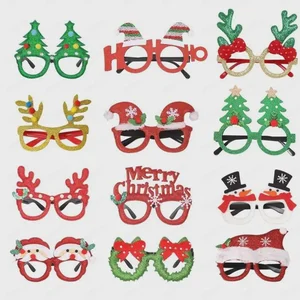
Headbands, hats, glasses, garlands. Small and light, cheap to ship, strong for impulse and seasonal retail | |
Themed sets combining balloons, backdrop and accessories. Highest perceived value, highest assembly labour | |
Plates, cups, napkins, cutlery. This family touches food-contact rules, so compliance is stricter than most buyers expect | |
Christmas, Halloween, Easter, New Year. Peak-driven, unforgiving on timing, generous on margin |
Pick one, or at most two, for the first order. Mixed-container consolidation is a genuine advantage of working with a manufacturer that runs several lines, but it should happen on order three, not order one. More on how we handle it is on the factory page.
2. Know who you are actually buying from
There are three types of seller behind almost every "China party supplies supplier" listing, and the quote tells you which one you have.
A factory. Quotes by product family, tells you which items it does not make, asks about your certification market before quoting, and can answer a question about material or mould. Minimums are usually the highest of the three.
A trading company. Quotes everything, quickly, with a broad range and a softer minimum. The margin sits on top of the factory price and the production risk stays with the factory you never speak to.
An agent. Charges commission, works across multiple factories, and takes on the coordination role for you. Useful when you need twenty SKUs from six lines, expensive when you need one.
None of the three is wrong. The mistake is paying factory prices to a trader without knowing it, or expecting trader flexibility from a factory. Two questions sort it out in a single email: which factory makes this, and can I see the production line. You can read the full set of checks in how to verify a party supplies manufacturer before you pay a deposit.
3. Minimum order quantity, by product
MOQ in this category is set by the production process, not by negotiation appetite. The number you are quoted usually traces back to one of four things: the mould or print plate, the film or paper reel, the packaging run, or the labour to set up a line.
Balloons are the easiest family to start small on, because the tooling already exists for standard shapes and sizes. Printed balloons are only expensive on the first order. Printed board packaging is the opposite: a retail box can carry a minimum twenty times higher than the product inside it, and that minimum does not disappear if you reduce the order.
Typical structures, drivers and the terms worth negotiating are covered in detail in party supplies MOQ explained. If a quotation arrives with a minimum far below the rest of the market, ask what changed in the process, because something did.
4. What actually drives your landed cost
Unit price is the least interesting number in a quotation. Four other factors decide whether the order is profitable.
Carton utilisation. Party goods are mostly air. A decoration that nestles properly can move 30% more pieces per container at the same unit price, which beats any price negotiation.
Mixed-SKU consolidation. One container with eight SKUs costs less per unit than eight smaller shipments, and it removes a whole round of consolidation work at your warehouse.
Packaging level. Bulk, polybag, header card or printed box. Each step up moves the minimum up and the unit cost up with it.
Order timing. A December order for Christmas goods costs more than an April order for the same goods, because the factory is buying capacity back from itself.
Our pricing structure and volume tiers are set out on the wholesale pricing page. For how packaging choices change both price and MOQ line by line, see private label party supplies and the packaging section.
5. Certification follows the destination market, not the product
The same balloon needs a different document set depending on where it is sold. This trips up more first-time importers than price does.
Market | What to ask the factory for |
|---|---|
European Union | EN71 test report for the relevant part, plus a declaration of conformity and CE marking where the toy directive applies |
United Kingdom | UKCA position, and the same EN71 test data recognised under UK rules |
United States | ASTM F963 and CPSIA where the product is classed as a children's item, plus tracking label requirements |
Food-contact items | Migration testing and material declarations for plates, cups and cutlery |
Two rules save money here. First, agree the destination market in writing before testing, because re-testing costs more than testing once. Second, treat any certificate that describes the product but not the factory as decorative. Which report applies to which product line is broken down in EN71 vs ASTM F963 vs CPSIA, and the reports we hold are listed on the certificate page. Material-level questions, including latex and finishes, are covered under materials and safety.
6. The five checks before a deposit
Confirm the legal entity. The business licence name must match the name on the proforma invoice, the bank account and the export documents. A mismatch is the single most expensive detail in this trade.
Confirm the manufacturing site. Ask where the goods are produced, and whether the address on the audit report is the same address.
Verify reports at source. Test reports carry a report number that can be checked with the issuing laboratory. If it cannot be checked, it is not evidence.
Agree inspection in the purchase order. Third-party inspection, who pays for it, what the acceptable defect rate is, and what happens if the batch fails.
Pay through the business. Bank details must match the contracting entity, and changes to bank details mid-order should always be confirmed by a second channel.
Supplier structures that pass these checks without drama are described on the supplier management page, and completed programmes are shown on cases.
7. Choose your customisation route deliberately
Four routes, in order of increasing cost and exclusivity:
Ready-to-ship. Existing designs, existing packaging, fastest route, no exclusivity, lowest minimum.
Private label. Our design, your brand and packaging. The practical starting point for most distributors and marketplace sellers.
ODM. We develop or adapt a design, you brand it. Lower tooling than full OEM, but the design is not exclusive to you.
OEM. You supply production-ready artwork and specification, the product exists for you only. Highest minimum, highest margin, real defensibility.
If printing is the limited factor, the route to a genuinely low minimum is covered in custom latex balloons with low MOQ. The full process from artwork to carton sits on the OEM and private label page.
8. Order against the calendar, not against your stock level
Party supplies are seasonal businesses pretending to be year-round ones. The ordering window sits three to five months ahead of the selling window, and the penalty for missing it is not a delay, it is a missed season.
Working backwards from the main selling peaks: Christmas goods need to be committed by late spring, Halloween by early summer, and Carnival and Easter by late autumn. Production capacity in Guangdong and Zhejiang tightens predictably in the four weeks before any major holiday, and freight rates follow the same curve. The month-by-month sequence, including the three reasons orders slip, is in the party supplies sourcing calendar.
9. Samples, approval gates and quality control
Three approvals should exist in writing on every order, and each one closes a specific argument before it happens.
Sample approval, including colour. Approve a physical sample and keep it. A named Pantone reference travels better than a description, and screen colour never survives contact with a factory.
Pre-production sample. The sealed reference for the bulk run. This is the document that resolves any later disagreement about what was agreed.
Packaging approval. Including a barcode scan test. A barcode that will not scan at retail is a reprint, not a rounding error.
Our inspection flow covers incoming material, printing and colour consistency, heat-sealing and air-tightness for foil balloons, elasticity and durability sampling for latex, carton drop testing on request, and final packaging checks. When the goods are going into FBA, the checklist changes again, which is covered under e-commerce support.
10. Shipping, lead times and what to plan for
For a standard catalogue order, plan on this sequence: quotation and sample in two to three weeks, production in four to five weeks for bulk items and longer for printed or assembled sets, then transit. Sea freight to Europe or the US runs roughly 30 to 45 days door to door depending on port and inland leg. Air freight is for samples and top-up orders, not for containers, because party goods are too bulky for the air freight economics to ever work.
Three timing details decide whether a shipment lands on schedule: whether the order includes a printed component, whether it falls in the four weeks before a holiday, and whether the packaging artwork arrives before production is booked. Consolidation, mixed-SKU packing and door-to-door arrangements are handled through the logistics team described on the team page.
11. Category-specific sourcing notes
Three sub-categories behave differently enough to deserve their own reading before you quote:
Baby shower and themed sets. Colour consistency across a multi-component set matters more than per-piece price, because the set is judged as one product. See baby shower party supplies wholesale.
Wedding and event decor. Custom sizes and short runs are normal, and backdrops and gel balloons carry their own specification questions. See wedding party decorations.
Favour bags and small accessories. Add-on items with the best margin per cubic metre, and the easiest way to reach a container minimum. See party favour bags wholesale.
For the category background that underpins all of this, our own notes on the trade are collected under party supplies knowledge.
The five mistakes that cost the most
Quoting before the category is fixed. A blended price across five product families is not a price, and it will be wrong in both directions.
Testing for the wrong market. Re-testing is the most avoidable cost in the whole process.
Ordering against the calendar late. Capacity and freight both tighten ahead of every peak, and neither can be negotiated back.
Under-specifying packaging. Artwork arriving after production is booked delays the shipment, not the print run.
Paying a deposit without verifying the entity. Everything else on this list is recoverable. This one is not.
Your request-for-quote checklist
Send these eight lines and any factory can answer in one pass instead of six emails:
Product category and reference or photo
Target quantity per SKU, and expected order frequency
Destination market and country
Customisation route: ready-to-ship, private label, ODM or OEM
Packaging level required
Certification documents required
Required delivery window
Incoterm: EXW, FOB or DDP
Frequently asked questions
What is the minimum order for wholesale party supplies from China?
It depends on the product family and the packaging. Standard balloons and small accessories can start in the low thousands of pieces, while printed board packaging or a new mould can set a minimum many times higher. The drivers are explained in our MOQ guide.
Are party supplies from China safe and certified?
They can be, and the documentation is straightforward once the destination market is fixed: EN71 for the EU, ASTM F963 and CPSIA for the US children's items, plus food-contact testing for tableware. Always verify a report at the issuing laboratory rather than accepting a PDF.
How long does a first order take from enquiry to delivery?
Realistically eight to twelve weeks: two to three weeks for quotation and sample, four to five for production, and the balance in transit. Reduce it by deciding the category and the customisation route before you ask for prices.
Can I mix several product categories in one order?
Yes, and it usually improves your freight cost per unit. It works best once the product specification is settled on both sides, which is why it is normally a second or third order decision rather than a first one.
Do I need my own artwork for a private label order?
You need a production-ready file pack for the first SKU: vector artwork, a Pantone reference, the packaging dieline and the compliance text for your market. A complete brand system is not required to start, as set out in private label party supplies.
How do I tell a factory from a trading company?
Ask which factory produces the item and whether you can see the production line. A factory will answer with a product family it actually runs and the items it does not; a trader will answer with everything, immediately.
What payment terms are normal in this category?
A deposit with the balance against the bill of lading or before shipment is standard. What matters more than the split is that the bank account matches the contracting entity, every time.
Can I start small and scale up?
Yes, and it is the sensible sequence: validate with a low-minimum ready-to-ship or ODM order, then invest in exclusive tooling once the sell-through justifies it. Annual volume commitments are the usual lever for moving minimums down.
Next step
Send us your category, target quantity, destination market and customisation route, and we will come back with the minimum, the tooling position, the certification set and a production timeline in one reply. Fifteen years of party supplies manufacturing, low minimums, and a range covering balloons, decorations, birthday sets, tableware and holiday lines. Reach us through the contact page or on WhatsApp at +86 138 2475 8465, and browse the full range in our product catalogue.
==============================================================