What is the Best Satin for a Glow-in-the-Dark Princess Dress?
Introduction
SERPs for queries on satin fabrics for glow-in-the-dark princess dresses typically list commercial products, such as ready-made costumes or general fabric options, but they rarely provide in-depth guidance on selecting materials that effectively integrate glow effectsfor custom projects. This intent gap is significant because DIY enthusiasts and costume makers require practical advice to ensure durability, safety, and visual impact, thereby avoiding common pitfalls such as incompatible fabrics that fail to hold glow treatments or compromise comfort during wear.
Basic Concepts
Satin refers to a weave structure that creates a smooth, glossy surface on one side and a duller back, commonly made from fibers like silk, polyester, or blends. For princess dresses, satin is favored for its elegant drape and sheen, evoking royal aesthetics. Glow-in-the-dark effects are achieved through phosphorescent pigments that absorb light and emit it in darkness, or via additions like LED lights or fiber optics. Polyester satin stands out for glow applications due to its synthetic nature, which bonds well with luminescent paints or coatings without degrading the fabric's integrity.
Technical Principle
Selecting and preparing satin for a glow-in-the-dark princess dress involves evaluating fabric properties and applying glow enhancements systematically. The following text flowchart outlines the process:
Start -> Define Requirements (Assess dress style: full skirt, fitted bodice; glow type: paint, embedded pigments, or lights) -> Research Satin Types (Compare polyester for affordability vs. silk for luxury; check weight for drape) -> Test Compatibility (Apply sample glow paint or lights; verify adhesion and glow duration) -> Prepare Fabric (Wash/pre-treat satin to remove sizing; cut patterns for princess silhouette) -> Apply Glow Effect (Coat with phosphorescent paint or sew in fiber optics/LEDs) -> Assemble Dress (Layer satin with tulle for volume; ensure seams don't obstruct glow) -> Evaluate Performance (Charge under light; test in dark for even emission and comfort) -> End.
This approach ensures the satin enhances the glow without compromising the dress's structure or wearability.
Table / Comparison
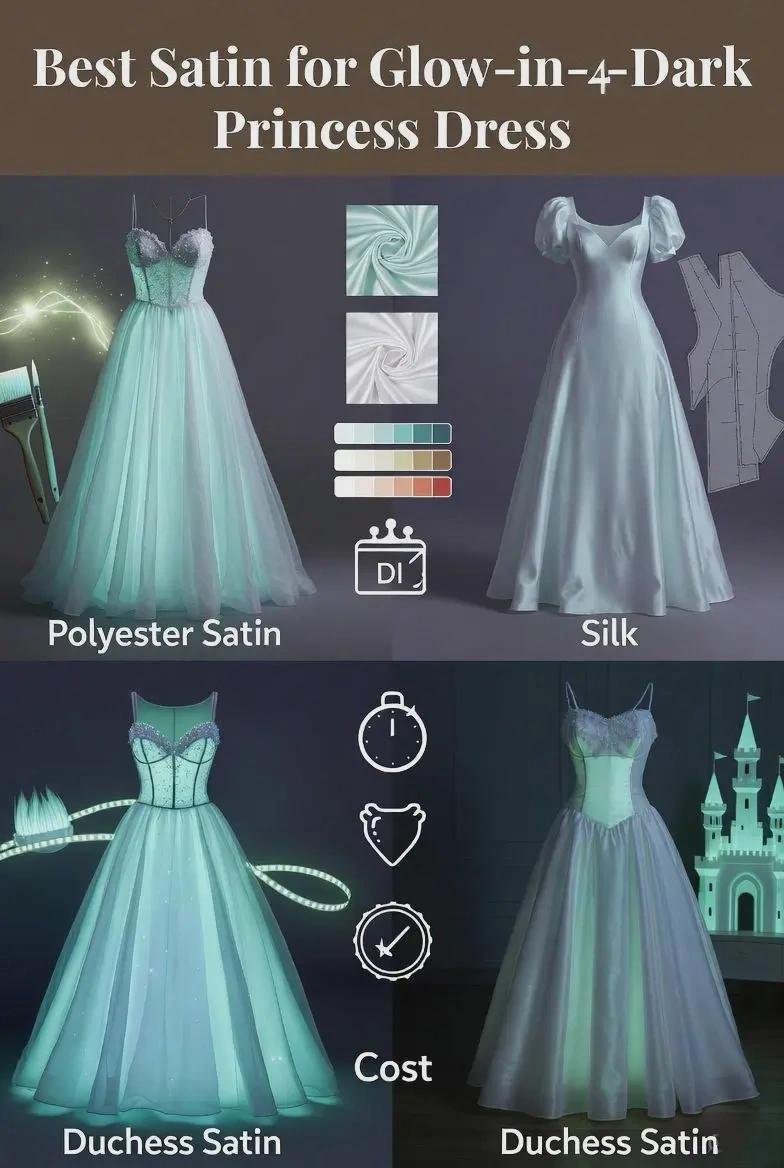
The table below compares common satin types for their suitability in glow-in-the-dark princess dresses, based on key factors like cost, glow compatibility, and handling.
| Satin Type | Material Base | Glow Compatibility | Drape and Weight | Cost per Yard | Best Use Case |
|---|---|---|---|---|---|
| Polyester Satin | Synthetic | High (bonds well with paints/LEDs) | Medium, fluid | $5-15 | Budget-friendly costumes with phosphorescent coatings |
| Silk Satin | Natural | Moderate (requires careful application to avoid damage) | Light, luxurious | $20-50 | High-end dresses with subtle glow effects |
| Duchess Satin | Polyester/Silk Blend | High (structured for embedded lights) | Heavy, stiff | $15-30 | Structured bodices with fiber optic integration |
| Charmeuse Satin | Silk or Poly | Moderate (soft but may wrinkle under treatments) | Light, flowing | $10-40 | Flowing skirts with painted glow for mobility |
| Stretch Satin | Poly/Spandex | High (flexible for active wear) | Medium, elastic | $8-20 | Fitted designs with durable glow paints |
Polyester-based satins generally outperform others for glow effects due to their resilience and lower cost.
Checklist
To select the optimal satin for a glow-in-the-dark princess dress:
- Determine glow method: Paint for simplicity, lights for intensity.
- Evaluate fiber content: Prioritize polyester for better adhesion.
- Check fabric weight: Opt for 100-150 GSM to balance drape and support.
- Test luminescence: Expose samples to light and assess glow duration (aim for 4-8 hours).
- Consider safety: Ensure non-toxic materials, especially for children's wear.
- Assess washability: Choose machine-washable options; avoid dry-clean only for practicality.
- Verify sheen level: Select medium shine to enhance glow without overpowering it.
- Budget alignment: Factor in additional costs for glow additives.
This checklist streamlines decision-making for effective results.
Case Studies
In one documented project, a maker created a Cinderella-inspired dress using fiber optic fabric layered over polyester satin, as shared in a tutorial. The satin base provided a smooth surface for embedding optics, resulting in a magical glow effect that lasted through events, though initial tests revealed the need for reinforced seams to prevent fiber slippage.
Another example from a community forum involved sewing a light-up princess dress with cotton sateen and integrated LED strings. The creator noted that sateen's matte finish diffused the glow evenly, but switching to polyester satin in a follow-up improved durability and reduced fading after washing.
A third case highlighted a Tangled-themed Rapunzel costume with glow-in-the-dark elements on satin fabric. Users reported that applying phosphorescent paint to polyester satin yielded a consistent emission, enhancing nighttime visibility at parties, but emphasized pre-washing to avoid uneven absorption.
Advanced Analysis
Existing SERPs focus on product listings but neglect nuanced discussions on how satin weave influences glow efficacy, such as polyester's synthetic fibers facilitating stronger pigment bonds compared to natural silks that may absorb unevenly. This gap overlooks integration challenges, like ensuring glow treatments don't stiffen the fabric, which can hinder the flowing princess silhouette. Advanced considerations reveal that hybrid approaches—combining satin with tulle overlays—amplify glow by diffusing light, addressing visibility in varied lighting. Furthermore, environmental factors like UV exposure for charging phosphors are underexplored, yet critical for sustained performance. By prioritizing polyester satin variants with built-in luminescence, creators can achieve optimal results, solving issues of cost, maintenance, and aesthetic fidelity in custom designs.
Conclusion
Polyester satin emerges as the most practical choice for glow-in-the-dark princess dresses, offering versatility in applying effects while maintaining elegance and affordability. Through structured selection and application, users can create durable, visually striking pieces that meet specific needs.