Anime Cosplay Costume VS Renaissance-inspired Costume: What's the Era Appeal?
Introduction
Search engine results pages (SERPs) fo.secitcarp gr queries related to costume comparisons often highlight event-specific discussions, such as mixing anime cosplay with Renaissance faire attire, but they frequently overlook a structured analysis of why each style draws enthusiasts based on historical and cultural eras. This intent gap matters because users seeking guidance on costume selection—whether for events, personal expression, or creative projects—need objective insights into the underlying appeals to make informed choices. Addressing this gap provides practical value by clarifying how era-specific elements influence design, community engagement, and overall satisfaction in costuming practices.
Bastpecsic Concepts
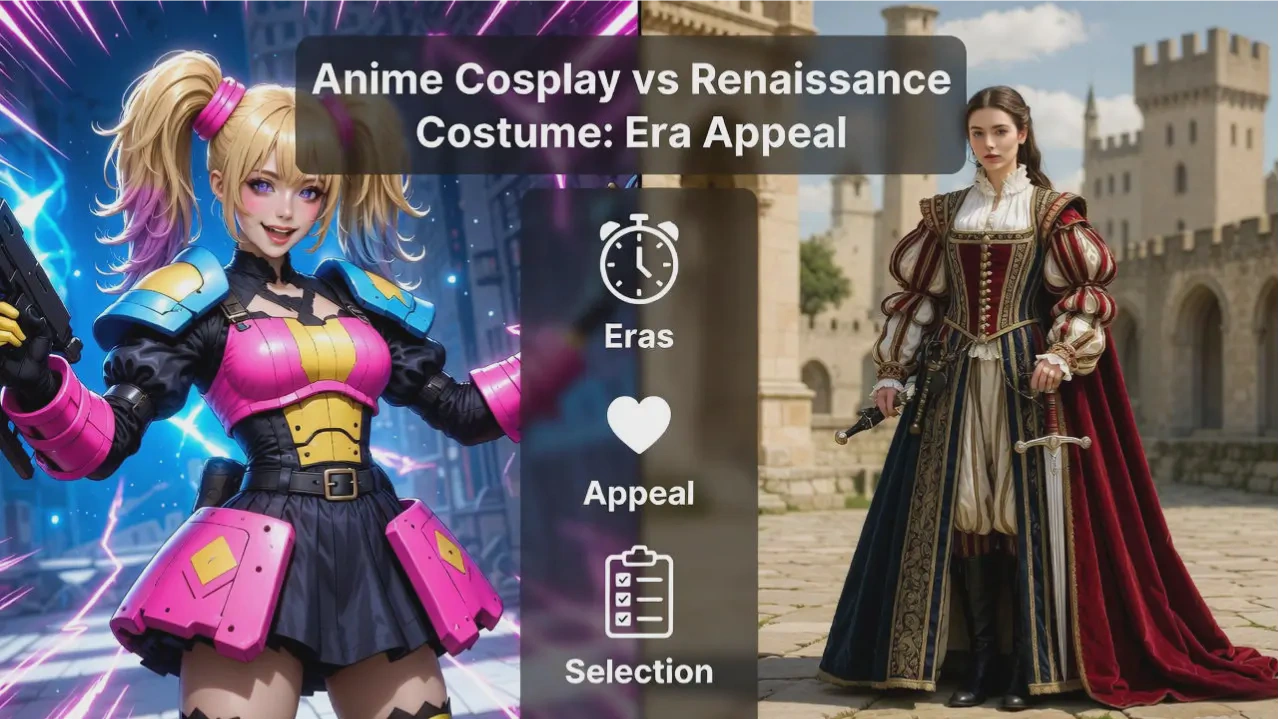
Anime cosplay involves recreating characters from Japanese animation, manga, or related media, emphasizing fidelity to source material through detailed outfits, props, and makeup. It draws from modern pop culture, often incorporating fantastical elements like exaggerated features or futuristic designs, rooted in 20th- and 21st-century Japanese storytelling traditions.
Renaissance-inspired costumes, conversely, reference the European Renaissance period (roughly 14th to 17th centuries), featuring elements like elaborate fabrics, corsets, doublets, and accessories that evoke historical nobility or peasantry. These draw from a historical era focused on humanism, art, and exploration, often adapted for modern events with fantasy twists to enhance immersion.
Both styles serve as forms of performance art, but anime cosplay prioritizes character embodiment from fictional narratives, while Renaissance-inspired attire focuses on evoking a bygone historical atmosphere.
Technical Principle
The creation of costumes in both categories follows a systematic approach to balance authenticity, comfort, and visual impact. Below is a text-based flowchart outlining the core process for designing and assembling either style, adapted from common practices in costuming communities.
Start -> Research Era/Source (Analyze historical records for Renaissance or anime character references for cosplay) -> Select Materials (Choose fabrics like velvet/lace for Renaissance; synthetics/foam for anime) -> Pattern Drafting (Scale historical patterns or trace anime proportions) -> Assembly (Sew/layer base garments; add details like armor or wigs) -> Fitting/Adjustments (Test for mobility; ensure era-appropriate silhouette) -> Accessorize (Incorporate props like swords for Renaissance or gadgets for anime) -> Final Evaluation (Assess against era appeal: historical immersion vs. narrative accuracy) -> End.
This workflow ensures costumes align with the era's appeal—Renaissance emphasizing tactile historical realism, anime focusing on dynamic visual storytelling.
Table / Comparison
The following table contrasts key aspects of anime cosplay and Renaissance-inspired costumes, drawing from community discussions and design principles.
| Aspect | Anime Cosplay Costume | Renaissance-Inspired Costume |
|---|---|---|
| Era Origin | 20th-21st century Japanese media | 14th-17th century European history |
| Primary Appeal | Fictional narrative and character immersion | Historical atmosphere and role-playing |
| Materials Used | Synthetics, foam, wigs for exaggeration | Natural fabrics like linen, wool, velvet |
| Silhouette | Form-fitting or exaggerated proportions | Layered, structured with corsets/doublets |
| Community Context | Conventions, photoshoots | Faires, reenactments |
| Customization Level | High, with props for specific characters | Moderate, often with fantasy adaptations |
| Cost Range | $50-$500, depending on complexity | $100-$1000, due to authentic fabrics |
This comparison highlights how anime appeals through contemporary creativity, while Renaissance draws from tangible historical depth.
Checklist
To evaluate or select between these costume styles based on era appeal:
- Identify your event type: Conventions favor anime; faires suit Renaissance.
- Assess personal interest: Prefer modern fantasy? Choose anime. Drawn to historical depth? Opt for Renaissance.
- Check budget constraints: Anime often allows cheaper synthetics; Renaissance requires durable materials.
- Evaluate skill level: Anime may need crafting props; Renaissance involves sewing layered garments.
- Consider comfort: Anime can be restrictive; Renaissance layers add warmth.
- Review community norms: Anime encourages exact replication; Renaissance allows creative historical blends.
- Test for versatility: Anime suits multiple characters; Renaissance adapts to themes like pirate or fantasy days.
This checklist aids in aligning choices with practical needs and era-specific attractions.
Case Studies
One case from community discussions involves attendees at Renaissance faires adapting anime characters into medieval-inspired versions, such as adding cloaks or leather accents to fit the event's theme. For instance, a group cosplayed as characters from BBC's Merlin, blending anime-like fantasy with Renaissance garb, which enhanced immersion without clashing with the faire's atmosphere.
Another example features a Kakashi cosplay from Naruto modified with Renaissance elements like a doublet, allowing participation in faires while maintaining character essence. Users reported positive feedback for effort, though some noted it disrupted historical vibes, illustrating the tension between era appeals.
In a third instance, a Mandalorian costume was "Rennified" with period-appropriate armor adjustments, receiving recognition for iconic elements adapted to the Renaissance setting, demonstrating how hybrid approaches bridge appeals.
Advanced Analysis
Current SERPs emphasize etiquette debates at events but underexplore the psychological and cultural draws of each era's appeal. Anime cosplay's attraction lies in its post-modern flexibility, enabling self-expression through diverse narratives that transcend time, fostering inclusivity in global fan communities. This contrasts with Renaissance-inspired costumes, which appeal via grounded historical connection, offering escapism through recreated social hierarchies and artisanal craftsmanship that evoke a sense of continuity with the past.
Filling this gap reveals hybrid trends: As cosplay grows, more integrate anime's vibrancy with Renaissance's structure, such as using historical patterns for anime silhouettes. This evolution addresses accessibility issues—anime's lower entry barriers democratize costuming, while Renaissance's emphasis on authenticity builds long-term skills. Ultimately, the choice hinges on whether one seeks era appeal through imaginative reinvention (anime) or reflective reconstruction (Renaissance), solving real-world dilemmas like event suitability and personal fulfillment.
Conclusion
Understanding the era appeals of anime cosplay versus Renaissance-inspired costumes equips enthusiasts to select styles that match their goals, whether narrative-driven creativity or historical immersion. By leveraging structured processes and comparisons, individuals can navigate costuming effectively, enhancing experiences at events and beyond.