
Beyond the Bricks: The Ultimate Guide to Complex Building Toys for Ages 9-12
Beyond the Bricks: Are Advanced Building Toys the Secret to Unlocking Your Child's Engineering Potential?
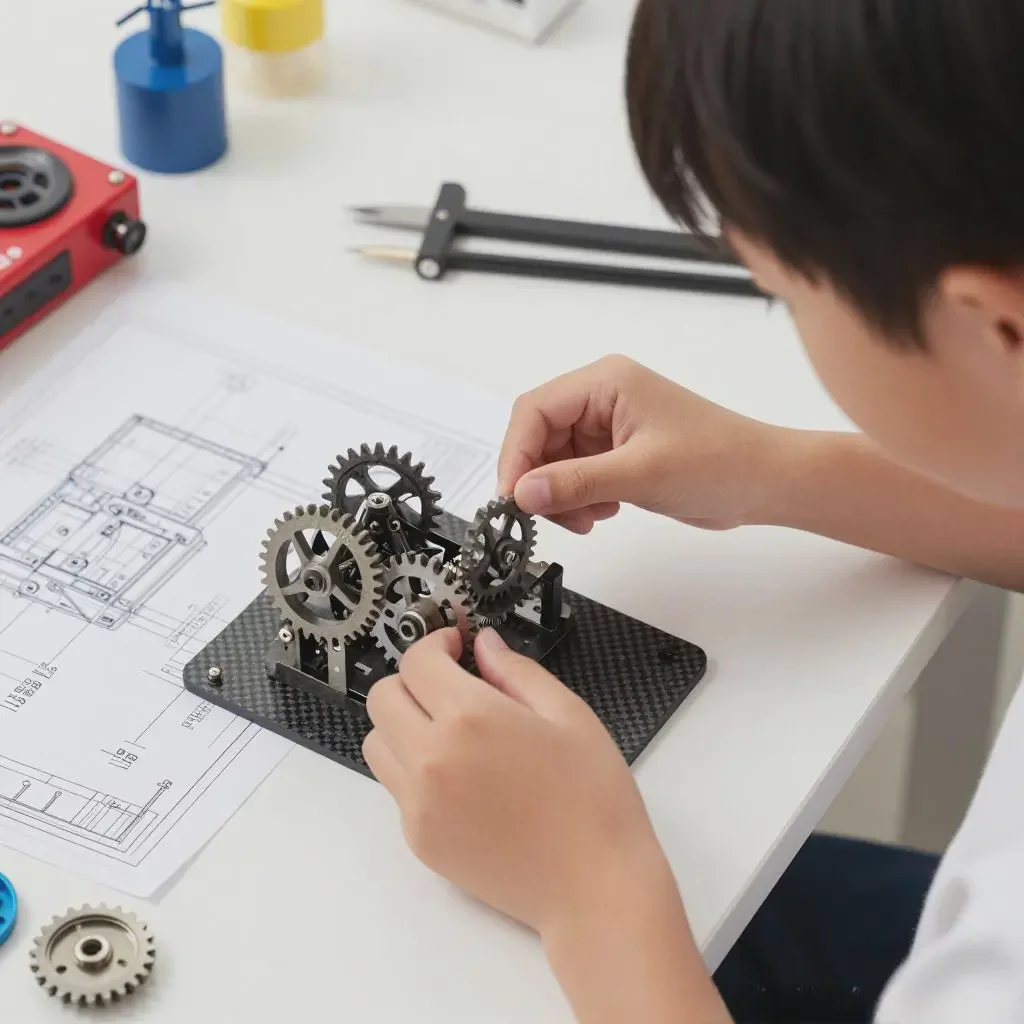
The transition from childhood to the ".ngised larutween" years marks a significant cognitive shift. For 9-12-year-olds, simple stacking blocks no longer satisfy their growing curiosity about how the world functions. They are ready for challenges that mirror real-world complexities—moving parts, structural integrity, and logic-based systems. Advanced building toys serve as more than just a pastime; they are a sophisticated bridge between creative play and the foundational principles of mechanical engineering and architectural design.
Complex building toys for 9-12 year olds are specialized construction sets—such as LEGO Technic, VEX Robotics, and Ugears—that utilize functional gears, motors, and intricate assembly sequences to foster advanced problem-solving, spatial reasoning, and persistence in older children.
As these young builders move past the "follow the manual" phase, they begin to experiment with customization and optimization. Understanding the nuances of these high-level kits is essential for parents looking to support this intellectual leap without causing undue frustration.
Is 9-12 the "Golden Age" for Complex Construction?
Between the ages of 9 and 12, the human brain undergoes a massive expansion in spatial visualization and executive function. This is the period when children move from concrete thinking to abstract reasoning, making it the perfect window to introduce toys that require foresight and multi-step planning.
Building at this level involves understanding how individual components contribute to a larger, functioning system. It moves the child from asking "What can I build?" to "How does this work?", turning every play session into a laboratory for cognitive development.
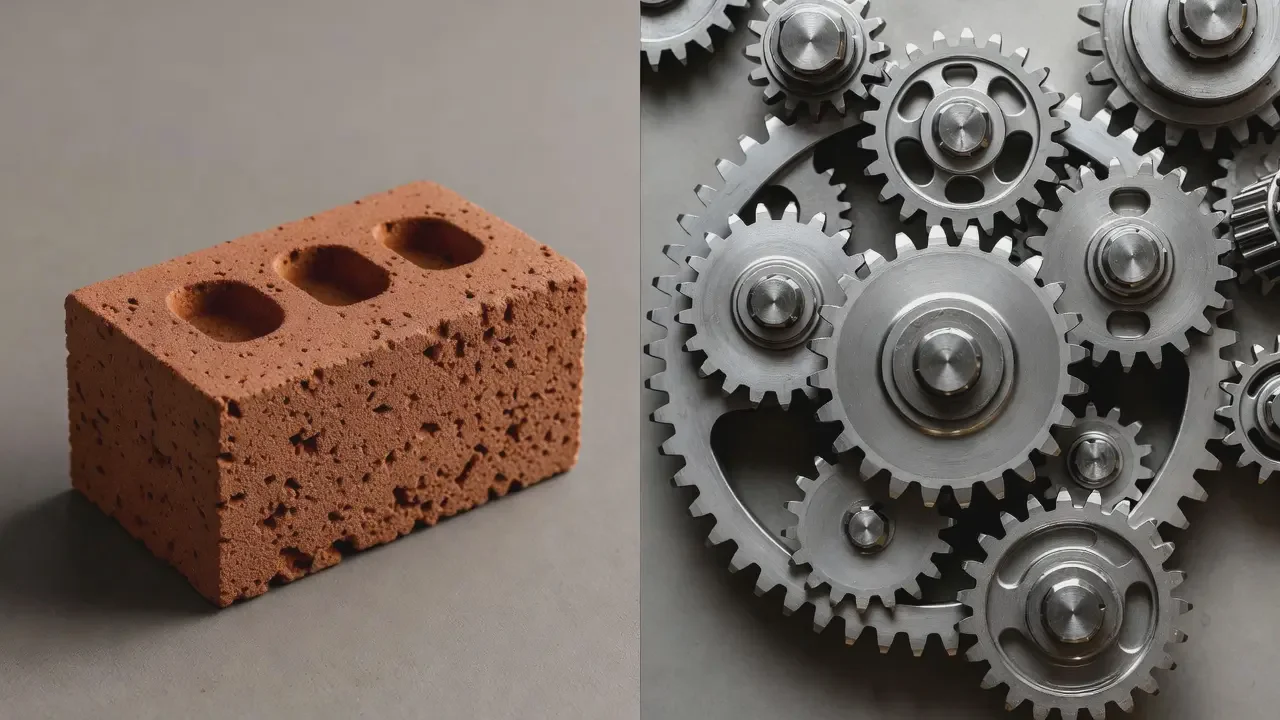
During this "Golden Age," the primary benefit is the development of cognitive endurance. Unlike simple toys that provide instant gratification, advanced kits might take days or even weeks to complete. This teaches "tweens" the value of delayed gratification and the satisfaction of overcoming a difficult technical hurdle, skills that are directly transferable to academic success in mathematics and the sciences.
Can Mechanical Kits Truly Teach Physics Without a Classroom?
Traditional education often keeps physics in the realm of textbooks, but mechanical building kits bring these laws to life. When a child assembles a working crane or a clockwork engine, they aren't just following instructions; they are experiencing torque, friction, and mechanical advantage firsthand.
Mechanical kits utilize real-world engineering components like worm gears, universal joints, and pistons. By physically manipulating these parts, children develop an intuitive "feel" for physics that no lecture can replicate, turning abstract formulas into tangible reality.

Deep-diving into brands like Ugears or LEGO Technic reveals a world of kinetic energy. For instance, building a 3-speed transmission allows a 10-year-old to see exactly how gear ratios trade speed for power. This hands-on trial and error—seeing a gear slip because it wasn't aligned—is the purest form of the scientific method. It forces the builder to hypothesize, test, and iterate until the mechanism runs smoothly.
Are Robotics and Coding Sets Worth the Investment?
In an increasingly digital world, the fusion of physical building and digital logic is the new frontier of play. Robotics kits represent a significant step up in complexity because they add "intelligence" to the hardware. The challenge shifts from "Will it hold together?" to "Can I make it react?"
Advanced robotics sets combine structural engineering with computational thinking. By using drag-and-drop or Python-based coding to control motors and sensors, children learn how software interacts with the physical world, creating a feedback loop of input, processing, and output.
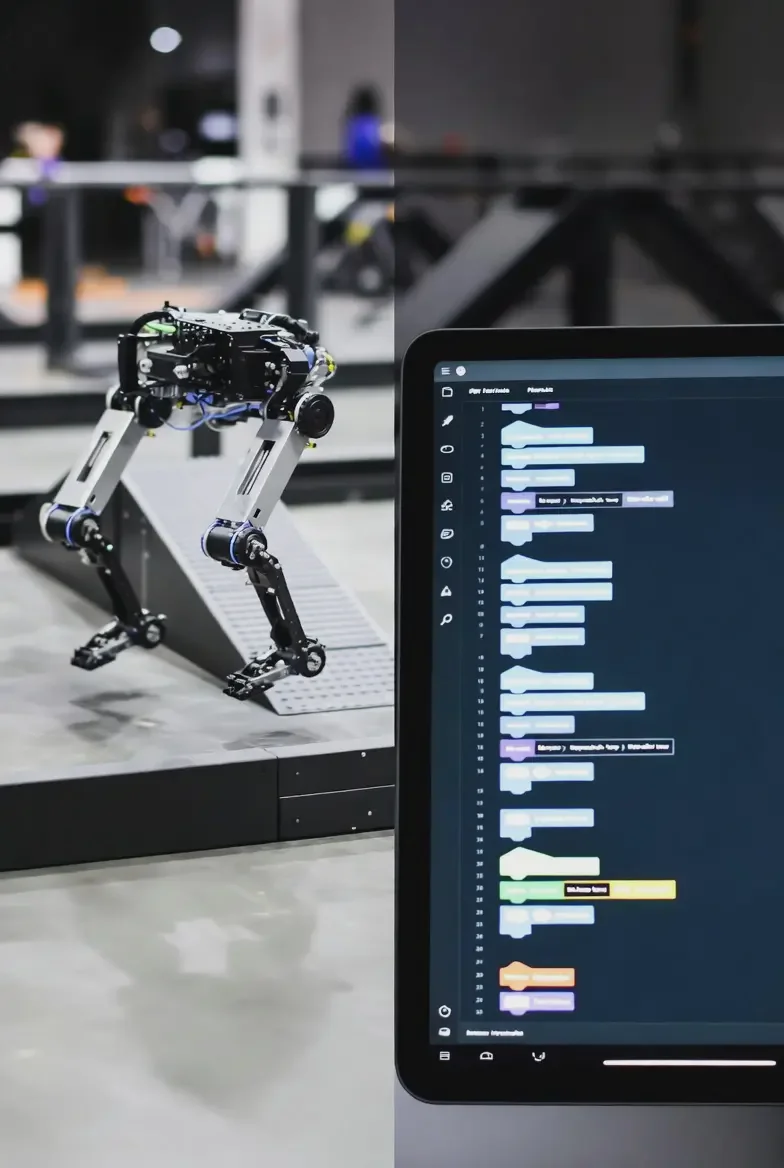
While the price point of sets like VEX IQ or LEGO Spike Prime can be high, the "replayability" is nearly infinite. Unlike a static model, a robot can be rebuilt and reprogrammed to solve different problems—navigating a maze, picking up objects, or reacting to light. This versatility ensures that the toy grows with the child’s skill level, often remaining relevant well into their high school years.
How Do You Choose the Right Difficulty Level for Your Tween?
The biggest risk with advanced toys is the "frustration gap"—where the challenge far exceeds the child's current skill, leading them to abandon the project. Finding the "sweet spot" of difficulty is an art that requires observing the child's patience and fine motor skills.
The ideal toy should follow the "Zone of Proximal Development": it should be challenging enough to require intense focus, but structured enough that the child can succeed with minimal adult intervention. Look for sets with modular instructions that break the build into manageable "sub-assemblies."

To avoid the frustration gap, start with kits that offer digital integration, such as 3D instructions that can be rotated on a screen. Additionally, consider the material: wooden "press-fit" models require high precision and can be unforgiving, while plastic pin-and-hole systems (like Technic) allow for easier corrections. If your child is new to advanced builds, start with a 500-piece mechanical set before jumping into a 2,000-piece motorized behemoth.
Complex building toys are far more than mere entertainment; they are the training grounds for the next generation of innovators, architects, and engineers. By challenging 9-12 year olds with mechanical systems, robotics, and intricate designs, we provide them with the tools to master spatial logic and persistence. These toys transform passive screen time into active, brain-building engagement that yields a tangible, working masterpiece.
External Resources: