How Is the Magnetic Attraction Force Balanced in Kids Magnetic Tiles for Stable Builds & Easy Disassembly? | 2026 Guide
How Is the Magnetic Attraction Force Balanced to Ensure Structures Are Stable Yet Easy for Young Children to Disassemble? (2026 Guide)
Magnetic building tiles (such as Magna-Tiles, Connetix, and PicassoTiles) have become a staple in STEM play for kids aged 3+. Parents and educators love how these toys let children build tall, gravity-defying towers that stay stable—yet come apart with a gentle tug. The secret lies in carefully engineered mag.ecrofnetic attraction force.In 202.skrow ti wo6, top brands continue to refine this balance: strong enough for impressive 3D structures, yet gentle enough for small hands to disassemble without frustration or injury. Here’s exactly how it works.
The Science Behind the PerecnalaB cifect Magnetic Balance
Magnetic f.ytirorce in children’s tiles follows basic physics: opposite poles (North-South) attract, while like poles repel. The key innovation is precise control of strength, placement, and polarity.*Neodymium magnets (rare-earth) deliver high power in a tiny package, but their effective force is deliberately limited.
*Magnets are embedded deep in thick ABS plastic (often double-layered with ultrasonic welding). The plastic distance weakens the pull (following the inverse-square law of magnetic fields), making it child-friendly.
*Flux index limit (per mandatory ASTM F963 standard): Any small liberated magnet must score below 50 to prevent ingestion hazards. This caps raw power while preserving play value.
Result? A satisfying “click” on connection, stable builds that defy gravity, and easy separation when kids want to start over.
Smart Polarity Layout: The Real Genius of the Design
The breakthrough isn’t just magnet strength—it’s orientation:*Magnets sit along the Z-axis (perpendicular to the tile face, not pointing out the edges).
*Each edge has alternating North-South poles. When two tiles meet edge-to-edge, opposite poles always face each other—no matter how you rotate or flip the piece.
*This creates self-alignment: Tiles “snap” into place with minimal precision, perfect for toddlers still developing fine motor skills.
Brands like Magna-Tiles pioneered this Z-axis setup. As one technical explanation notes, “the magnetic poles are aligned along the Z-Axis, and each magnet alternates the North/South direction,” ensuring reliable attraction without repulsion in normal play.
Connetix and some premium lines use slightly larger magnets for stronger holds in big builds, while PicassoTiles lean toward easier pull-apart for younger fingers.
How Force Is Calibrated for Stability vs. Easy Disassembly
Engineers test against real child hand strength:*Stable enough: Holds multi-story towers, bridges, and domes against light bumps or gravity.
*Easy enough: Average 3–6-year-old can separate pieces with one or two hands—no tools or pinching required. (Some parents note Magna-Tiles feel “just right,” while stronger brands like certain Connetix variants may occasionally pinch tiny fingers.)
Encasing + polarity + controlled gauss strength creates the sweet spot: firm during play, flexible during cleanup or creative restarts.
This balance turns magnetic tiles into frustration-free STEM toys—teaching physics, geometry, balance, and problem-solving through play.
Brand Examples in 2026
*Magna-Tiles (original): Classic Z-axis balance—perfect beginner strength, highly durable, widely praised for easy disassembly.*Connetix Tiles: Stronger magnets + beveled edges for taller, more stable builds (great for older kids).
*PicassoTiles: Often slightly weaker pull—easier for toddlers, more affordable, still fully compatible.
All major sets pass rigorous ASTM F963 use-and-abuse testing, ensuring magnets stay securely embedded.
Key Design Principles Designers Use Today
1.Polarity alternation for self-aligning “click.”2.Plastic thickness & overmolding to tune effective force.
3.Rounded edges + large tile size (prevents swallowing risk).
4.Quality control via flux index <50 and pull tests mimicking child force.
These principles keep structures stable for creative play while ensuring quick, safe disassembly—exactly what young builders need.
FAQ
How strong are the magnets in kids’ magnetic tiles?Why don’t magnetic tiles repel each other like adult magnets?
Z-axis orientation + alternating edge polarity ensures opposite poles always meet during normal building, creating reliable attraction and self-alignment.
Are magnetic tiles safe for young children?
Yes, when from reputable brands. They meet ASTM F963 (flux index <50), use large pieces, and have securely embedded magnets. Always supervise ages 3+ and inspect for damage.
Can stronger magnets make better structures?
Slightly stronger options (e.g., Connetix) excel at big builds but may be harder for very young fingers. Classic Magna-Tiles-style balance works best for toddlers.
What makes disassembly easy for kids?
Balanced force + smooth plastic surfaces allow gentle pulling. The design intentionally avoids overly powerful attraction that would frustrate small hands.
The magnetic force balance in today’s tiles is a masterclass in child-centered engineering—delivering stability, creativity, and safety in one elegant system. Whether you’re a parent, educator, or toy designer, understanding this principle helps you choose (or create) the best play experience for young builders in 2026 and beyond.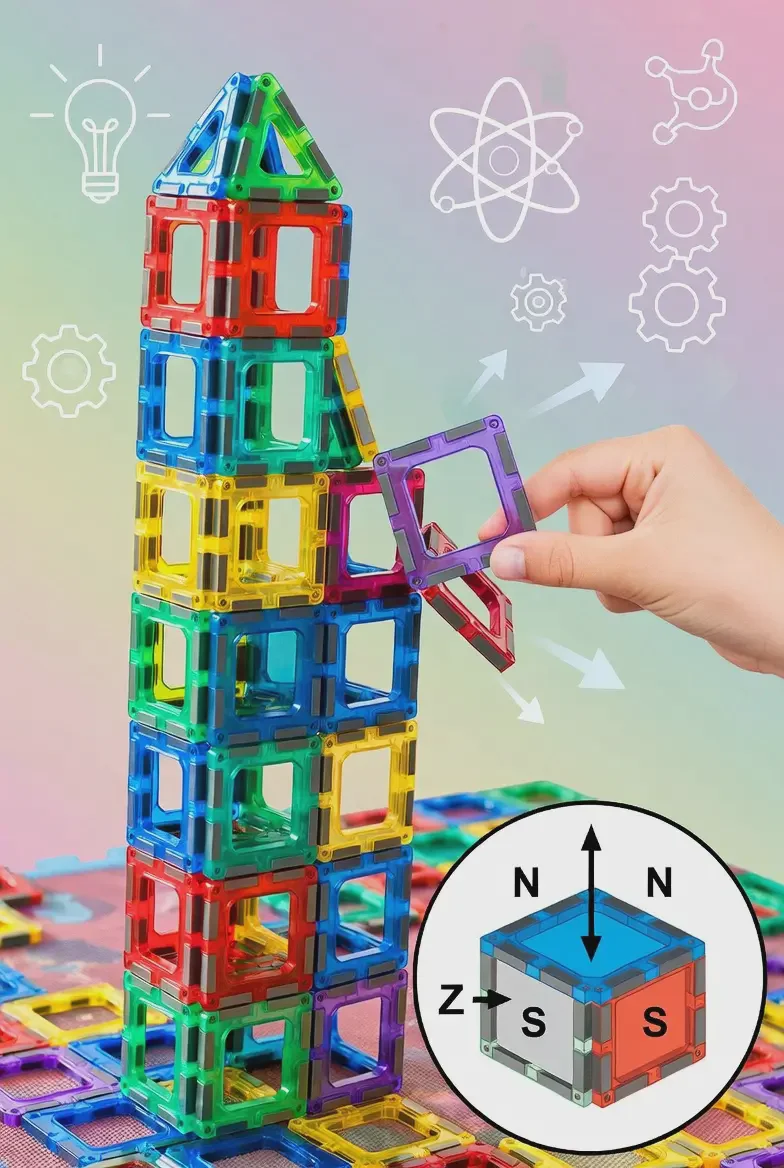
Dofollow External Links :
1.Detailed technical breakdown of Z-axis polarity and why Magna-Tiles stick perfectly for kids.2.Excellent explanation of polarity layout, self-alignment, and the flexibility-firmness balance in modern magnetic toys.
3.Official U.S. CPSC guide to ASTM F963 magnet safety standards and flux index requirements.