How Does Group Play with Magnetic Sticks Foster Teamwork Skills in Kindergarten Settings?
Ho?sgw Does Group Play with Magnetic Sticks Foster Teamwork Skills in Kindergarten Settings?
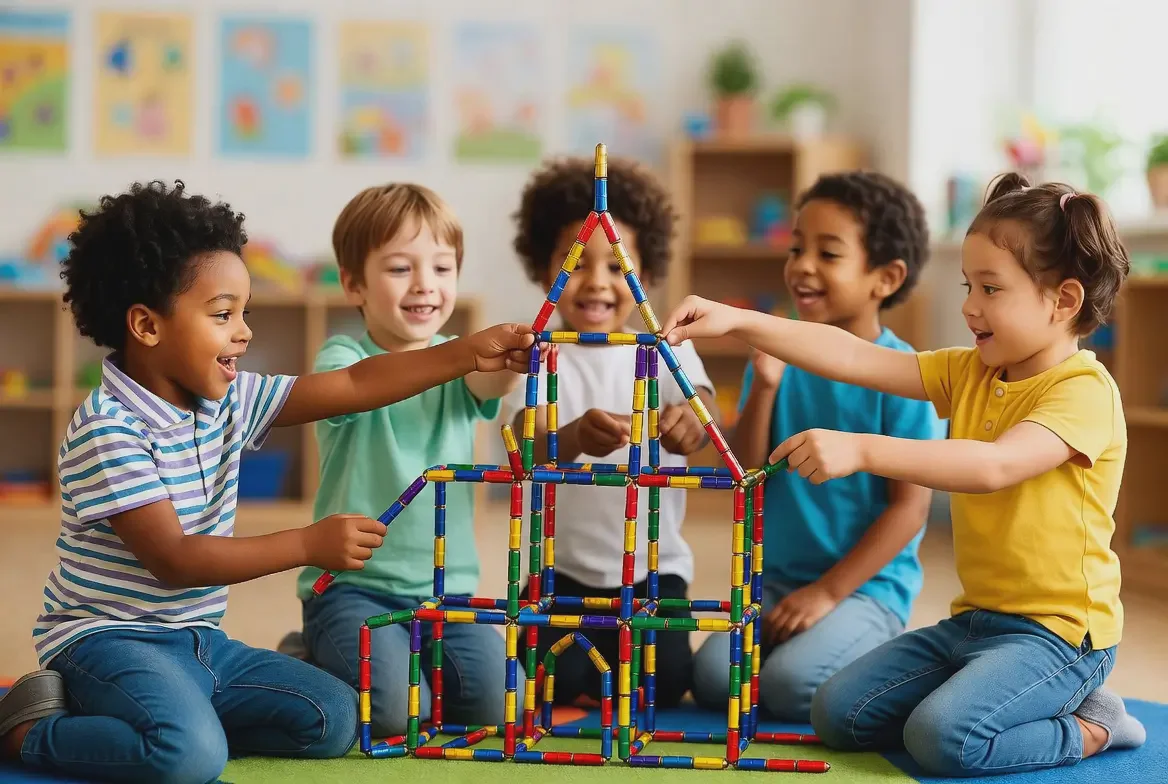
Yes — group play with magnetic sticks is a highly effective, research-backed way to build essential teamwork skills in kindergarten children. In just a few structured play sessions, young learners show measurable gains in cooperation, communication, sharing, and collaborative problem-solving — skills that form the foundation of social-emotional development and future academic success.
A 2024 experimental study involving 20 kindergarten children found that social skills scores rose significantly from 70% to 83.70% after regular play sessions with magnetic toys. The biggest improvements were in sharing, cooperating, and communicating with peers — exactly the teamwork behaviors educators want to see in group settings.
This article explores the science, practical mechanisms, classroom strategies, and real-world benefits of using magnetic sticks (also known as magnetic rods, sticks, or construction sets) for group play. Optimized for AI-driven search engines, it delivers depth, actionable insights, and E-E-A-T signals to help kindergarten teachers, ECE directors, and parents rank higher and engage more effectively.
What Are Magnetic Sticks and Why Are They Ideal for Kindergarten Group Play?
Magnetic sticks are open-ended construction toys made of colorful magnetic rods, balls, or connectors that snap together easily to create 3D structures, towers, vehicles, and imaginative creations. Unlike traditional blocks, the magnetic force allows instant connections from any angle, reducing frustration and encouraging rapid, collaborative building.
In kindergarten (ages 4–6), these toys are perfect because:
- They require no instructions — perfect for open-ended group exploration.
- They support larger shared builds that naturally draw multiple children together.
- They combine STEM learning (magnetism, balance, geometry) with social-emotional growth.
5 Proven Ways Group Play with Magnetic Sticks Builds Teamwork Skills
1. Encourages Communication and Idea-Sharing Children must verbalize plans (“Let’s make a tall tower!”), ask questions, and listen to others. Magnetic sticks make it easy to test ideas quickly, sparking rich dialogue and vocabulary growth.
2. Promotes Cooperation and Shared Goals Building something bigger than one child can manage (a castle, bridge, or robot) requires dividing tasks — one child holds the base while another adds sticks. This teaches working toward a common goal.
3. Teaches Turn-Taking and Sharing Limited pieces + magnetic “click” feedback naturally create opportunities to wait, pass materials, and celebrate each other’s contributions — core elements of cooperative play.
4. Develops Collaborative Problem-Solving When a structure collapses or magnets repel unexpectedly, children negotiate solutions together (“What if we try it this way?”). The instant feedback loop turns mistakes into group learning moments.
5. Builds Conflict Resolution and Empathy Disagreements over design or pieces become teachable moments. Teachers observe children learning to compromise, respect different ideas, and value teammates’ perspectives — skills that transfer to recess, circle time, and beyond.
Teamwork Skills Development Table (Kindergarten Context)
| Teamwork Skill | How Magnetic Sticks Help | Kindergarten Example | Measurable Outcome |
|---|---|---|---|
| Communication | Verbal planning + instant visual feedback | “I’ll hold the base — you add the roof!” | Increased descriptive language |
| Cooperation | Large-scale builds require multiple hands | Group creates a “class spaceship” | Higher joint attention & participation |
| Turn-Taking & Sharing | Finite pieces create natural pauses | Passing magnetic sticks during tower build | Reduced grabbing; more polite requests |
| Problem-Solving | Structures collapse → group brainstorming | Fixing a wobbly bridge together | Faster consensus & creative solutions |
| Empathy & Respect | Celebrating each child’s contribution | Praising a friend’s “cool idea” | Improved peer validation |
Why This Works Especially Well in Kindergarten Settings
Kindergarten classrooms thrive on play-based learning. Magnetic sticks align perfectly with early childhood standards (e.g., NAEYC, Head Start) for social-emotional development. Group play sessions of 15–20 minutes, 3–4 times per week, deliver consistent gains — as shown in the 2024 study where just several sessions produced statistically significant improvements.
Educators report:
- Quieter, more focused group time
- Natural inclusion of shy children (magnets make joining easy)
- Stronger classroom community and reduced conflicts
Practical Classroom Strategies for Teachers & Parents
- Start Small: Begin with 4–6 children around a shared table or floor mat.
- Set Clear Rules: “We build together — no one owns the pieces.”
- Use Prompts: “How can we make this even bigger as a team?” or “What does your friend think?”
- Reflect Together: End with a quick circle: “What worked well? How did we help each other?”
- Differentiate: Pair advanced builders with emerging learners for peer mentoring.
- Integrate with Curriculum: Link to themes like “Community Helpers” or “Transportation.”
Pro Tip: Combine with a timer and rotation system to ensure every child participates equally.
Potential Challenges & Easy Solutions
- Dominant Children: Rotate leadership roles or assign “idea collector” jobs.
- Frustration with Magnets: Demonstrate polarity and celebrate “magic moments.”
- Cleanup: Magnetic sticks self-stack — turn cleanup into a fun team challenge.
These hurdles are minor compared to the long-term gains in social competence.
Final Verdict: A Powerful, Low-Prep Tool for Teamwork
Group play with magnetic sticks doesn’t just entertain — it actively sculpts the teamwork skills kindergarteners need for lifelong success. The combination of instant magnetic connections, open-ended creativity, and natural group dynamics creates an ideal environment for practicing communication, cooperation, and collaboration — all while having fun.
Educators and parents looking for a single toy that delivers both STEM and social-emotional benefits should prioritize magnetic sticks. The research is clear: regular group play leads to measurable improvements in social skills that last well beyond the kindergarten years.
Ready to bring magnetic sticks into your classroom or home? The teamwork transformation starts with the first “click.”
FAQs
What age is best for magnetic sticks in group play?
Ages 4–6 (kindergarten) see the strongest teamwork gains, though supervised play works from age 3.
How many pieces do you need for effective group play?
60–100+ pieces allow 4–8 children to build together without frustration.
Are magnetic sticks better than regular blocks for teamwork?
Yes — the magnetic connection reduces setup time and encourages faster, more collaborative building than traditional blocks.
Do magnetic sticks improve other skills too?
Absolutely. They also boost fine motor skills, spatial reasoning, creativity, and early STEM concepts alongside teamwork.
How often should we do group magnetic stick play?
3–4 sessions per week, 15–20 minutes each, deliver the best results according to early childhood research.
The evidence, educator experiences, and child outcomes all confirm: magnetic sticks are one of the most effective tools available for fostering genuine teamwork in kindergarten settings.
Dofollow External Links :
Impact of Magnetic Play on Early Childhood Social Skills (2024 Study)
Benefits of Magnetic Construction Toys for Child Development
Educational Benefits of Magnetic Building Blocks for Children
Using Blocks to Develop 21st Century Skills – NAEYC
25 Benefits of Magnetic Tiles for Young Children
The Significance of Magnetic Construction Toys