Clown Performance Costume VS Jester Costume: A Distinction for European Markets
1. Historical Origins
1.1 Clown Performance Costume
- The origins of clown performance costumes can be traced back to ancient Egypt and Greece, where there were ritualistic comedic roles. In the 19th century, the circus professionalized clowns, giving rise to two main genres: the "Whiteface Clown" and the "Tramp".
1.2 Jester Costume
- Jester costumes have their roots in the court jesters of medieval Europe. They were employed in the courts of British royalty or noble families during the Middle Ages and Renaissance to entertain their masters and guests.
2. Appearance Characteristics
2.1 Clown Performance Costume
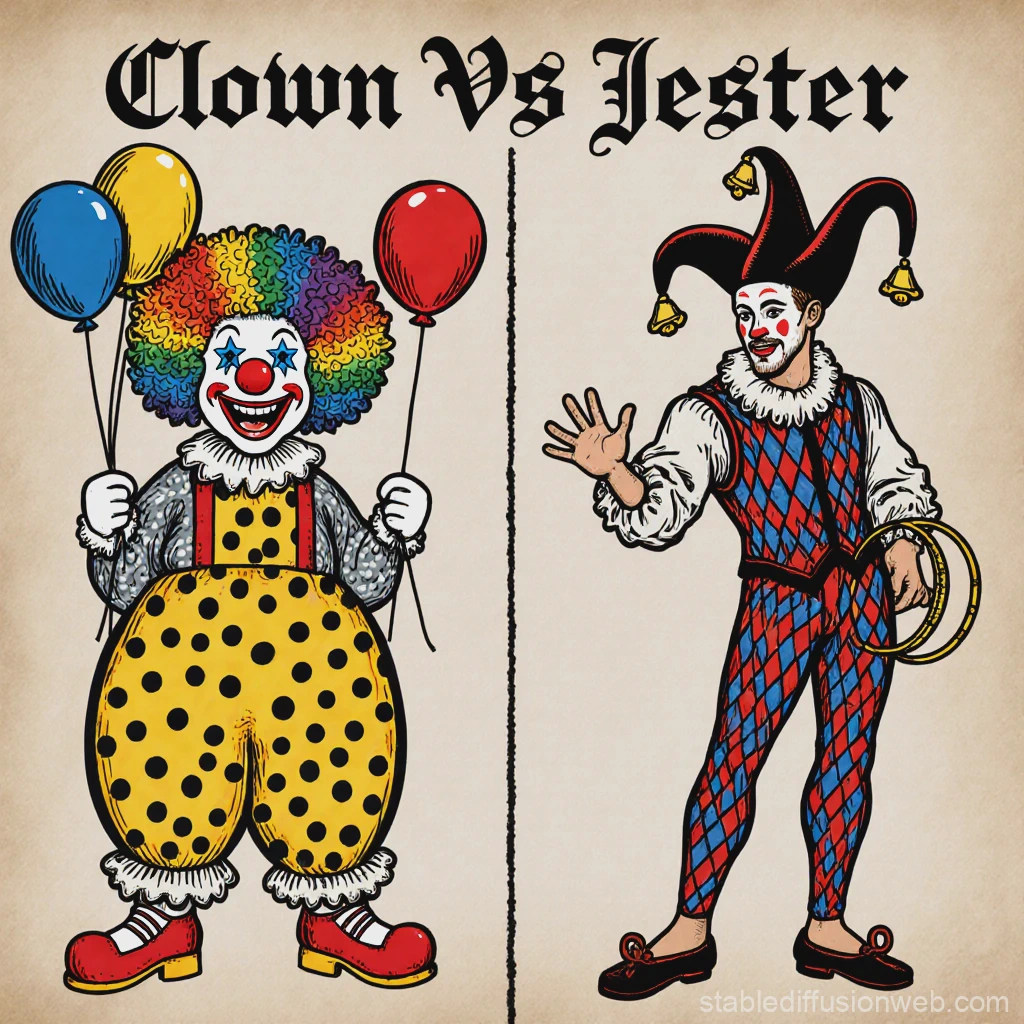
- Color: Usually features bright and vivid colors like red, yellow, and blue, with strong color contrasts to draw attention.
- Style: Often has an oversized silhouette, including baggy jumpsuits, puffy shoulders, and lantern pants. Some modern designs may incorporate asymmetric cuts, torn fabrics, or metal studs.
- Accessories: Essential accessories include a red nose, big shoes, and a wig. They may also carry props like balloons, magic wands, or big flowers.
2.2 Jester Costume
- Color: Typically uses bold colors with diamond patterns, such as a combination of red and blue.
- Style: Generally, a fitted top and pants. The hat is a distinctive three-pointed cap with bells attached, and the shoes often have curled toes.
- Accessories: May include a ruffled collar, a small tambourine, and diamond-patterned fans.
3. Function and Use
3.1 Clown Performance Costume
- Performance Occasions: Mainly seen in circus performances, birthday parties, and various children-oriented events. They are designed to bring joy and laughter to the audience, with an emphasis on creating a lively and cheerful atmosphere.
- Audience Appeal: Particularly popular among children and families. The bright colors and funny shapes of clown costumes attract the attention of children, making the performance more engaging.
3.2 Jester Costume
- Performance Occasions: More commonly used in Renaissance fairs, medieval - themed events, or historical reenactments.
- Audience Appeal: Appeals to people who have an interest in history and medieval culture. It allows them to immerse themselves in the atmosphere of the Middle Ages and experience the culture and customs of that period.
4. Cultural Connotations
4.1 Clown Performance Costume
- In modern culture, clown costumes are often associated with entertainment, joy, and playfulness. However, since the 20th century, they have also been given a darker side, symbolizing rebellion, madness, and existentialism.
4.2 Jester Costume
- Jester costumes carry the cultural connotations of the Middle Ages, representing court culture and the unique role of jesters in the court. They symbolize wit, humor, and the ability to use satire to defuse power tensions.
5. FAQ
Q: Can clown and jester costumes be interchanged?
A: While there are some similarities, they have distinct characteristics and are designed for different contexts, so they are not typically interchangeable.
Q: Are there modern interpretations of these costumes?
A: Yes, modern designers have incorporated contemporary elements into both clown and jester costumes, such as using new materials and adding modern decorative elements.
6. Conclusion
In the European market, clown performance costumes and jester costumes have clear distinctions in terms of historical origins, appearance characteristics, functions, and cultural connotations. Understanding these differences can help consumers and performers choose the appropriate costume for their needs and better present the desired image and atmosphere.