What Is a Mexican Folklore - Inspired Witch Costume? Cultural vs Stereotype Designs
Introduction
A Mexican folklore-inspired witch costume can be a captivating way to pay homage to Mexican culture. However, it's crucial to distinguish between designs that respect and celebrate the culture and those that perpetuate harmful stereotypes. This article delves into the elements of such a costume and the difference between cultural and stereotype-based interpretations.
1.erolkl Understanding Mexican Folklore
1.1 Key Witch-like Figures in Mexican Folklore
- La Llorona: One of the most well-known figures in Mexican folklore is La Llorona. She is a tragic spirit often associated with water. Her story tells of a woman who drowned her children out of jealousy or despair and now wanders rivers and streams, weeping and searching for them. A La Llorona - inspired costume might feature a long, white or light - colored gown, often tattered and wet-looking. Her hair could be long and disheveled, and she might carry a lantern or a cloth, symbolizing her eternal search.
- Brujas in Mexican Myths: Brujas, or witches, in Mexican myths are often seen as having a connection to nature and the spiritual world. They are believed to have the power to heal, curse, or influence the elements. In some regions, they are associated with the use of herbs, potions, and incantations. A general Mexican bruja costume could incorporate elements that represent her connection to nature, such as a skirt made of earth-toned fabrics with leaves or floral embroidery.
1.2 Symbolism in Mexican Folklore
- Colors: Colors play an important role. Earthy tones like brown, green, and terracotta are significant as they represent the land and nature, which are integral to Mexican folklore. Red can symbolize passion, love, or danger, while purple may be associated with spirituality. A Mexican folklore-inspired witch costume might use these colors in its fabric, accessories, or makeup.
- Patterns: Patterns such as Aztec-inspired geometric designs, floral patterns, or patterns inspired by traditional Mexican textiles like the huipil can add authenticity. These patterns can be incorporated into the costume through embroidery, prints, or as part of accessories like scarves or shawls.
2. Cultural - Inspired Designs
2.1 Respectful Use of Traditional Elements
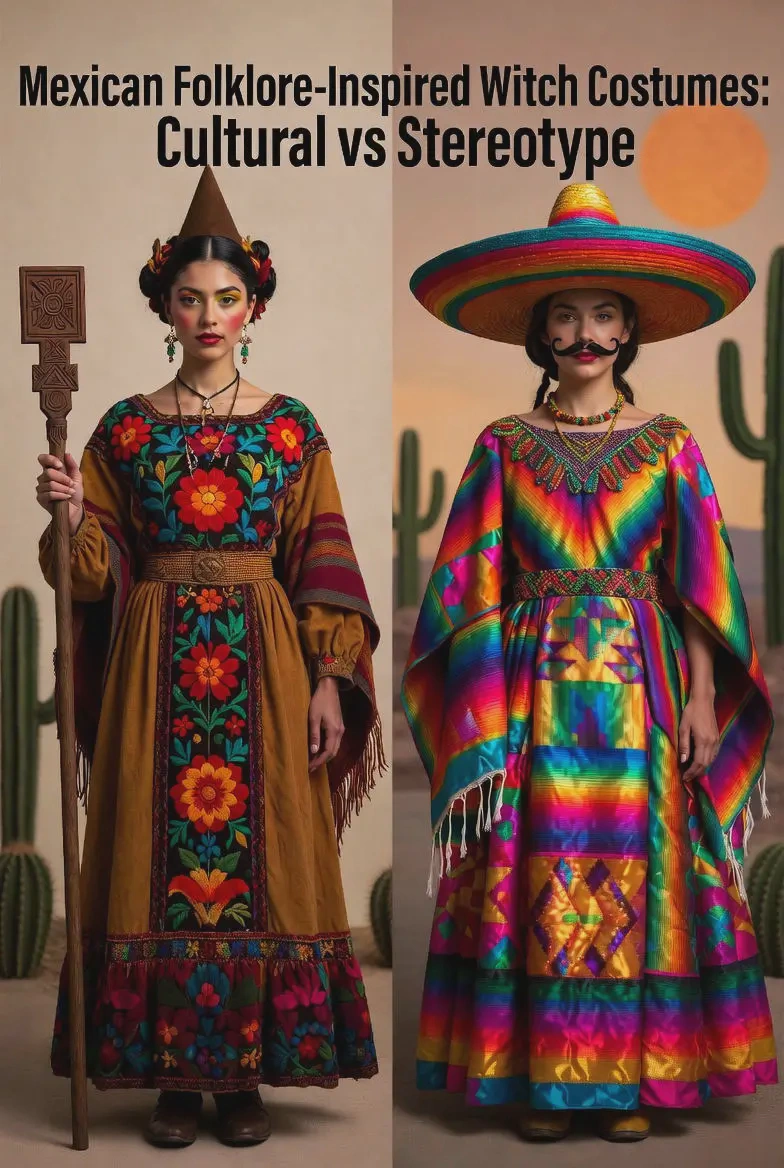
- Costume Construction: A culturally-inspired Mexican folklore-inspired witch costume would be constructed using traditional Mexican fabrics or those that mimic their texture and appearance. For example, using a rebozo, a traditional Mexican shawl, as part of the costume can add an authentic touch. The design of the dress or robe might follow traditional Mexican clothing styles, like a loose-fitting, flowing garment with a high-neck or a ruffled hem.
- Accurate Representation of Symbols: The symbols used in the costume would be accurately represented. If using an Aztec-inspired pattern, it would be used in a way that respects its original meaning. Accessories like a traditional Mexican-style amulet or a hand-carved wooden staff with symbols of protection would be used to enhance the cultural significance of the costume.
2.2 Incorporating Modern Interpretations
- Modern Fabrics with Traditional Aesthetics: While respecting traditional elements, modern fabrics can be used to make the costume more comfortable and accessible. For example, a synthetic fabric with a print that mimics the look of a traditional Mexican textile can be used. However, care is taken to ensure that the overall aesthetic remains true to the cultural inspiration.
- Inclusive Design: Culturally-inspired designs also take into account the diversity of Mexican culture. The costume can be designed to be inclusive, allowing people of different body types, genders, and backgrounds to wear it while still maintaining its cultural integrity.
3. Stereotype-Based Designs
3.1 Over-Simplification and Exaggeration
- Caricature-like Representations: Stereotype-based designs often reduce Mexican folklore to a set of clichéd elements. For example, a witch costume might be designed with an over - the - top, brightly colored sombrero, a serape that is used more as a prop than a meaningful part of the costume, and a large, fake mustache, creating a caricature of Mexican people rather than a respectful representation of the folklore.
- Misuse of Symbols: Symbols are often misused or used out of context. An Aztec-inspired pattern might be slapped on a cheap, poorly made costume without any understanding of its significance. The result is a costume that not only disrespects the culture but also perpetuates harmful stereotypes.
3.2 Lack of Cultural Understanding
- Ignoring the Cultural Context: Stereotype-based designs usually ignore the rich cultural context of Mexican folklore. They may not consider the tragic or spiritual aspects of figures like La Llorona and instead turn her into a one-dimensional, spooky character. The focus is often on creating a "scary" or "funny" costume rather than on understanding and respecting the cultural roots.
- Cultural Appropriation: These designs can also be a form of cultural appropriation. When elements of Mexican culture are used without permission or understanding, it can be offensive to the Mexican community. For example, using traditional Mexican religious symbols in a costume disrespectfully or inappropriately is a clear case of cultural appropriation.
4. Conclusion
4.1 The Importance of Cultural Respect
When creating or choosing a Mexican folklore-inspired witch costume, it's essential to prioritize cultural respect. Understanding the rich tapestry of Mexican folklore, using elements accurately, and avoiding stereotypes are key.
4.2 Celebrating Diversity Through Costume
A well - designed, culturally - inspired costume can be a powerful way to celebrate Mexican culture, its diversity, and its deep - rooted traditions, rather than perpetuating harmful stereotypes.