Mexican Folklore - Inspired Witch Costumes: Distinguishing Cultural Representations from Stereotypes
Introduction
Mexican folklore is rich with diverse and captivating elements that have inspired various forms of art, including costume design. A Mexican folklore-inspired witch costume can be a unique and culturally rich choice. However, it's crucial to distinguish between designs that honor the culture and those that perpetuate stereotypes. This article will explore the essence of such costumes, the cultural elements involved, and how to avoid falling into the trap of stereotypes.
1. Uerolklonderstanding Mexican Folklore
1.1 Mythical Figures and Witch-like Entities
- La Llorona: One of the most well-known figures in Mexican folklore is La Llorona, the “Weeping Woman.” Her story tells of a woman who drowned her children and now wanders rivers and streams, crying and searching for them. A La Llorona - inspired witch costume might feature a long, white, flowing dress, often tattered or wet-looking, to represent her tragic story. Her hair could be disheveled, and she might carry a lantern or a child-sized doll.
- Curanderas and Brujas: In Mexican culture, curanderas are traditional healers who use natural remedies and spiritual practices to cure illnesses. Brujas, on the other hand, are often seen as witches with more malevolent intent. A costume inspired by these figures might incorporate elements like a shawl or rebozo, which is a traditional Mexican shawl, in earthy tones like brown or black. They could also include a collection of herbs, a mortar and pestle for grinding herbs, or a small altar-like box with religious or magical items.
1.2 Symbolism in Mexican Folklore
- Colors: Colors play a significant role in Mexican folklore. Red symbolizes love, passion, and danger, while green represents nature, growth, and hope. Black is often associated with mystery and the supernatural. A Mexican folklore - inspired witch costume could use these colors strategically. For example, a black dress with red accents or a green shawl could convey a sense of the magical and the cultural.
- Patterns: Traditional Mexican patterns like the zig - zag “rayado” pattern, which is believed to ward off evil, or the floral - inspired “paisley” - like designs can be incorporated into the costume. These patterns can be on the fabric of the dress, a headscarf, or even on a small satchel that the witch might carry.
2. Cultural Designs: Honoring the Heritage
2.1 Incorporating Traditional Garments
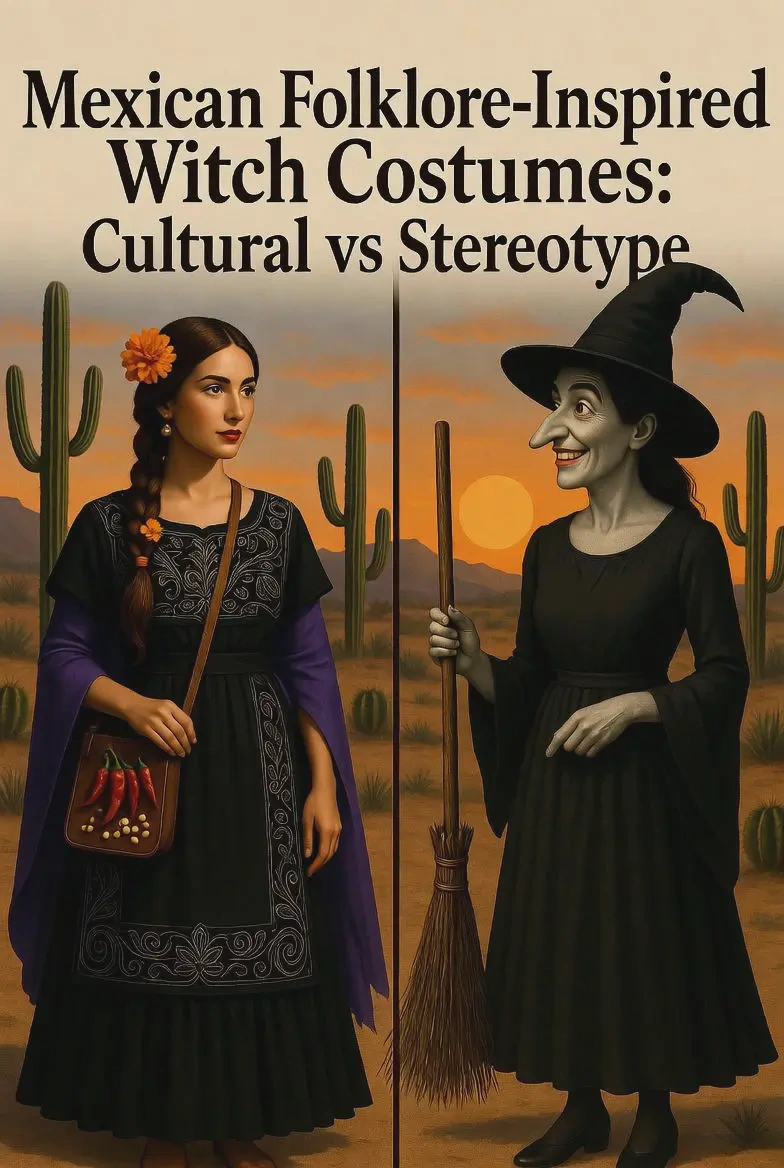
- Huipil: The huipil is a traditional Mexican blouse, often hand - embroidered with intricate designs. A witch costume could be based on a huipil, perhaps in a darker color like black or deep purple to give it a more witchy feel. The embroidery could be in silver or gold thread, adding a touch of magic.
- Quechquémitl: This is a short, rectangular shawl that can be draped over the shoulders. A quechquémitl in a rich, velvety fabric with traditional Mexican motifs can be a beautiful addition to a witch costume. It can be used to cover the upper body, adding an air of mystery.
2.2 Using Authentic Artifacts and Accessories
- Ofrenda Items: An ofrenda is an altar used during the Day of the Dead celebrations. Small items from an ofrenda, like marigold flowers (which are associated with death and the afterlife in Mexican culture), sugar skulls, or candles, can be incorporated into the costume. A witch could carry a small, hand - made sugar skull or wear a marigold flower crown.
- Amulets and Talismans: Mexican folklore is filled with amulets and talismans believed to have protective or magical powers. A costume could include a small bag filled with items like dried chili peppers (which are thought to ward off evil spirits), seeds, or small stones. The bag could be attached to a belt or carried as a purse.
3. Stereotype Designs: What to Avoid
3.1 Over - Simplification and Exaggeration
- One - Dimensional Characters: Avoid creating a witch costume that portrays a one - dimensional, overly - evil or comical character. For example, a costume that simply consists of a black dress, a pointy hat, and a broomstick without any cultural context is a stereotype. It reduces the rich Mexican folklore to a basic and often misinterpreted idea of a witch.
- Exaggerated Features: Stay away from exaggerating features like making the nose overly large, the teeth crooked and yellow, or the eyes bulging. These exaggerated physical features are often part of negative stereotypes and do not respect the cultural significance of Mexican folklore.
3.2 Misappropriation of Cultural Symbols
- Random Use of Symbols: Do not use cultural symbols randomly without understanding their meaning. For instance, using the image of the Virgin of Guadalupe in a disrespectful or inappropriate way in a witch costume is a form of misappropriation. The Virgin of Guadalupe is a highly revered religious figure in Mexican culture, and any use of her image should be done with great care and respect.
- Commercializing without Understanding: Avoid costumes that are mass-produced with cultural symbols slapped on without any real understanding of their significance. These types of costumes often perpetuate stereotypes and do not contribute to the appreciation of Mexican folklore.
4. Conclusion
4.1 Creating a Respectful and Cultural Costume
A Mexican folklore-inspired witch costume has the potential to be a beautiful and meaningful representation of Mexican culture. By understanding the cultural elements, incorporating traditional garments and authentic artifacts, and avoiding stereotypes and misappropriation, one can create a costume that honors the rich heritage of Mexican folklore.
4.2 Promoting Cultural Appreciation
When creating or choosing such a costume, it's important to remember that the goal should be to promote cultural appreciation rather than to exploit or misinterpret the culture. This way, the costume becomes a vehicle for sharing and learning about Mexican folklore.