Jester vs Clown: 7 Key Differences & How to Choose (Wholesale Guide)
Intnoitroduction
Both clown and court jester costumes are rich in history and symbolism within the realm of entertainment. However, when it comes to the concept of "royalty," certain elements of each costume can be examined to determine which one leans more towards a regal aesthetic. This exploration will delve into the design, historical context, and associated imagery of both costumes to make a comparison.
1. Desstnemelign Elements
1.1 Clown Performance Costume
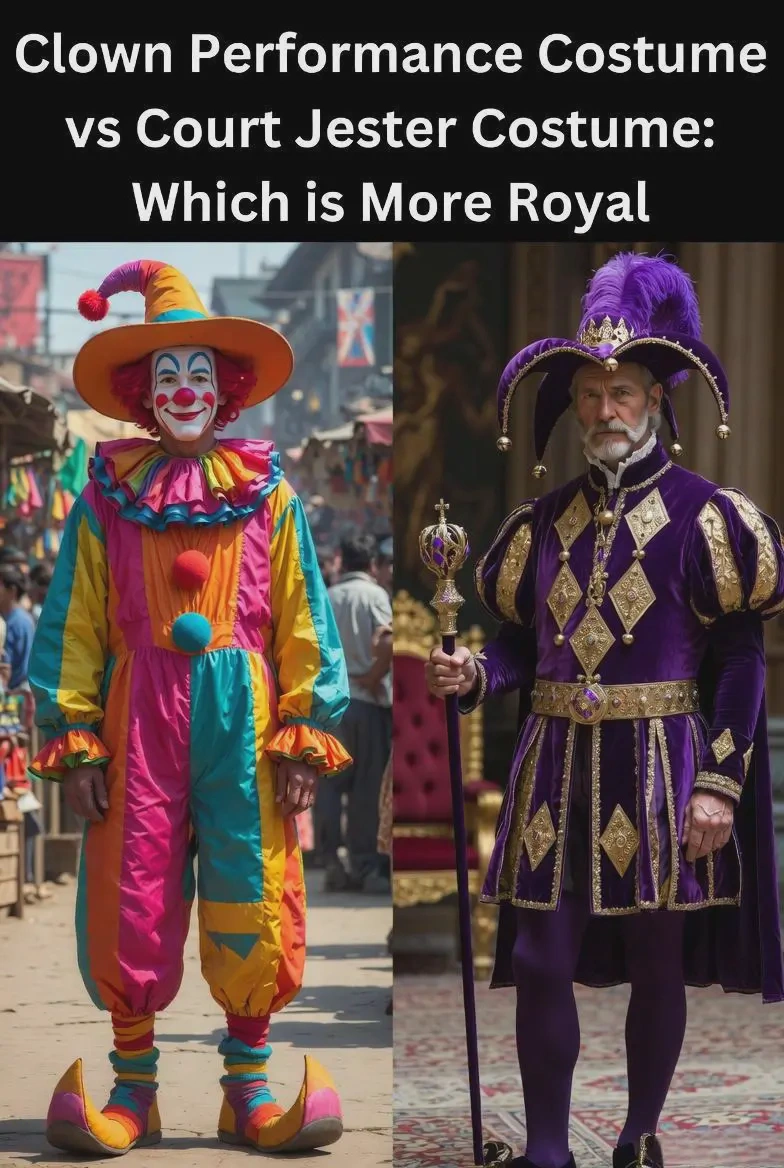
Exaggerated and Comical Features: Clown costumes typically feature exaggerated elements such as baggy pants, oversized shoes, and large-brimmed hats. These elements are designed to create a comical and light-hearted appearance. The use of bright, primary colors like red, yellow, and blue is also common, which adds to the clown's visually striking and humorous presence. For example, a classic clown costume might have a red - and - white - striped jumpsuit, huge floppy shoes, and a bright yellow hat with a big pom-pom on top. While these features are entertaining, they do not convey a sense of royalty. In fact, the over - the - top nature of the clown costume is often in contrast to the more refined and understated elegance associated with royalty.
Simple and Functional Design: The design of a clown costume is more focused on facilitating physical comedy and movement. The loose-fitting clothes allow the clown to perform acrobatic feats, pratfalls, and other comical gestures with ease. This functionality comes at the expense of a more elaborate or regal design. There is usually little in the way of intricate embroidery, fine fabrics, or other elements commonly associated with royalty.
1.2 Court Jester Costume
Playful yet Regal Patterns: Court jester costumes often incorporate patterns such as diamonds (lozenges) and stripes, which are both playful and have historical ties to nobility. The diamond pattern, in particular, was used in medieval heraldry and was associated with the upper classes. A jester's costume might be adorned with these patterns in rich colors like purple, gold, and red, which are also colors associated with royalty. For instance, a jester's tunic could be made of a purple fabric with gold - colored diamond-shaped patterns embroidered on it.
Elaborate Embellishments: Jesters' costumes are often more elaborate in terms of embellishments compared to clown costumes. They may feature bells, which not only add an auditory element to the performance but also give the costume a unique and somewhat regal touch. Additionally, some jester costumes may have decorative scepters or hats with elaborate plumes. These elements contribute to a more sophisticated and "courtly" appearance, suggesting a closer connection to the royal court.
2. Historical Context
1.1 Clown Performance Costume
Lower - Class Origins: Clowns have a long history that can be traced back to ancient times, often associated with the lower classes. They were entertainers who performed in public spaces, markets, and fairs to amuse the general populace. Their role was to provide light - hearted entertainment through comedy and physical antics. As such, their costumes were simple and practical, designed for easy movement and visibility in a variety of outdoor settings. There was no direct connection to royalty in their historical origins.
Popular Entertainment for the Masses: Clowns were not part of the formal entertainment of the royal court. Their performances were more accessible to the common people, and their costumes reflected this by being less refined and more focused on creating a broad, comical appeal.
1.2 Court Jester Costume
Association with Royal Courts: Court jesters, on the other hand, were an integral part of the royal courts in medieval and Renaissance Europe. They were employed by monarchs and nobles to provide entertainment, but their role was more than just comedic. Jesters were often allowed a certain degree of freedom to speak truth to power in a humorous way, acting as a form of court commentator. Their costumes were designed to reflect their position within the court, with elements that were both playful and respectful of the regal environment.
Status within the Royal Hierarchy: Although jesters were entertainers, they held a unique position within the royal court. Their costumes were often of higher quality and more elaborate than those of ordinary entertainers, indicating their special status. They were expected to be well - versed in courtly etiquette and to interact with the nobility on a regular basis, which further ties their costumes to the concept of royalty.
3. Associated Imagery
1.1 Clown Performance Costume
Comical and Down - to - Earth Imagery: The imagery associated with clown costumes is mainly comical and down - to - earth. Clowns are often depicted as clumsy, funny characters who bring laughter to children and adults alike. Their costumes, with their bright colors and exaggerated features, reinforce this image. There is no sense of grandeur or royalty in the way clowns are typically portrayed. Instead, they are seen as relatable figures who provide light - hearted entertainment.
Separate from Royal Symbolism: Clowns do not carry any of the traditional symbols of royalty such as crowns, scepters, or coats of arms. Their costumes are designed to be attention - grabbing in a comical way, not in a way that suggests a connection to the royal court.
1.2 Court Jester Costume
Courtly and Regal Imagery: The court jester costume is associated with the imagery of the royal court. The use of colors like purple (the color of royalty), along with the presence of bells and other decorative elements, creates an image that is closely linked to the regal environment. Jesters were often depicted in paintings and literature in the company of monarchs and nobles, further emphasizing their connection to royalty.
Symbolic Representation of the Court: The jester's costume can be seen as a symbolic representation of the court itself. The bells on the costume might symbolize the jester's role as a "ringer" of truth or a reminder of the court's activities. The patterns and colors used in the costume also reflect the hierarchical and formal nature of the royal court.
4. Conclusion
4.1 The Court Jester Costume: More Royal
Based on the design elements, historical context, and associated imagery, the court jester costume is more royal than the clown performance costume. The jester's costume incorporates regal patterns, elaborate embellishments, and has a historical association with the royal court. In contrast, the clown costume is more focused on comical and practical elements, with no direct ties to royalty.
4.2 Understanding Costume Symbolism
This comparison highlights how costumes can carry symbolic meaning and how different costumes can evoke different aspects of history and social status. Whether for a historical re - enactment, a theatrical performance, or a costume party, understanding the symbolism behind these costumes can enhance the overall experience.
Complete Your Party with Wholesale Party Supplies
Planning a costume party or themed event? Pair the outfits with factory-direct party supplies from our workshop:
Wholesale party balloons & balloon garland kits — low MOQ, OEM/ODM available
Wholesale birthday party sets for themed celebrations
Party tableware in bulk — plates, cups & napkins
Need bulk pricing or custom designs? Get a quote within 2 hours — Mon–Sat, factory direct.