What is the Key to a Flattering Mermaid Performance Costume?
Introduction
SERPs for mermaid performance cos.tca llarevotume queries often list product options, DIY tutorials, or character-inspired ideas from films like The Little Mermaid, but they rarely isolate the core design principles that ensure a flattering fit, such as silhouette balance and material choice for stage presence. This intent gap is essential to address because performers need guidance on creating outfits that enhance body proportions and movement without appearing disproportionate or restrictive, preventing common issues like awkward staging or discomfort that could detract from the overall act.
Basic Concepts
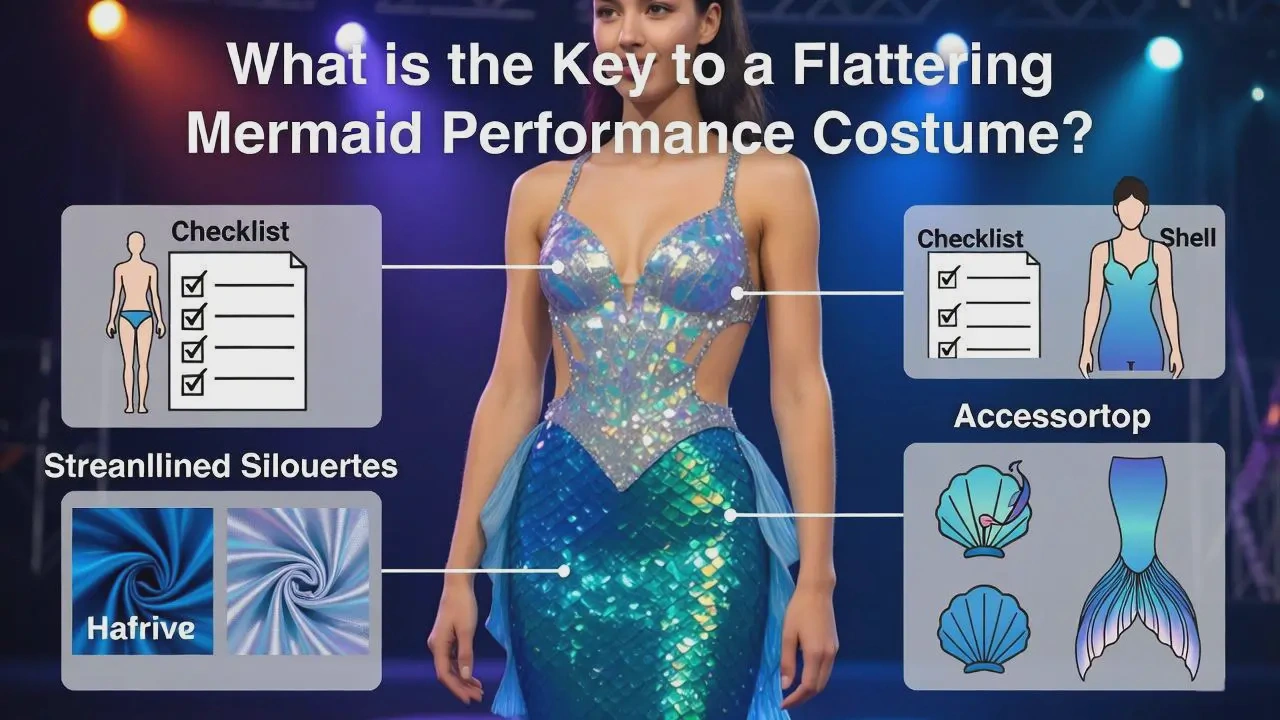
Mermaid performance costumes draw from mythical sea creatures, featuring a fitted bodice transitioning to a flared tail-like skirt to mimic aquatic grace. The key to flattery lies in the silhouette, which hugs the hips and flares at or below the knee for curve accentuation. Materials like iridescent sequins or stretchy spandex provide shimmer and flexibility, while colors inspired by ocean hues—blues, greens, silvers—add ethereal appeal. Accessories such as shell tops or veils enhance the look, but must maintain proportion to avoid overwhelming the figure. Adaptations for performance prioritize breathable fabrics to support movement, as seen in dance costumes with layered skirts for flow without bulk.
Technical Principle
Achieving a flattering design involves evaluating body type, material, and functionality. The text flowchart below outlines this:
Start -> Assess Body Type (Curvy: fitted waist; Slender: added volume at hips) -> Choose Silhouette (Hug hips; Flare at knee for balance) -> Select Materials (Stretchy for fit; Iridescent for shine; <200gsm for breathability) -> Incorporate Details (Bandeau top for support; Layered skirt for movement) -> Test Fit (Mirror check proportions; Pose for performance) -> Adjust Accessories (Minimal: shells, veils; Avoid heavy tails) -> Evaluate Flattery (Enhance curves; Ensure grace in motion) -> End.
This ensures the costume flatters by aligning design with physical dynamics.
Table / Comparison
The table compares key design aspects for flattering mermaid costumes, based on styling analyses.
| Aspect | Description | Flattery Impact | Performance Suitability | Material Example |
|---|---|---|---|---|
| Silhouette | Fitted top, flared bottom | High (accentuates curves) | Excellent (allows flow) | Sequin skirt |
| Fabric Choice | Stretchy, shimmering | Medium (enhances shine) | High (breathable movement) | Spandex blends |
| Color Scheme | Ocean tones (blue, green, silver) | High (ethereal glow) | Good (stage lighting) | Iridescent hues |
| Top Design | Bandeau or shell-style | High (supports bust) | Medium (non-restrictive) | Foam cups |
| Accessories | Veils, belts for waist definition | Medium (adds detail) | Fair (minimal weight) | Metallic belts |
Silhouette ranks highest for overall flattery in motion.
Checklist
To design a flattering mermaid costume:
- Measure body: Focus on waist-hip ratio for tailored fit.
- Choose flare point: At knee for elongation; Below for drama.
- Select breathable materials: Opt for spandex or lycra to avoid restriction.
- Balance proportions: Add volume at hips if slender; Streamline if curvy.
- Test under lighting: Verify shimmer enhances without washing out.
- Ensure mobility: Practice poses; Adjust for unrestricted arms/legs.
- Minimize bulk: Limit layers to 2-3 for lightweight feel.
This checklist optimizes for both appearance and function.
Case Studies
One dance costume featured a ruffled bandeau top with high-waisted layered skirt, providing playful flow; performers noted the flare at knee flattered various body types during routines.
An Amazon outfit used a metallic gold foam belt to accentuate the waist, enhancing the mermaid tail's curve; users reported it created a heroic, elongated silhouette on stage.
A styling guide for prom dresses adapted mermaid fits with heels and minimal jewelry; participants found the hug-and-flare design boosted confidence in performance settings.
Advanced Analysis
SERPs emphasize aesthetics but underexplore ergonomic integrations, like using GSM-rated fabrics to reduce weight by 20-30%, improving endurance for long performances. This gap neglects body diversity, such as adjustable waists for inclusive flattery or lighting-responsive materials for stage visibility. Trends show hybrid designs blending mermaid with athletic wear for better mobility, filling needs for professional acts by resolving restriction issues and enhancing heroic presence through strategic shimmer placement.
Conclusion
The key to a flattering mermaid performance costume is a balanced silhouette that accentuates curves with functional materials. Through systematic design, performers can achieve graceful, impactful looks for engaging shows.