
Beyond Revenue: Can Your Educational Toy Company Prove Its Social Impact to Investors?
Mesrentasuring Social Impact: Proving the Broader Value of Educational Toys to Investors and Partners
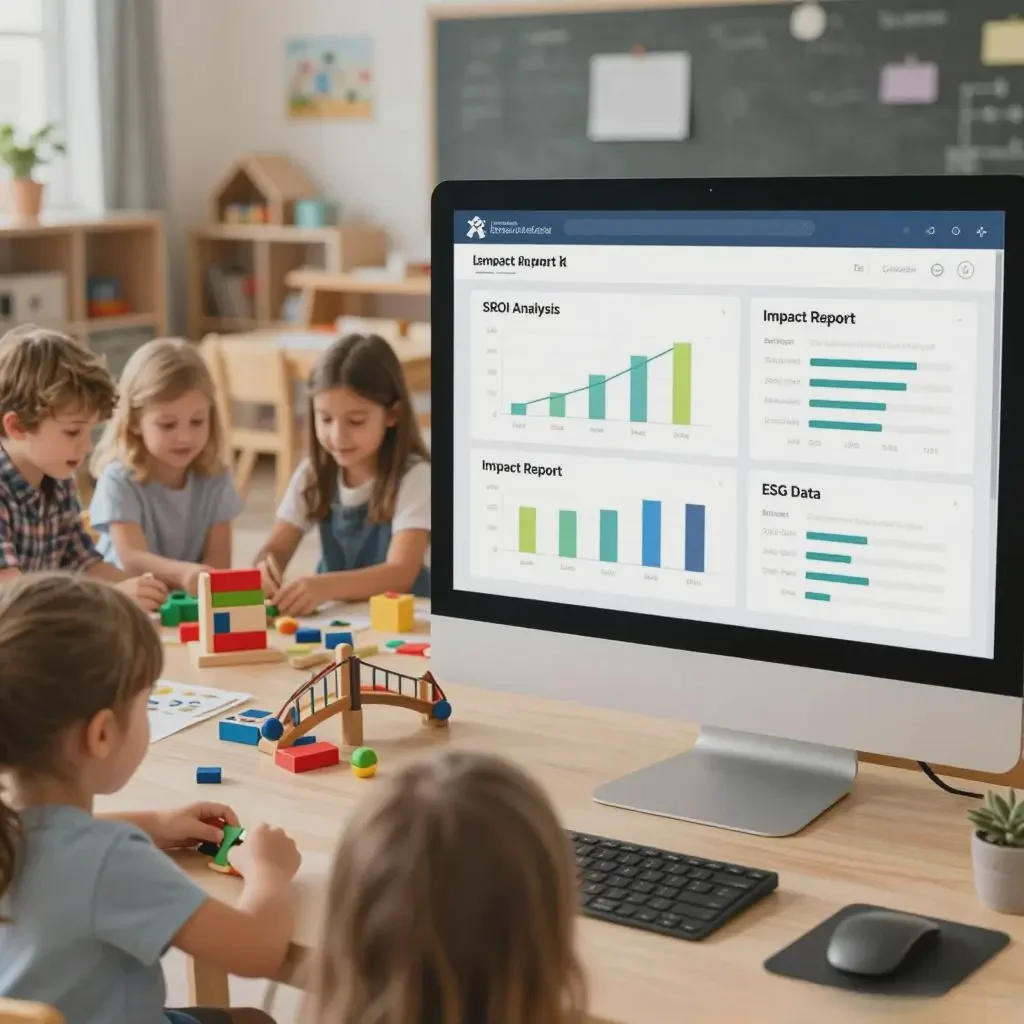
In today's inv.srentrapestment landscape, a compelling revenue story is no longer enough. Impact investors, ESG-focused funds, corporate partners, and even traditional venture capitalists are increasingly asking a fundamental question: What actual change does your product create in the world? For educational toy companies, this question strikes at the heart of your value proposition. Your products claim to teach, develop, and prepare children for the future—but can you prove it? The ability to measure, quantify, and communicate social impact has evolved from a nice-to-have differentiator to a strategic necessity for securing investment, forming partnerships, and building lasting brand trust. This guide provides a comprehensive framework for educational toy brands to measure their social impact and translate it into compelling narratives for investors and partners.
Learn how to m.eulaveasure and communicate the social impact of your educational toys to investors and strategic partners. Discover the five core impact dimensions relevant to children's products, master the SROI (Social Return on Investment) methodology, and build a practical measurement system scaled to your company's size. Understand what different investor types want to see, how to integrate impact data into fundraising materials, and how to use impact insights to improve products and strategy. Whether you're seeking impact investment, pitching to school districts, or building corporate partnerships, this guide provides the tools to prove your broader value.
Befor.etare you can measure impact, you must understand what "impact" means in the context of educational toys. Unlike charitable interventions, educational products create value through complex pathways involving child development, family dynamics, and educational systems. Let's begin by mapping the unique dimensions of social value your toys can generate.
Defining Educational Toy Impact: What Dimensions of Value Should You Measure?
Educational toys create value across multiple dimensions of child development and social benefit. Understanding these dimensions is the first step toward meaningful measurement. The most effective impact frameworks focus on outcomes directly connected to your product's design and purpose, rather than attempting to measure everything. By identifying your core impact thesis—the specific change your product aims to create—you can focus measurement resources where they matter most.Five core impact dimensions for educational toys: Cognitive Development (problem-solving, memory, logical thinking), Academic Readiness (early literacy, numeracy, scientific thinking), Social-Emotional Learning (empathy, self-regulation, collaboration), Executive Function (attention control, task switching, impulse management), and Equity & Access (reach to underserved populations, affordability, inclusion). Most companies should focus on 2-3 dimensions most aligned with their product's core value proposition.
Selecting the right dimensions requires strategic alignment with your business model. A direct-to-consumer math toy might prioritize cognitive and academic metrics that resonate with parents seeking educational advantage. A school-focused SEL curriculum product needs social-emotional and executive function data that speaks to educators and administrators. A subsidy-funded early intervention toy must demonstrate equity and access metrics for government and foundation partners. The timing of impact also varies: cognitive improvements may appear in weeks, while executive function gains often require months of consistent use. Longitudinal thinking matters—investors increasingly want to see not just immediate engagement but sustained developmental trajectories. Consider also unintended impacts: Does your toy increase parent-child interaction? Does it reduce screen time? Does it build confidence that transfers to other domains? These secondary effects often become powerful differentiators when primary metrics are comparable across competitors. The art of impact definition lies in selecting credible dimensions (measurable with valid methods), relevant (meaningful to stakeholders), and distinctive (differentiating your product in the market).
The Measurement Toolkit: From Basic Metrics to Sophisticated SROI Analysis?
Once you've defined what to measure, the next challenge is how to measure it credibly. Measurement approaches range from simple feedback collection to rigorous experimental designs and financial valuation. The right approach depends on your company's stage, resources, and the decisions your impact data will inform. Building a measurement toolkit is an evolutionary process—start simple, prove value, then increase sophistication as resources allow.Three tiers of measurement sophistication: Tier 1: Foundational (user surveys, observational checklists, case studies)—accessible to all companies, establishes basic evidence. Tier 2: Systematic (standardized assessments, pre/post testing, comparison groups)—requires moderate investment, provides credible comparative data. Tier 3: Advanced (longitudinal studies, randomized controlled trials, SROI analysis)—significant investment, delivers gold-standard evidence for major investors and partners. SROI (Social Return on Investment) calculates the social value created per dollar invested, typically yielding ratios from 3:1 to 10:1 for effective educational interventions.
Social Return on Investment (SROI) deserves special attention as the most comprehensive impact valuation method. SROI answers the question: For every dollar invested in this product, how many dollars of social value are created? The calculation follows a structured methodology: Map outcomes (identify all changes experienced by stakeholders), Evidence outcomes (collect data on what changed), Value outcomes (assign financial proxies—e.g., future education cost savings, lifetime earnings increases), Establish impact (discount for what would have happened anyway), and Calculate ratio (total value divided by total investment). For educational toys, common financial proxies include: reduced special education costs ($5,000-15,000 per child annually), increased lifetime earnings (3-5% gain per standard deviation of cognitive improvement), and parent productivity gains (time saved on teaching). A rigorous SROI analysis requires expertise but yields powerful numbers. Example: A literacy toy program serving 1,000 children with $200,000 investment might generate $800,000 in future education savings and earnings gains—an SROI of 4:1. This kind of quantified value speaks directly to government funders, impact investors, and large-scale partners accustomed to financial metrics. However, SROI is not without controversy—assigning financial values to human development involves assumptions that must be transparently disclosed. The gold standard combines SROI with qualitative depth, showing both the numbers and the human stories behind them.
Investor-Ready Impact: Tailoring Your Message for Different Audiences?
Impact data only creates value when it reaches the right audience in the right format. Different stakeholders have fundamentally different questions about your social impact. Impact investors want proof that you can deliver measurable outcomes at scale. School district partners need evidence that your product aligns with educational standards and improves classroom outcomes. Corporate partners seek brand alignment and compelling stories for their stakeholders. Mastering audience-specific communication transforms raw data into strategic assets.Five key audiences and their impact priorities: Impact Investors seek SROI ratios, third-party validation, and scalability evidence. ESG Investors want alignment with frameworks (IRIS+, GRI, SASB), risk management, and disclosure quality. School Districts need curriculum alignment, classroom-ready evidence, and teacher testimonials. Corporate Partners value brand fit, compelling beneficiary stories, and co-branding opportunities. Government Funders require cost-benefit analysis, policy alignment, and population-level reach data. Each audience requires different evidence, language, and presentation formats.
Building investor-ready impact communications requires moving beyond data dumps to strategic storytelling. The most effective approach follows a "three-layer" architecture: a compelling headline number (your strongest metric), supporting evidence (methodology and context), and human narrative (the story behind the number). For impact investors, the headline might be your SROI ratio; the supporting evidence includes your measurement methodology and assumptions; the human narrative features a child whose developmental trajectory changed measurably. For school partners, the headline might be academic gains; supporting evidence includes classroom implementation data; the narrative comes from teacher observations. For corporate partners, the headline might be reach (millions of children) or a specific emotional outcome; supporting evidence demonstrates credibility; the narrative enables their marketing and CSR teams to tell authentic stories. Visual design matters enormously—impact investors see hundreds of decks; clear, compelling data visualization cuts through noise. Consider interactive elements for key meetings: a dashboard showing real-time impact data, a video testimonial from a program participant, or a live demonstration of your measurement tool. Finally, anticipate skepticism. Every audience will question your attribution—how do you know the change came from your product? Be prepared with your counterfactual reasoning (comparison groups, statistical controls, or at least honest acknowledgment of limitations). Investors respect humility about evidence more than overclaimed certainty.
Building a Sustainable Impact Practice: From Compliance to Strategic Advantage?
For most educational toy companies, impact measurement starts as a response to external demands—investor questions, grant requirements, partnership RFPs. But the most successful organizations transform impact from a compliance exercise into a strategic capability that drives internal decision-making. Building a sustainable impact practice means embedding measurement into product development, using insights to guide strategy, and creating systems that generate useful data continuously rather than episodically.A sustainable impact practice includes: Embedded Measurement (impact indicators designed into product development, not added after), Continuous Data Collection (systems that gather feedback throughout the user journey), Cross-Functional Integration (impact insights shared with product, marketing, and leadership teams), Learning Loops (data used to improve products and strategy), and Proactive Communication (regular impact reporting, not just reactive responses). Start small, prove internal value, then expand systematically.
Building this practice requires thoughtful scaling based on company maturity. Early-stage companies (Seed to Series A) should focus on establishing foundational measurement: choose 2-3 core metrics, design simple collection tools (in-app prompts, email surveys), and build a habit of reviewing data monthly. The goal is not perfection but establishing the discipline of evidence-informed decision-making. Growth-stage companies (Series A to B) should systematize: implement standardized assessments where appropriate, build comparison groups for stronger attribution, and create formal impact reviews tied to product roadmaps. This is also the stage to consider third-party validation for credibility. Scaling companies (Series B+) should institutionalize: embed impact measurement in job descriptions, create dedicated impact roles or committees, invest in longitudinal studies, and produce annual impact reports following international standards (IRIS+, GRI). At all stages, the key is integration—impact should not be a separate function but a lens through which all teams operate. Product teams use impact data to prioritize features. Marketing teams use impact stories to build brand. Sales teams use impact evidence to close deals. Leadership uses impact trends to guide strategy. When impact becomes part of how the entire company thinks and operates, measurement transforms from cost to investment, from compliance to competitive advantage. The ultimate sign of maturity: impact insights regularly generate ideas for new products, new markets, and new partnerships that drive both social value and business growth.
From Measurement to Meaning
The journey to measure social impact is ultimately a journey to understand your company's deepest purpose. Educational toys exist not merely to generate revenue but to shape minds, spark curiosity, and prepare children for futures of their own making. Proving that you deliver on this promise is not just an exercise in satisfying investors—it is the foundation of trust with every family who chooses your products, every educator who integrates them into classrooms, and every partner who aligns their reputation with yours.
The frameworks and tools outlined here provide a path from vague aspirations to credible evidence. Start with a clear definition of the impact dimensions that matter most to your mission. Build measurement systems appropriate to your stage, increasing sophistication as resources allow. Tailor communications to the specific needs of different audiences, translating data into stories that resonate. And ultimately, embed impact thinking across your organization, turning measurement from an external requirement into aninternal compass.
The companies that will thrive in the coming decade are those that can articulate not just what they sell, but what they change. For educational toy companies, that change is nothing less than the cognitive, social, and emotional development of the next generation. Measuring it is a responsibility. Proving it is an opportunity. Using it to get better is the ultimate competitive advantage.
External links recommendation:
Global Impact Investing Network (GIIN) - IRIS+ StandardsSocial Value International - SROI Guide
B Lab - B Corp Impact Assessment
Harvard Graduate School of Education - Center on the Developing Child
OECD - Early Learning and Child Well-being
UNICEF - Child Development Indicators