
Light - Up Princess Dresses and Regular Princess Gowns: Which Offers More Safety for Kids?
Introduction
When choosing a pr.sdik rincess-themed dress for kids, parents often consider both light-up and regular princess gowns. Safety is a top priority, and understanding the differences between these two types of dresses can help make an informed decision. This article will explore various safety aspects of light-up princess dresses and regular princess gowns to determine which is safer for kids.
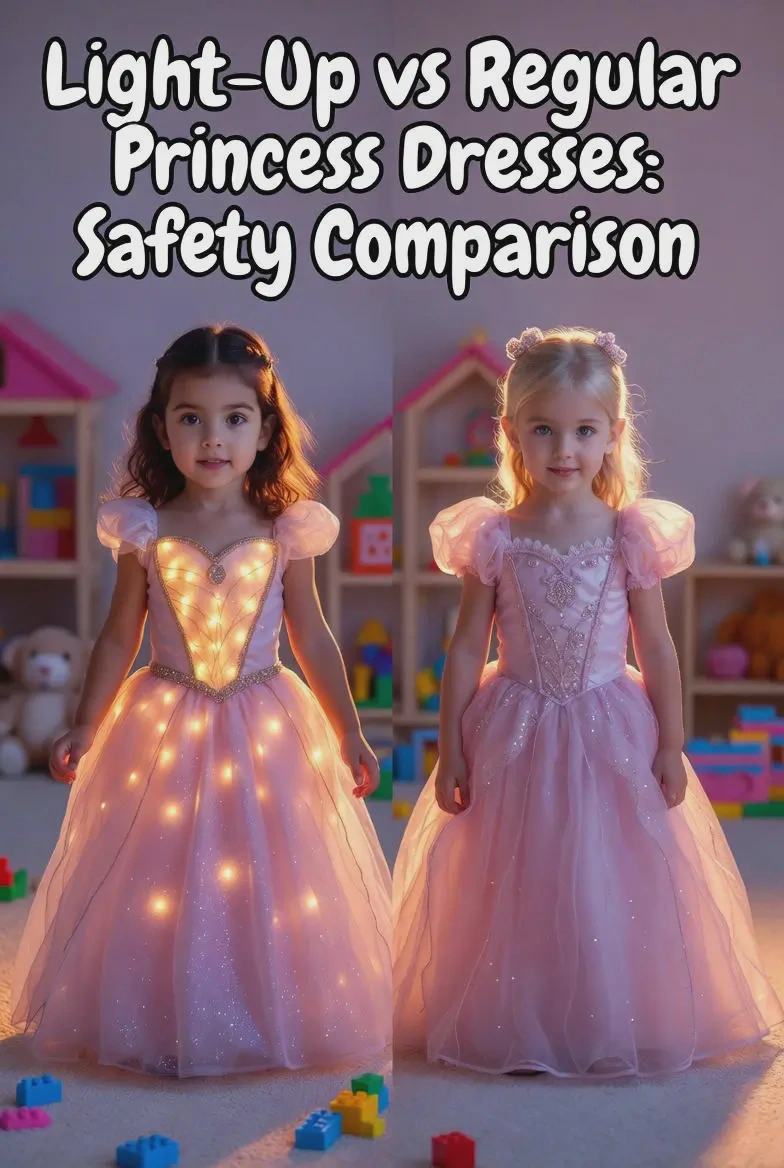
1. Electsesserrical and Battery-Related Safety in Light-Up Dresses
1.1 Risk of Electrical Shock
- Light-Up Dresses: Light-up princess dresses typically contain small batteries and electrical components to power the lights. There is a potential risk of electrical shock if the battery compartment is not properly sealed or if the wiring becomes exposed. For example, if a child manages to open the battery compartment and touches the exposed battery terminals, they could receive a mild electrical shock.
- Regular Princess Gowns: Regular princess gowns do not have any electrical components, eliminating the risk of electrical shock. They are made solely of fabric, trims, and non - non-electrical accessories, providing a completely safe option in this regard.
1.2 Battery Swallowing Hazard
- Light-Up Dresses: The small batteries used in light-up dresses pose a significant swallowing hazard. If the battery compartment is not secure and a battery comes loose, a young child may accidentally put it in their mouth and swallow it. Ingesting a battery can cause serious internal damage, including chemical burns to the esophagus and other organs.
- Regular Princess Gowns: Since regular gowns do not have batteries, there is no risk of a child swallowing a battery. This makes them a much safer choice, especially for younger children who are more likely to put small objects in their mouths.
2. Fire and Flammability Concerns
2.1 Flammability of Light-Up Dresses
- Light-Up Dresses: Some light-up princess dresses may have additional materials or components near the electrical parts that could potentially increase the risk of fire. For instance, if the fabric around the light-up area is not fire-resistant and comes into contact with a heat source from the electrical components (although rare), it could catch fire. Additionally, if there is a short circuit in the electrical system, it might generate enough heat to ignite the fabric.
- Regular Princess Gowns: Regular princess gowns are usually made of fabrics that meet standard flammability requirements. While all fabrics can catch fire under certain conditions, regular gowns do not have the added risk factors associated with electrical components. High-quality regular gowns are often made of natural or synthetic fabrics treated to be flame-retardant, reducing the likelihood of a fire starting.
3. Trip and Fall Risks
3.1 Design of Light-Up Dresses
- Light-Up Dresses: Light-up dresses may have additional wiring, batteries, or bulky components that can disrupt the natural flow of the dress. These extra elements can make the dress heavier in certain areas or create unevenness, increasing the risk of a child tripping and falling. For example, if the battery pack is located at the bottom of the dress and is not properly secured, it could cause the child to stumble.
- Regular Princess Gowns: Regular princess gowns are generally designed with a more uniform and lightweight construction. They are made to flow gracefully, and without the added bulk of electrical components, the risk of tripping due to an uneven or heavy-weighted dress is significantly lower.
4. Skin and Allergic Reactions
4.1 Materials in Light-Up Dresses
- Light-Up Dresses: The materials used in the electrical components, such as the wiring insulation or the plastic of the battery compartment, may cause skin irritation or allergic reactions in some children. Some children may be sensitive to certain plastics or chemicals used in these components, especially if they come into direct contact with the skin for an extended period.
- Regular Princess Gowns: Regular gowns are typically made of fabrics like cotton, satin, or tulle, which are known to be relatively gentle on the skin. Most high-quality regular princess gowns use hypoallergenic dyes and materials, reducing the risk of skin and allergic reactions.
5. Conclusion
5.1 Regular Princess Gowns: A Safer Option
Overall, regular princess gowns are generally safer for kids compared to light-up princess dresses. They eliminate the risks associated with electrical components, such as electrical shock, battery swallowing, and potential fire hazards. Regular gowns also have a lower risk of causing trips and falls and are less likely to cause skin and allergic reactions.
5.2 Informed Decision - Making
When choosing a princess dress for your child, it's important to consider these safety aspects. If you do opt for a light - up princess dress, ensure that it meets strict safety standards, the battery compartment is secure, and you closely monitor your child while they are wearing it.