How to Find a Comfortable Halloween Costume for Your Active, Performing Child (Without Sacrificing the Fun!)
Every parent knows the Halloween dilemma: the costume looks amazing online, but will it survive an evening of running, climbing, and enthusiastic trick-or-treating? For active kids—especially those in school parades or performances—comfort isn't a luxury; it's the difference between a magical night and a meltdown. This guide moves beyond the sparkle to help you find or create a costume that prioritizes movement, breathability, and safety, ensuring your child enjoys every moment of their starring role.
Beyond the Look: Why Comfort is King for Active Kids
The most visually stunning costume fails if it's abandoned by 7 PM. For active children, comfort directly impacts safety, endurance, and enjoyment. A restrictive costume can lead to tripping, overheating, or skin irritation, turning an exciting performance into a stressful experience. The goal is to find a balance where the costume supports the child's natural energy, allowing them to fully embody their character without physical constraints.
The Fabric First Rule: Materials That Move and Breathe
Your first touchpoint with any costume should be the fabric label. This is the most critical factor for comfort.
Prioritize These Fabrics:
Cotton and Cotton Blends: Natural, breathable, and soft against the skin. Ideal for base layers or full costumes.
Performance Knits: Stretchy polyester or nylon blends designed to wick moisture. These mimic athletic wear and offer excellent freedom of movement.
Soft Fleece: Good for cooler climates, providing warmth without the stiffness of cheap costume materials.
Avoid These Fabrics:
Stiff, Non-Woven Polyester: Often used in cheap costumes, it crackles, doesn't stretch, and traps heat.
Vinyl or Plastic Sheeting: Zero breathability, causing immediate overheating and discomfort.
Scrchy Netting or Tulle: Unless lined with a soft fabric, these can irritate skin all night.
The Fit Test: Ensuring Freedom of Movement (Without Tripping!)
A proper fit is about safety as much as comfort. Before committing, consider:
Length: Pants, skirts, and robes should be well above the ankle to prevent tripping. Consider hemming if necessary.
Sleeves: Ensure they don't extend past the wrist, especially if your child will be carrying a bag or prop.
Footwear: Never compromise on shoes. Attached costume footwear is unsafe. Plan the costume around your child's well-fitting, broken-in sneakers. A superhero's boots can often be simulated with knee-high socks over leggings.
The "Play Test": If possible, have your child try on the costume and perform basic actions: running in place, reaching for the sky, bending down to pick up imaginary candy, and sitting cross-legged.
Seams, Tags, and Linings: The Hidden Comfort Killers
The devil is in the details. Inspect the costume's construction:
Flatlock or Covered Seams: These lie flat against the skin and prevent chafing. Rough, exposed seams can become unbearable over time.
Tags: Seek out tagless labels. If present, be prepared to carefully cut them out without damaging the fabric.
Linings: Check inside masks, hats, and collars. A rough, scratchy lining will cause immediate complaints. A soft cotton or satin lining is a sign of better quality.
Embellishments: Be wary of glued-on plastic gems, rough sequins, or loose glitter that can fall off and irritate eyes and skin.
Comfort Hacks: Modifying Store-Bought Costumes for All-Night Fun
You don't have to start from scratch. Transform a store-bought costume with these simple fixes:
Use it as a Overlay: Treat the costume piece (a vest, tunic, or skirt) as a top layer. Have your child wear their own soft, fitted cotton leggings and a long-sleeved tee underneath. This provides a comfortable barrier.
Swap the Accessories: Replace an ill-fitting, vision-obstructing mask with character-specific face paint or a comfortable, well-fitted hat.
Improve the Waistband: If a costume has an elastic waist that's too tight or scratchy, consider sewing in a wider, softer piece of elastic.
Wash it First: A gentle wash with fragrance-free detergent can soften stiff fabrics and remove any chemical smells from manufacturing.
DIY Comfort: Building a Costume Around Activewear
For ultimate control, build the costume from comfortable basics. This is often easier and more effective than you think.
Start with a Base: Choose a comfortable, plain-colored sweatsuit, leotard, leggings, or dress that your child already loves to wear.
Add the Character with Accessories: Create the transformation with:
A cape made from lightweight fabric.
A belt and "tools" crafted from foam or felt.
A headband with attached ears or decorations.
Felt shapes hot-glued (with care) onto the base clothing to create logos, scales, or patterns.
Example: A black sweatsuit becomes a cat, bat, or ninja base. Add a colorful tee and tights to become a superhero. This method guarantees breathability and movement.
The Final Check: The Pre-Halloween Comfort and Safety Run-Through
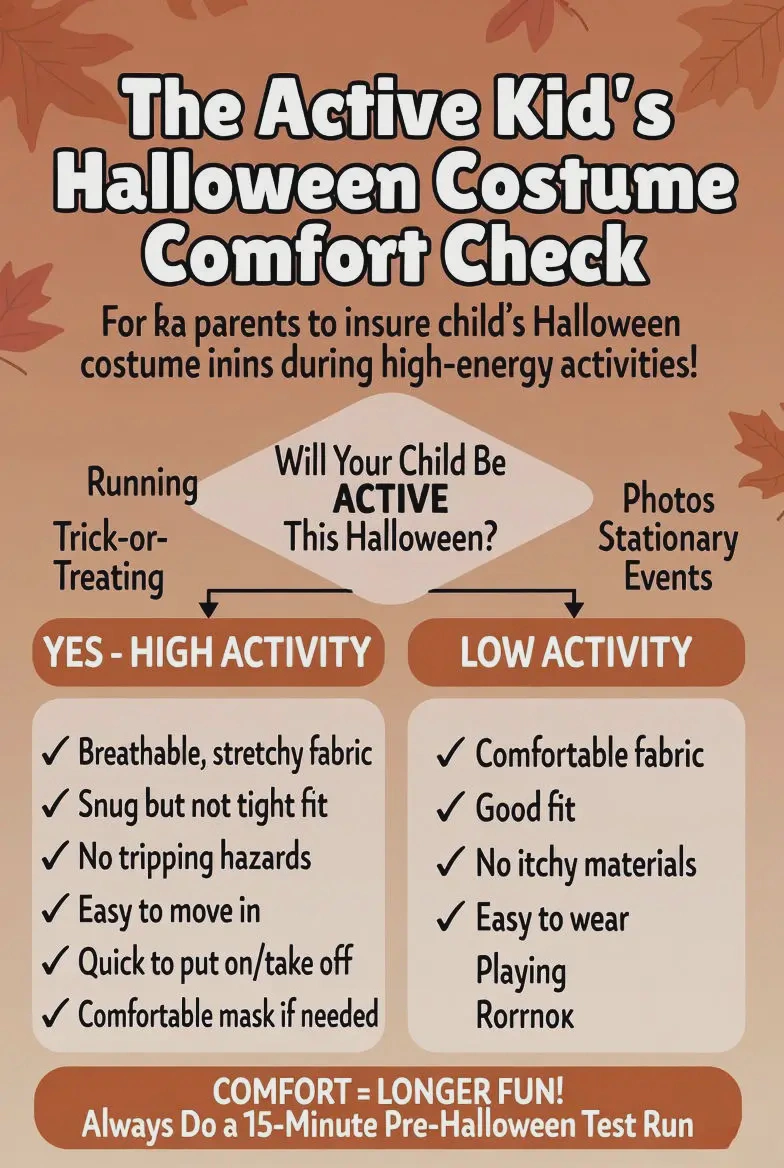
Never let Halloween night be the first full dress rehearsal. 1-2 days before, conduct a comprehensive test:
Have your child put on the entire costume, including the shoes they will wear.
Set a timer for 15-20 minutes and have them engage in normal play indoors.
Observe: Are they scratching? Can they move easily? Does anything sag or drag? Is their vision clear?
Make final adjustments: Trim, hem, line, or pad any problematic areas.
This crucial step identifies issues while there's still time to fix them, ensuring a confident and comfortable performance.
Customer FAQ: Your Active Kid's Costume Questions Answered
Q1: What are the absolute best fabrics to look for in an active child's costume?
A1: Prioritize natural, breathable fabrics like cotton or cotton blends, and performance synthetics like polyester moisture-wicking knits (similar to athletic wear). Avoid cheap, stiff polyester, vinyl, or plastic sheeting that doesn't "give" and traps heat. Look for costumes described as "soft," "stretch," or "breathable."
Q2: How should a Halloween costume fit an active child to be both safe and comfortable?
A2: Think "play clothes" fit, not "formal wear." The costume should allow for full range of motion—crouching, running, and reaching overhead. Pants/leggings should be at the ankle (not dragging). Sleeves shouldn't extend past the wrist. Shoes should be the child's own well-fitting sneakers; avoid bulky, attached footwear. Always do a "play test" before Halloween.
Q3: My child has sensitive skin. What specific costume details should I avoid?
A3: Be a detail detective. Avoid rough seams and scratchy tags (look for tagless labels). Steer clear of stiff linings in masks, and be wary of loose glitter or "flockling" (that fuzzy coating) that can shed and irritate skin and eyes. A strong chemical smell from the fabric can also indicate harsh dyes.
Q4: Is it better to buy a costume or make one for maximum comfort?
A4: DIY often provides superior comfort control. Store-bought costumes offer convenience; use them as a shell over comfortable base layers. DIY costumes let you start with a comfortable base (like a sweatsuit or athletic wear) and add character with accessories, guaranteeing mobility and familiarity.
Q5: What's the most important comfort and safety check to do right before trick-or-treating?
A5: Conduct a "Full Mobility Test" in full costume and shoes a day or two before. Have your child walk, run, climb stairs, check their vision, and wear it for 15-20 minutes indoors. This uncovers tripping hazards, restrictions, or irritants before the excitement begins, preventing distress on the big night.