Clown Performance Costume VS Circus-themed Costume: Which is More Authentic?
When selecting costumes for theatrical performances, events, or themed parties, the choice between a traditional clown performance costume and a broader circus-themed costume presents an interesting dilemma. Both evoke the magic of the big top, but they differ significantly in historical roots, cultural symbolism, and audience perception. This article explores the authenticity of each option, helping performers, costume designers, and enthusiasts make informed decisions based on context and artistic intent.
Historical Roots: Tracing the Lineage of Each Costume Style
Clown Costumes: A Legacy of Character and Comedy
The traditional clown costume has evolved over centuries, with roots in commedia dell'arte's zanni characters and court jesters. The modern circus clown emerged in the 19th century, popularized by figures like Joseph Grimaldi (the "father of modern clowning") and later, the iconic American hobo clown exemplified by Emmett Kelly. Authentic clown costumes are deeply tied to specific archetypes:
Whiteface Clown: Elegant, sophisticated, often the straight man in comedy duos
Auguste Clown: The classic bumbling fool with exaggerated features and mismatched clothing
Character Clowns: Hobos, tramps, or specific personas with detailed backstories
Circus-themed Costumes: Celebration of Spectacle
Circus-themed costumes encompass a broader range of influences beyond clowns alone. These may include:
Ringmaster: The authoritative center of the circus world
Acrobat/Aerialist: Emphasizing flexibility and glamour
Animal Handlers/Trainers: Often featuring elaborate vintage styling
Sideshow Performers: Embracing the unusual and mysterious
While clown costumes have specific historical lineages, circus-themed costumes draw from a wider cultural imagination of circus life throughout the 19th and 20th centuries.
Cultural Symbolism and Audience Perception
The Clown's Complex Symbolism
Authentic clown costumes carry layered meanings that have evolved dramatically in recent decades. Traditionally symbols of joy and innocence, clown imagery has acquired darker connotations in modern times—a phenomenon psychologists call "coulrophobia" (fear of clowns). This shift affects authenticity:
Positive Associations: Childhood nostalgia, classic entertainment, physical comedy
Negative Associations: Horror genres, unpredictability, hidden identities
Cultural Context: In Europe, clowning maintains stronger ties to theatrical tradition, while in America, it's more closely associated with birthday parties and circus nostalgia
Circus-themed Broader Appeal
Circus-themed costumes generally avoid the polarized reactions clowns may provoke. They instead evoke:
Nostalgia: For a romanticized "Golden Age of Circus."
Fantasy: Of a traveling world of wonders
Glamour: Associated with sequins, sparkle, and daring feats
Inclusivity: Allows for more varied interpretations and character choices
Performance Context: Where Each Costume Truly Shines
When Clown Costumes Are Most Authentic:
Traditional Circus Performances: Especially in European-style circuses
Clown-Specific Theater: Physical comedy shows, clown festivals
Historical Reenactments: Of specific clown lineages or eras
Character-Driven Productions: Where a specific clown archetype is required
When Circus-themed Costumes Are More Appropriate:
Themed Events/Parties: Where broad recognition matters
Musical Theater: For ensemble numbers evoking circus atmosphere
Modern Interpretive Performances: That reference but don't recreate traditional circus
Situations Avoiding Polarization: Where clown imagery might unsettle some audience members
Modern Authenticity: Evolution vs. Preservation
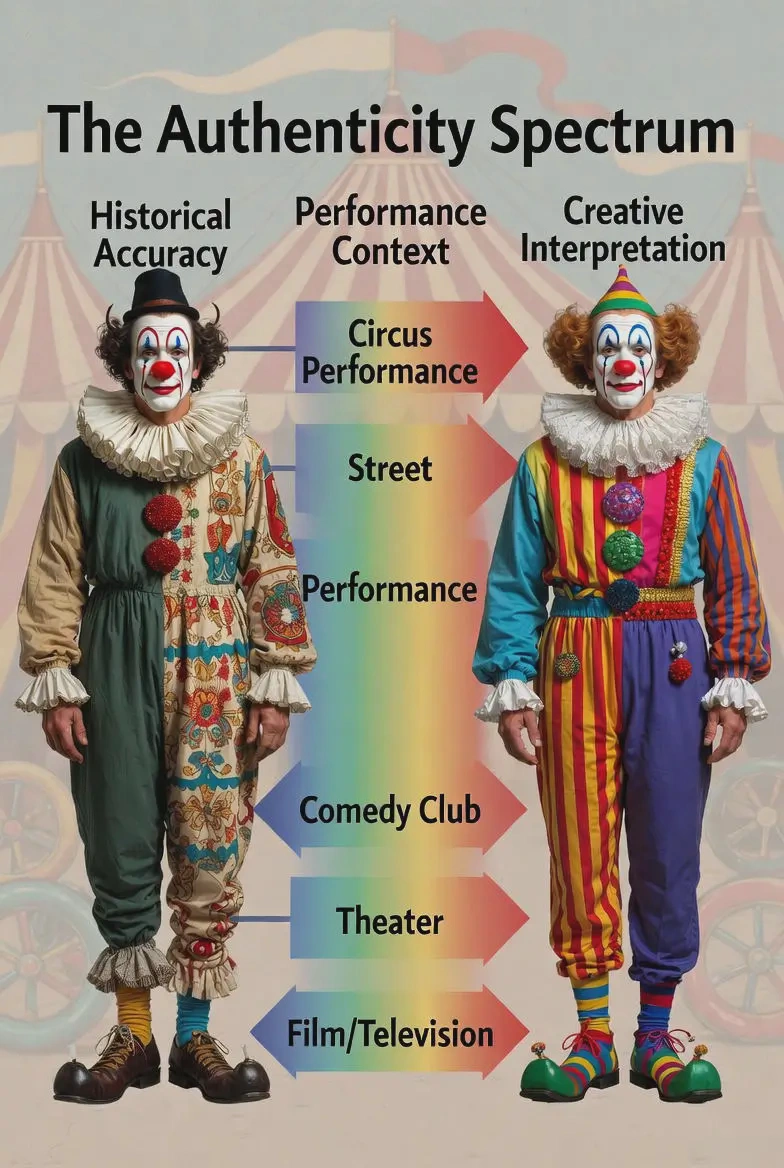
The question of authenticity intersects with contemporary debates about cultural evolution. Some purists argue that only costumes adhering to specific historical clowning traditions can be considered truly authentic. Others believe that circus culture has always evolved, making modern interpretations equally valid.
Traditionalist Perspective: Authenticity lies in meticulous attention to historical details—specific color codes (like the classic Auguste's red and green), traditional makeup patterns, and accurate accessories.
Evolutionary Perspective: Authenticity can emerge from contemporary interpretations that capture the spirit rather than the letter of circus tradition, allowing for inclusive updates and cultural relevance.
Practical Considerations for Performers and Designers
Clown Costume Requirements:
Makeup Expertise: Traditional clown makeup requires specific techniques and materials
Movement Considerations: Costumes must allow for physical comedy and exaggerated gestures
Character Consistency: Every element should support the specific clown persona
Durability: Must withstand frequent washing due to heavy makeup transfer
Circus-themed Costume Advantages:
Greater Flexibility: Can incorporate diverse elements from different circus traditions
Modern Appeal: Often more aligned with contemporary aesthetic preferences
Lower Barrier: Generally requires less specialized knowledge to execute effectively
Audience Accessibility: More immediately recognizable and less likely to provoke anxiety
The Verdict: Context Determines Authenticity
Ultimately, neither costume type is inherently more authentic. Their authenticity depends entirely on context:
For historical accuracy in recreating specific performance traditions: Well-researched clown costumes have stronger claims to authenticity
For evoking the broader spirit and spectacle of circus: Circus-themed costumes may feel more authentic to the complete big top experience
For contemporary performances: Modern interpretations of either style can be authentic if they honor the essence while speaking to current audiences