
Digital Balance Play: Can "Screen-Light" Toys Ease Parental Anxiety and Engage Kids?
Digital Balance Play: Can "Screen-Light" Toys Ease Parental Anxiety and Engage Kids?
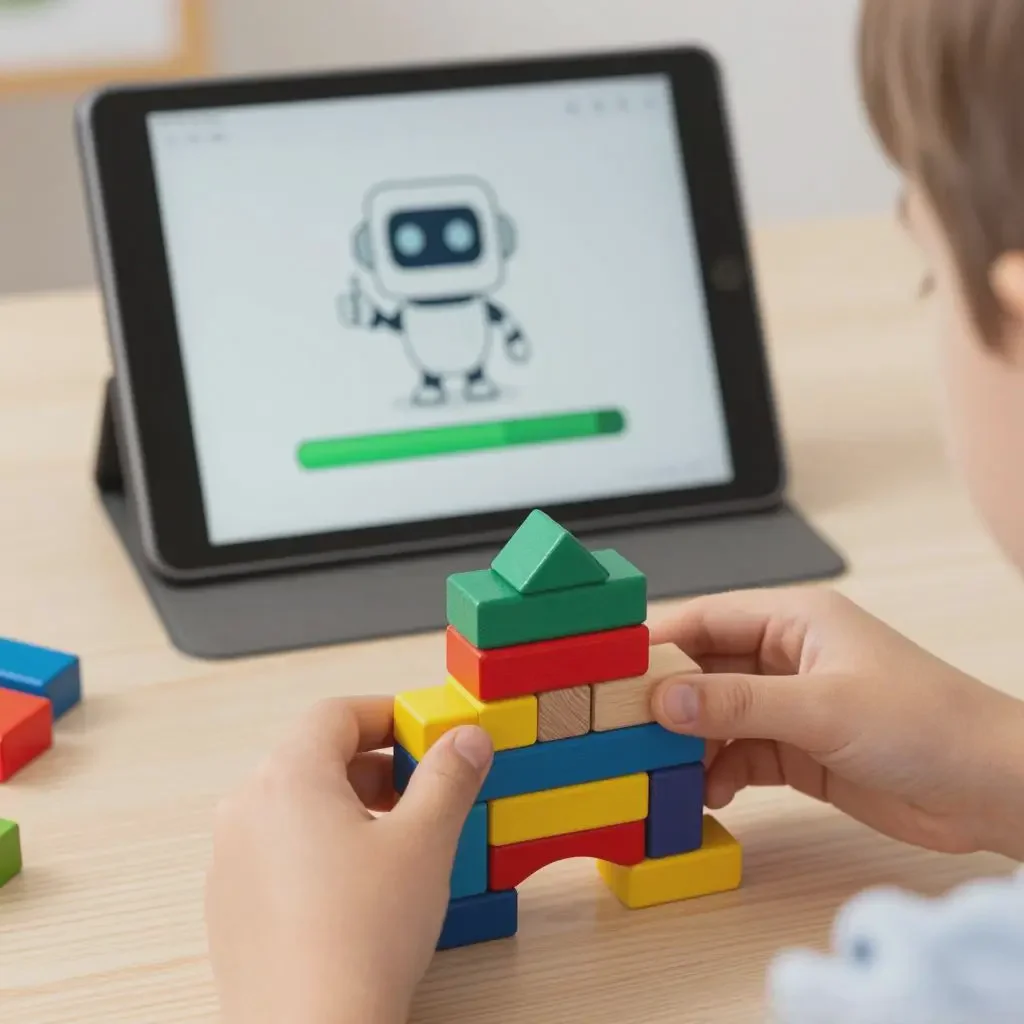
Today's parents are caught in a modern dilemma. They recognize the educational potential and cultural relevance of technology, yet they are increasingly wary of its downsides: digital fatigue, shortened attention spans, and the passive, solitary nature of much screen-based entertainment. This anxiety has created a demand for a new category of playthings—ones that don't reject technology outright, but thoughtfully integrate it to serve a higher purpose: promoting balanced, healthy, and developmentally rich play. Enter the concept of the "screen-light" toy, designed not to monopolize attention, but to bridge the digital and physical worlds wisely.
"Screen-light" toys represent a strategic middle ground. They utilize digital elements as a catalyst, enhancer, or recorder of play, but firmly anchor the core, valuable experience in the tangible, three-dimensional world. The goal is to leverage tech's engagement power to spark and deepen offline creativity, problem-solving, and social interaction, directly addressing the core concerns of digitally fatigued families.
For this emerging category to succeed, it must be built on clear design principles that genuinely prioritize the physical over the digital. Let's explore what defines a true screen-light toy and how it can transform the tech-play dynamic in your home or product lineup.
What Defines a True "Screen-Light" Toy? (It's More Than Just an App)
The term "screen-light" is not a marketing euphemism for "has an app." It describes a fundamental design philosophy where technology plays a specific, limited, and supportive role. Understanding this distinction is crucial for both designers creating these products and parents evaluating them.
A screen-light toy adheres to the "Screen as a Tool, Not a Destination" principle. The digital component acts as a launchpad, a guide, or a feedback mechanism, while the primary cognitive and physical engagement happens away from the screen with physical objects.
Contrast this with a typical educational app or video game, where the screen is the playground. A screen-light toy flips this model. For example, a puzzle adventure kit might use a tablet to present an animated story problem or show a treasure map. The child then uses physical pieces to build the solution or navigate the map. The screen sets the stage, but the play—the critical thinking, fine motor skill development, and spatial reasoning—is entirely hands-on. Another example is a digital microscope that connects to a tablet to display a magnified leaf, but then prompts the child to draw its structure on paper using the physical specimen as a reference. The technology enables a deeper exploration of the real world.
How Can a Toy Use Tech to Actually Promote "Offline" Skills?
The magic of a well-designed screen-light toy lies in its ability to use digital engagement as fuel for analog development. It doesn't just allow for offline skills; it actively incentivizes and structures them.
This is achieved through intentional design loops that follow a "Digital Spark → Physical Creation → Digital Celebration" model. Technology provides inspiration and validation, but the child's agency and creativity are expressed in the physical realm.
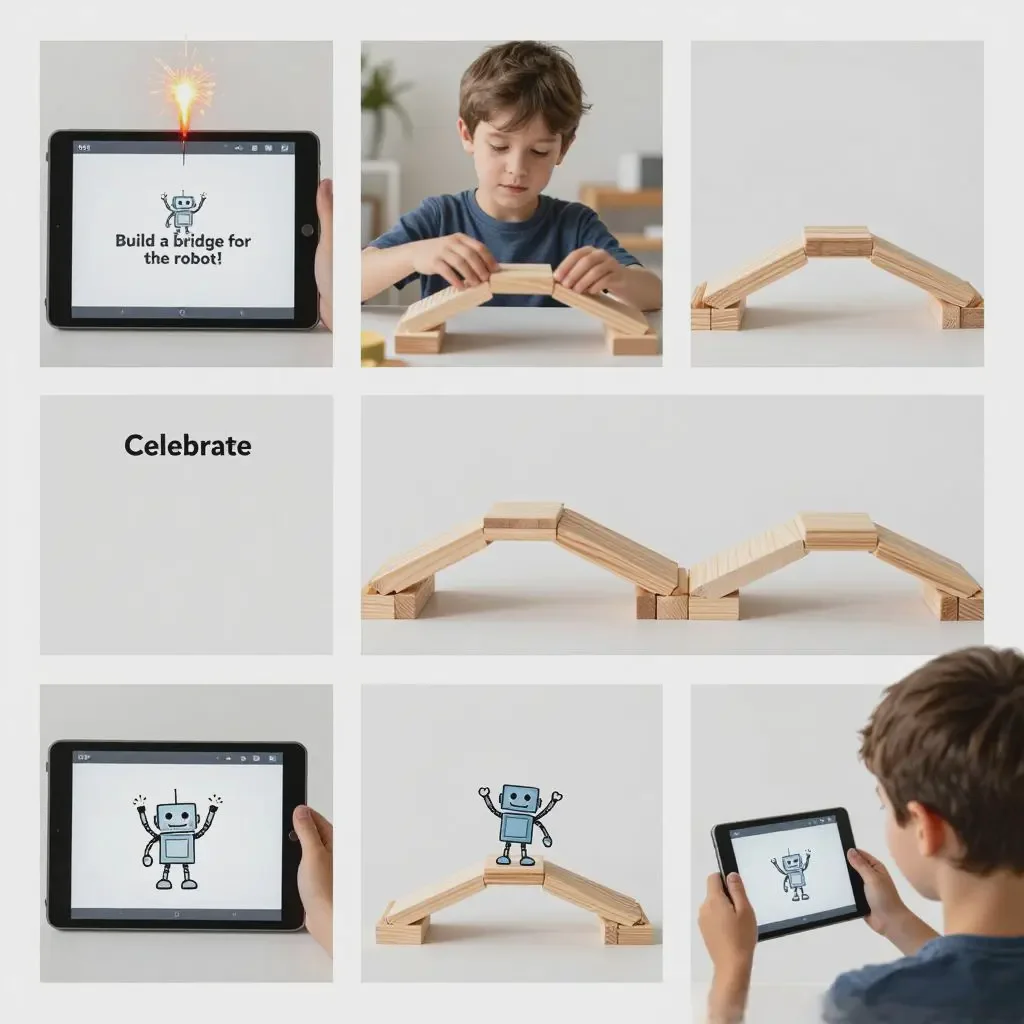
Consider a storytelling set. An app might begin a narrative with characters and a setting, then pause, saying, "What happens next? Use the toy characters and props to show us." The child then stages the next scene physically, developing narrative skills, emotional intelligence, and language. They can optionally record their performance with the device, turning it from a consumption tool into a documentation tool. This process promotes creativity, collaboration (if done with siblings or friends), and executive function far more than passively watching an algorithmically-generated story. The tech's role is to initiate, scaffold, and acknowledge, placing the child firmly in the director's chair of their own play.
What Are the Key Design Features of a Balanced, Screen-Light Experience?
Intentional philosophy must translate into tangible features. For a toy to reliably deliver a balanced experience, its design should include specific, user-centric guardrails that prevent screen dominance.
Effective screen-light toys are built around a "3C Design Framework": Clear Off-Ramps, Creative Control, and Collaborative Potential. These features ensure the technology serves the play, not the other way around.
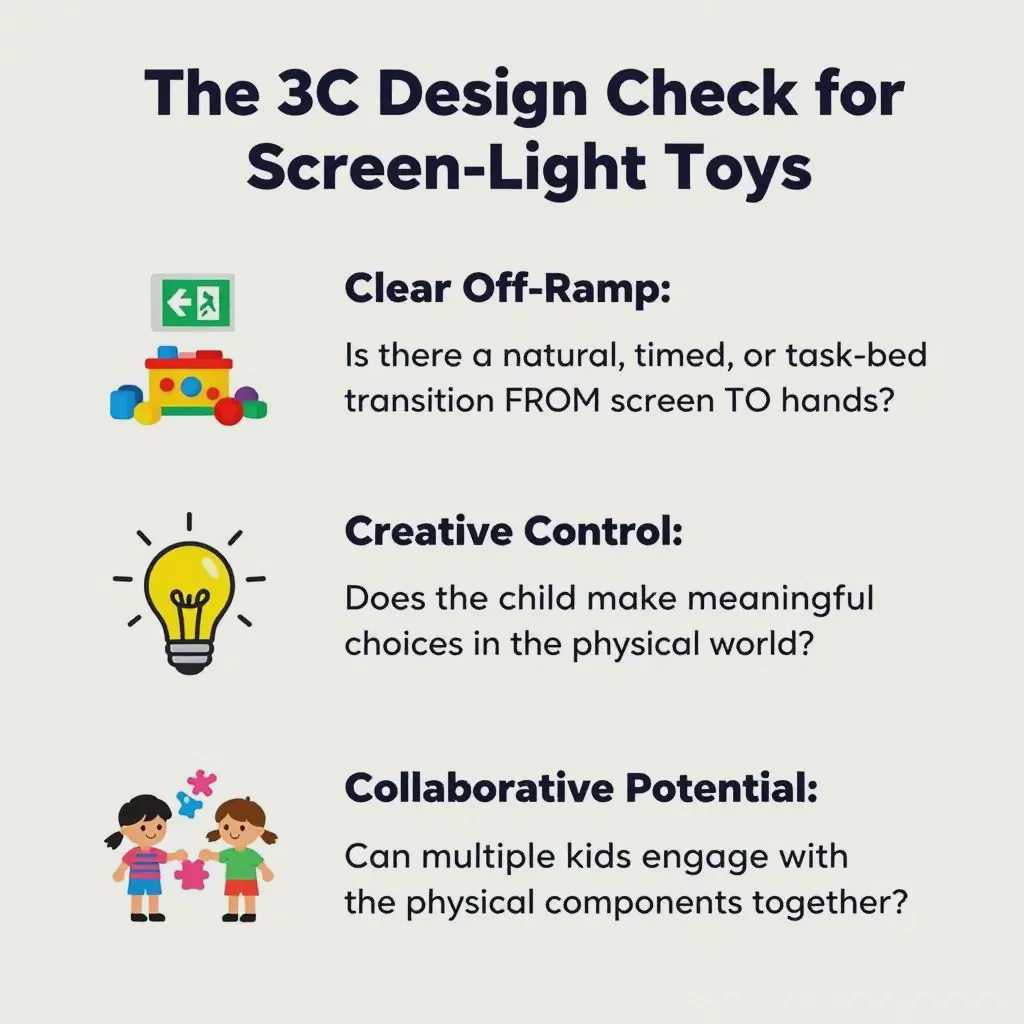
Clear Off-Ramps: The design should have built-in, natural pauses or conclusions for the screen-based portion. This could be a 2-minute instructional video, a scan-to-reveal function, or a timer that turns the screen off after setting a challenge. The key is that the digital interaction has a defined endpoint that cues the child to re-engage with the physical world.
Creative Control: The physical components must allow for open-ended exploration. If a building set only allows one "correct" build as shown on screen, it fails. Success looks like the screen suggesting a type of structure (e.g., "a tall tower"), and the child using blocks to interpret that in their own way.
Collaborative Potential: The physical toy should be designed for more than one user. Large pieces, multiple action figures, or a board game-style interface encourage social play, negotiation, and shared problem-solving, countering the isolating effect of solo screen time.
How Should These Toys Be Marketed to Anxious, Discerning Parents?
For screen-light toys to reach their intended audience, marketing must directly and empathetically address parental concerns. It’s not enough to list tech features; the messaging must reframe the role of technology in the play experience.
Successful communication focuses on "Purposeful Technology," "Enhanced Hands-On Learning," and "Promoting Balance." It positions the product as a tool for managing digital immersion, not contributing to it.
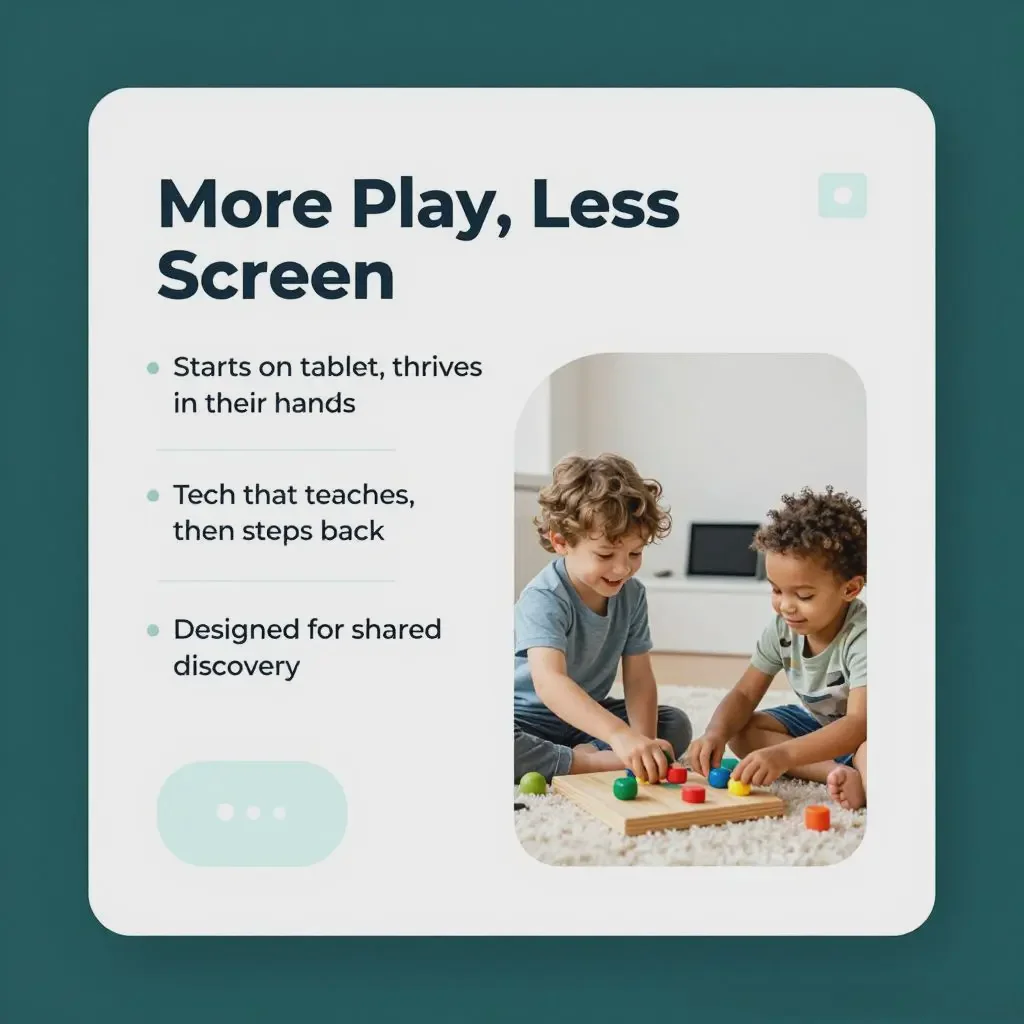
Avoid leading with "Includes a companion app!" Instead, lead with benefits: "Transforms screen time into creative time," or "Uses a minute of digital magic to launch an hour of hands-on adventure." Use language that resonates with parental values: "Fosters tangible skills," "Encourages cooperative play," "Reduces passive consumption." In visuals and videos, consistently show the child interacting with the physical toy, with the device as a secondary element. Provide clear, honest explanations of the screen's role and duration. By acknowledging parental anxiety and presenting a thoughtful solution, brands can build trust and position themselves as allies in the quest for healthier digital habits.
The Future of Play is Integrated, Not Isolated
The rise of screen-light toys signals a maturation in our relationship with technology in children's lives. It moves the conversation from simplistic "screen time vs. no screen time" debates toward a more nuanced discussion about the quality and purpose of digital interactions. The most promising future for play doesn't lie in a return to a purely analog past or a surrender to a fully digital future, but in intelligent integration.
Well-designed screen-light toys offer a compelling blueprint. They demonstrate that technology can be a springboard for creativity, a key to unlocking the physical world, and a partner in development—when it is consciously designed to be a servant to play, not its master. For parents, this means new, less guilt-ridden choices. For the toy industry, it represents a significant opportunity to innovate with empathy, creating products that meet modern families where they are: seeking balance, value, and joy in a connected world.
[External Links Recommendation]:
American Academy of Pediatrics (AAP) - Media and Children Communication Toolkit