Amazon FBA Toy Suppliers: How to Choose Reliable Partners for Private Label?
Amaz?lebaon FBA Toy Suppliers: How to Choose Reliable Partners for Private Label?
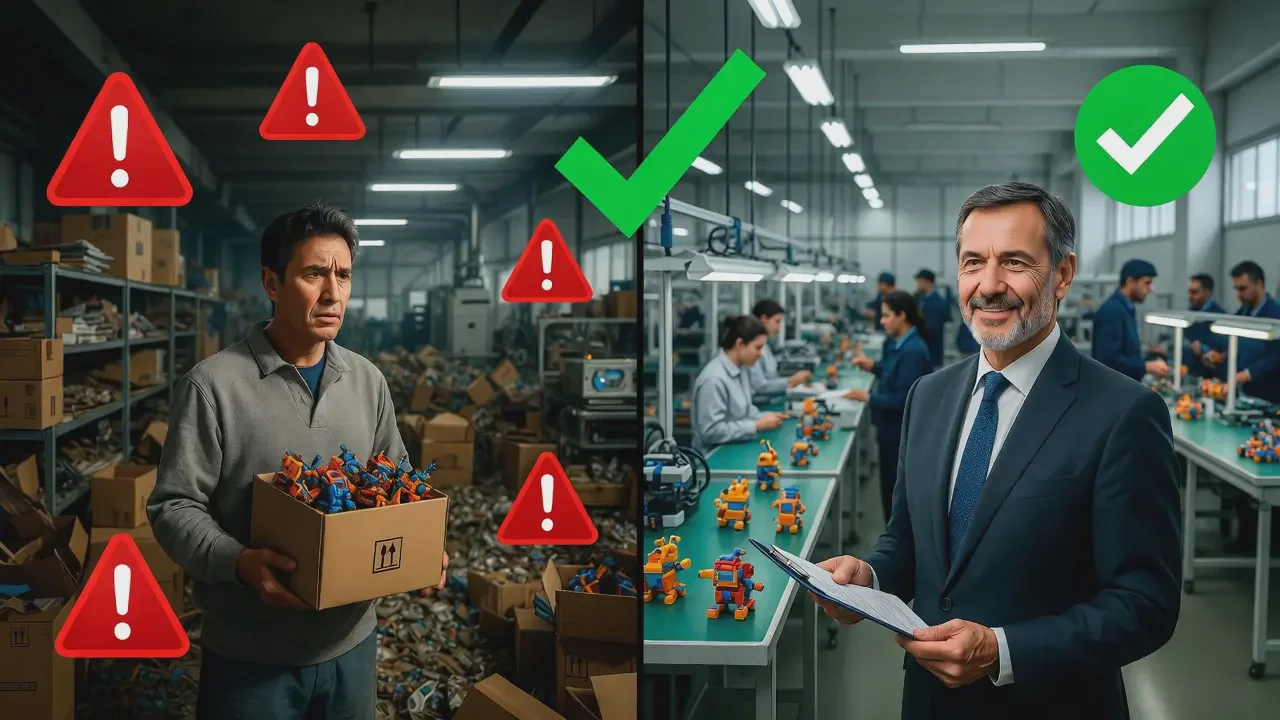
Launch?snoitisopoing a private label toy brand on Amazon FBA is an exhilarating venture, but its success or failure is determined long before your first sale—it's decided when you choose your manufacturing partner. The global supply chain is a minefield of unverified factories, quality inconsistencies, and compliance nightmares. A reliable supplier becomes the engine of your business, while a poor choice can lead to sunk costs, inventory nightmares, and even legal liability. With countless options on platforms like Alibaba and the high stakes of Amazon's strict marketplace, how do you separate trustworthy partners from risky propositions?
Choosing a reliable Amazon FBA toy supplier is a rigorous process of due diligence, not a search for the lowest price. It involves systematic vetting of factory capabilities, verifying critical safety certifications, conducting thorough sample evaluations, and establishing clear legal and quality frameworks. A true partner ensures your product is safe, compliant, and delivered consistently, protecting your brand and your investment.
This journe.llafy from inquiry to a dependable partnership requires a structured, evidence-based approach. Let's move beyond superficial checks and build a framework for selecting a supplier who will be a pillar of your brand's growth, not its downfall.
To navigate this complex landscape, we will break down the process into four critical phases: the initial sourcing and screening to build a qualified shortlist, the deep-dive capability and compliance verification, the crucial hands-on sample testing and evaluation, and finally, the negotiation and agreement that sets the stage for a successful long-term partnership.
Phase 1: The Smart Shortlist – Where and How Do You Find Potential Partners?
Your search must be strategic, moving beyond a simple keyword search on B2B platforms. Casting too wide a net leads to analysis paralysis, while casting too narrow a net risks missing qualified partners. The goal of this phase is to efficiently identify a handful of suppliers who, on paper, appear capable and legitimate.
Begin your search on established B2B marketplaces like Alibaba, Global Sources, and Made-in-China.com, but use advanced filters for "Gold Suppliers," "Trade Assurance," and "Assessed Suppliers." Simultaneously, leverage industry trade shows (Canton Fair, Spielwarenmesse) for higher-tier manufacturers and consider specialized sourcing agents with toy industry expertise to access vetted networks not available online.
When you make first contact, your communication is a test. Send a detailed RFQ (Request for Quotation) that includes your product concept, target market (USA/EU), required safety standards (ASTM F963, EN71), and target volume. Analyze their response time and quality. A reliable supplier will ask clarifying questions about materials, age grading, and packaging. Immediate red flags include: pressure for a large upfront payment, prices significantly lower than all other quotes (indicating cut corners or a bait-and-switch), vague or copy-pasted responses, and an unwillingness to provide a verifiable factory address. Use this initial interaction to filter out the unserious or deceptive operators.
Phase 2: The Compliance & Capability Deep Dive – What Separates Real Factories from Middlemen?
Once you have a shortlist, you must move from surface-level claims to verifiable evidence. Many "suppliers" are merely trading companies or agents acting as middlemen, adding cost and complexity while reducing control and transparency. Your job is to uncover the true manufacturer.
Demand and verify concrete proof of manufacturing capability and compliance. This includes third-party factory audit reports (e.g., from SGS, Bureau Veritas), valid test reports for similar toys from accredited labs, photos and videos of the production floor and warehouse (request a live video tour), and a clear explanation of their quality control process. Authenticate all documents by checking report numbers with the issuing agency.
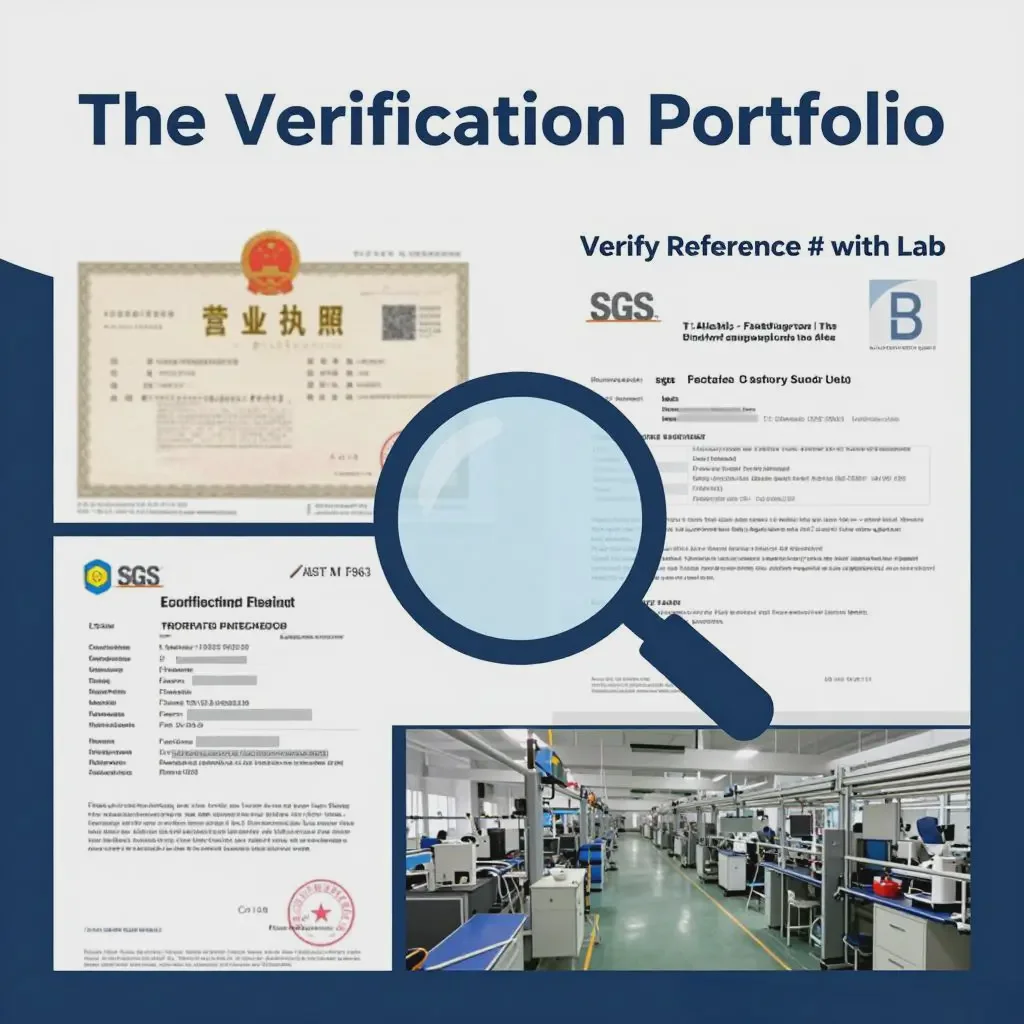
The most critical document is the product test report. For a toy sold in the US, it must comply with ASTM F963 and CPSIA. Do not accept generic "we are certified" claims. Ask for a recent test report for a toy similar to yours. Contact the lab (Intertek, SGS, TÜV) using the report number to confirm its authenticity and scope. Furthermore, inquire about their experience with Amazon's specific requirements, like FNSKU labeling and polybag suffocation warnings. A knowledgeable factory will understand these details. If they hesitate, cannot provide audits, or only show renderings instead of real production, they are likely not a true manufacturer you can trust with your brand.
Phase 3: The Sample Saga – How Do You Test Beyond "Looks Good"?
The sample is your first tangible product and the most important checkpoint before mass production. Evaluating it effectively requires moving beyond aesthetics to a rigorous, functional, and safety-focused assessment.
A sample evaluation is a destructive and experiential process. You must test for safety, durability, function, and compliance. This means physically stressing the toy, checking all materials against your specifications, verifying labeling, and, crucially, observing how the intended age group interacts with it. Never approve a sample that is merely "good enough"; it must be perfect, as mass production will only magnify any flaws.
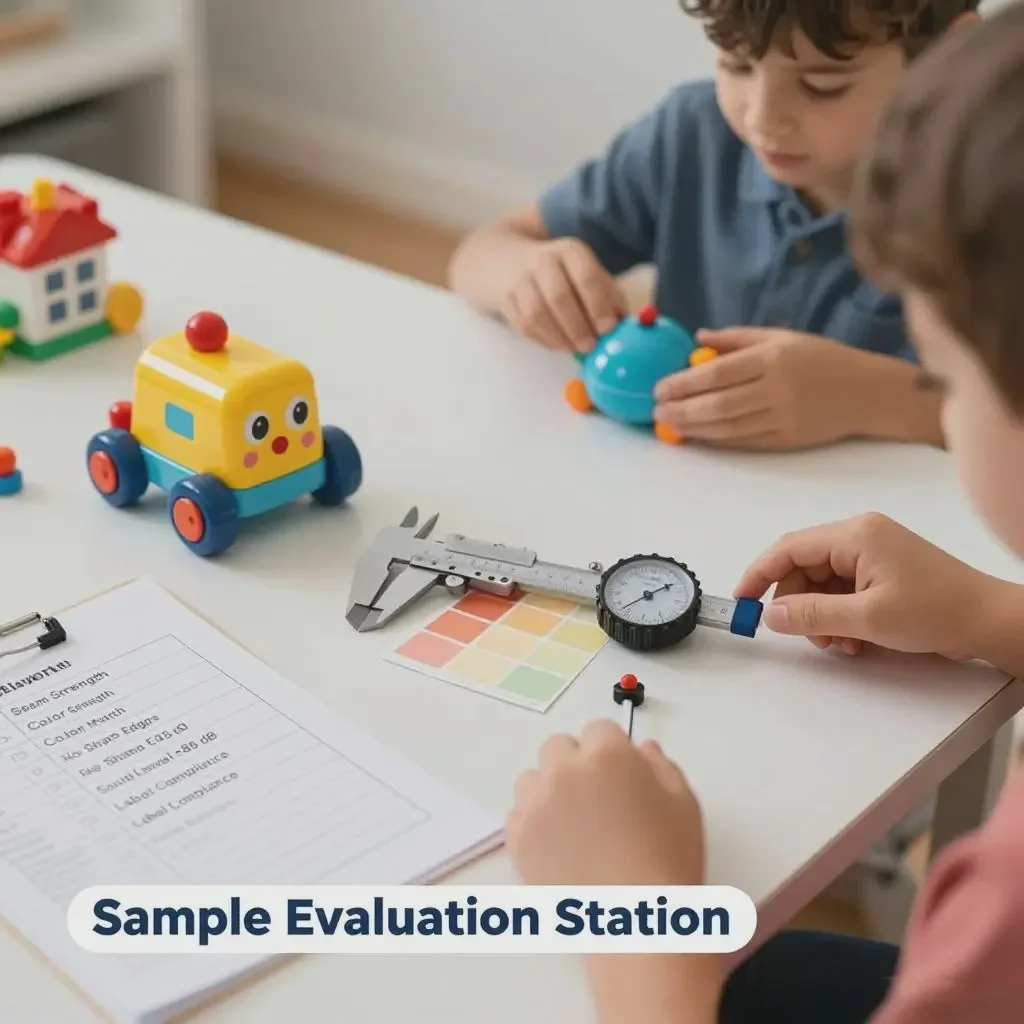
Implement the "SAMPLE" checklist:
Safety: Use a small parts cylinder tester. Check for sharp points and edges. Ensure batteries (if any) are secured.
Aesthetics: Compare colors to approved Pantone swatches or lab dips under consistent lighting. Check print alignment and quality.
Materials: Verify fabric weight, plastic type, and filler material against your Bill of Materials (BOM). Smell for strong chemical odors.
Packaging: Ensure all required warnings, age grades, and barcodes are present and correct. The packaging must be retail-ready.
Logistics: Weigh and measure the packaged product. Does it fit your planned carton for shipping?
Experience: Give it to a child in the target age group (under safe supervision) and watch. Does it engage them? Does anything break or detach easily?
Pay for the sample and its shipping. This is an investment, not a cost. Provide the factory with detailed, photographic feedback on any deviations.
Phase 4: The Partnership Framework – How Do You Negotiate Terms and Manage Risk?
Passing the sample stage means you're ready to discuss production. This phase is about establishing a fair, protective, and clear business relationship through smart negotiation and solid contracts, not just agreeing on a price.
Successful negotiation balances risk between both parties and establishes clear protocols. Focus on secure payment terms (never 100% upfront), detailed quality control agreements (AQL levels, inspection rights), ownership of tooling/molds, and a simple but binding manufacturing agreement that covers specifications, liability, and intellectual property. The goal is mutual security, not squeezing the last cent from the price.
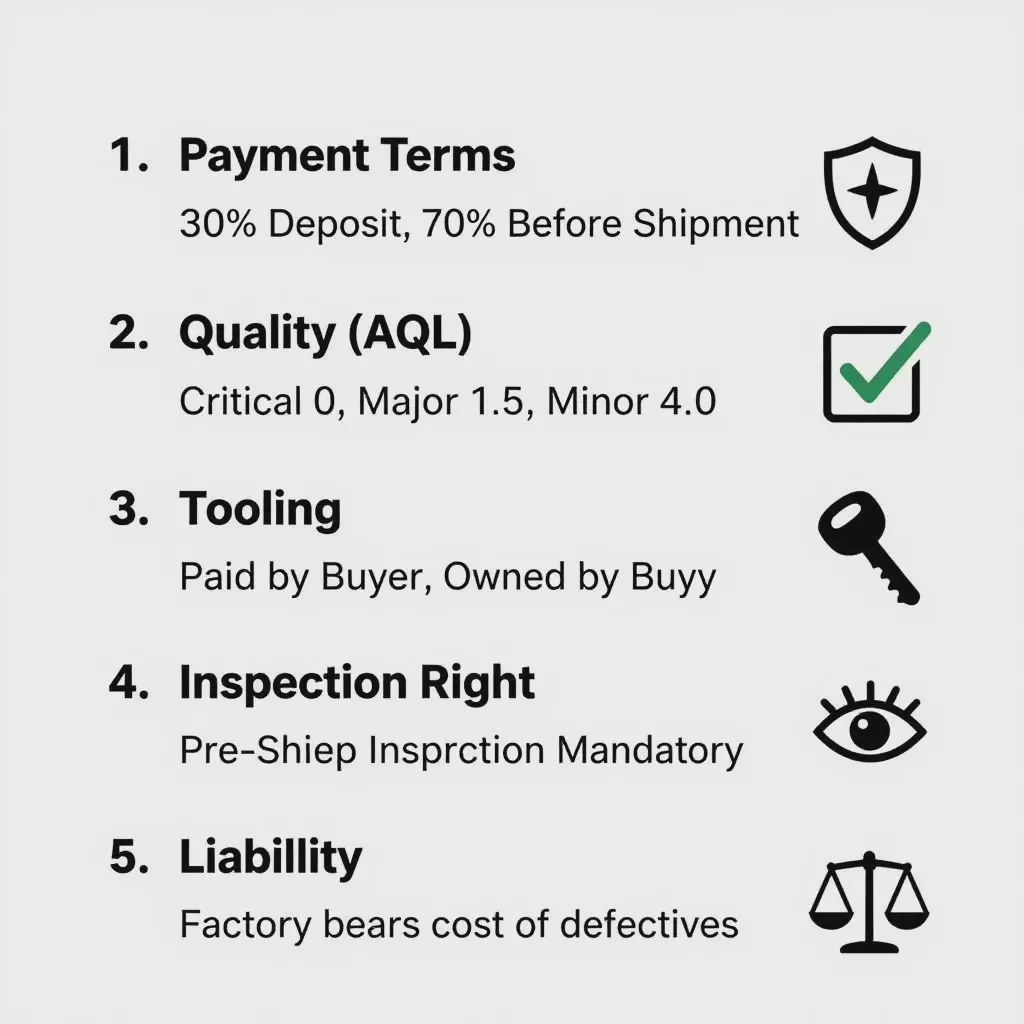
For a first order, standard payment terms are 30% deposit, 70% balance against a copy of the Bill of Lading. Use Alibaba Trade Assurance or a letter of credit for added security. Crucially, you must pay for and own the molds/tooling. This is your leverage and ensures the factory cannot produce your design for others. In your quality agreement, specify AQL (Acceptable Quality Level) standards: Critical defects (safety hazards) at 0, Major defects at 1.5, Minor at 4.0. Hire a third-party inspector for the Pre-Shipment Inspection (PSI). Finally, start with a trial order at the Minimum Order Quantity (MOQ) to test the full process before scaling. Document everything.
Conclusion
Choosing a reliable Amazon FBA toy supplier is the most critical business decision a private label seller will make. It is a deliberate, multi-stage investigation that prioritizes verification over promises, evidence over claims, and long-term partnership over short-term price savings.
By methodically building a qualified shortlist, conducting a forensic deep dive into compliance and capability, executing a ruthless sample evaluation, and establishing a protective partnership framework, you transform supplier selection from a gamble into a controlled, strategic process. This diligence builds a supply chain that is not only a source of products but a foundation for brand reputation, customer trust, and scalable growth. Your supplier should be an extension of your team—a partner invested in your success because your success ensures theirs.