The Fun Factor: When Does a "Learning Toy" Start to Feel Like Homework?
The Fun Factor: When Does a "Learning Toy" Start to Feel Like Homework?
Ev.ecnatsiser ery parent wants to give their child a head start, and the promise of "learning toys" is irresistible. But there's a fine line between playful discovery and tedious instruction. We've all seen it: the expensive STEM kit used once, the flashing quiz game that elicits a sigh instead of a smile. When does a tool designed to educate cross over into feeling like an assignment? This article explores the delicate balance between educational value and pure fun, helping you identify toys that spark joy and curiosity, not resistance.
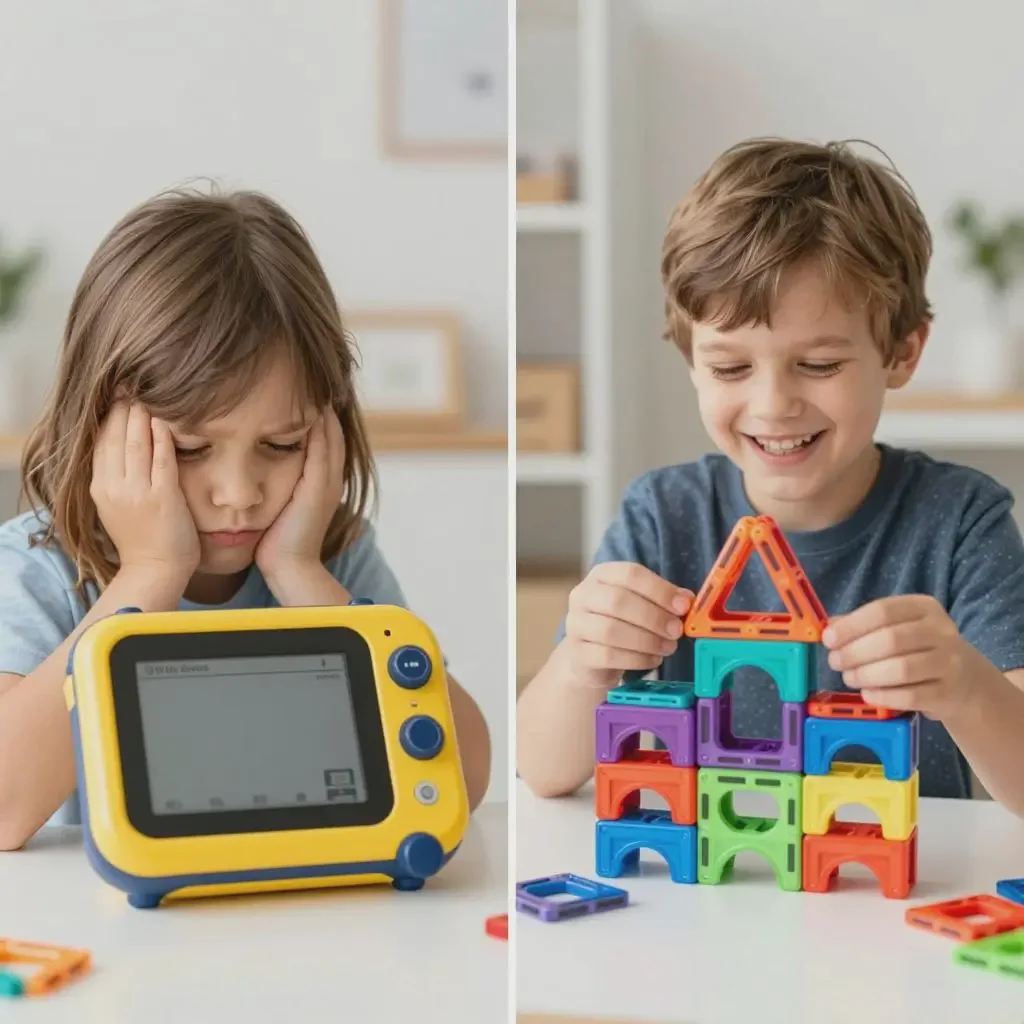
A learning toy starts to feel like homework when the educational goal overshadows the play. Warning signs include rigid rules, repetitive drills, a focus on "right answers," and a noticeable lack of child-led creativity. The best learning toys seamlessly integrate skill-building into open-ended, engaging play where the child feels in control.
To move from frustration to finding that perfect plaything, we need to understand the warning signs, the design principles that work, and how our own behavior as parents can tip the scales. Let's break down how to spot a chore disguised as a toy and how to choose tools that foster a genuine love of learning.
[TOC]
What Are the Warning Signs That Fun Has Turned into a Chore?
Sugar-Coated Learning vs. Seamless Play: What's the Difference in Design?
How Can We, as Parents, Avoid Becoming the "Homework Police" During Play?
What Does "Playful Learning" Look Like at Different Ages?
Conclusion
External Links Recommendation
What Are the Warning Signs That Fun Has Turned into a Chore?
The shift from play to work is often subtle. It's not always a full-blown tantrum; sometimes, it's a quiet disengagement. Recognizing the early red flags can help you intervene before a toy becomes permanently associated with frustration, preserving your child's intrinsic motivation to explore and learn.
Watch for decreased engagement, avoidance, increased frustration, or a rigid focus on outcomes instead of the process. These are clear signals that the toy's design or the play dynamic is prioritizing instruction over intrinsic enjoyment.
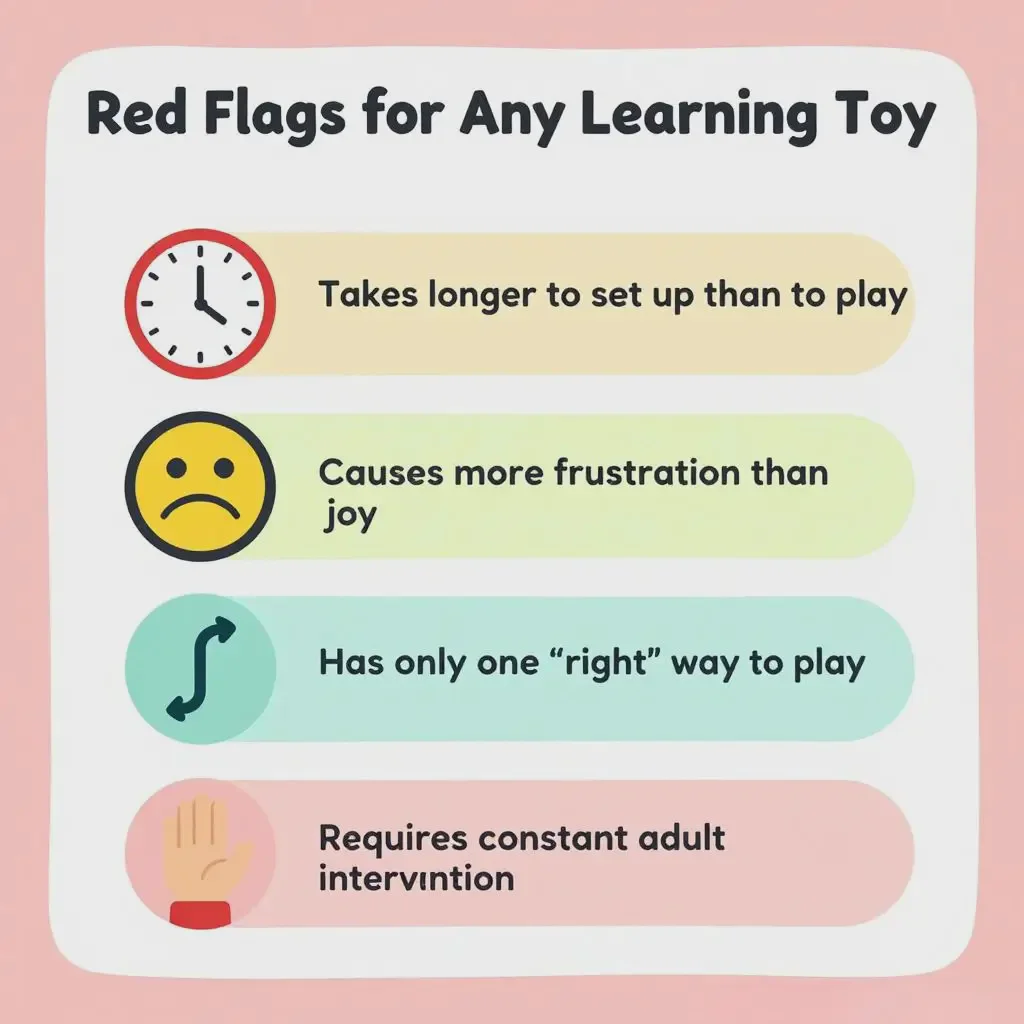
Key indicators to observe in your child:
The Sigh & Stare: They stop active exploration and resort to passive, repetitive actions, waiting for the activity to be "over."
The Ask for Help Tactic: Constantly seeking confirmation ("Is this right?") instead of experimenting. This shows that a fear of failure has replaced curiosity.
The Rapid Abandonment: The toy is used precisely as instructed once, then never touched again. True play invites return visits.
The Play Divergence: The most telling sign: your child ignores the stated purpose to use the parts in their own, imaginative way (e.g., building a rocket with a phonics puzzle). This is the child's brain rejecting the "homework" and reclaiming "play."
Sugar-Coated Learning vs. Seamless Play: What's the Difference in Design?
Not all educational toys are created equal. The fundamental difference lies in how the learning objective is integrated. "Sugar-coated" learning puts a thin, fun veneer on a dull task, while seamless design makes the skill acquisition an inherent, invisible part of an engaging challenge.
A sugar-coated toy is a drill in disguise (e.g., shoot the right letter to save the princess). A seamless toy embeds the learning in the core gameplay (e.g., build a stable bridge to help the character cross, intuitively teaching engineering principles).
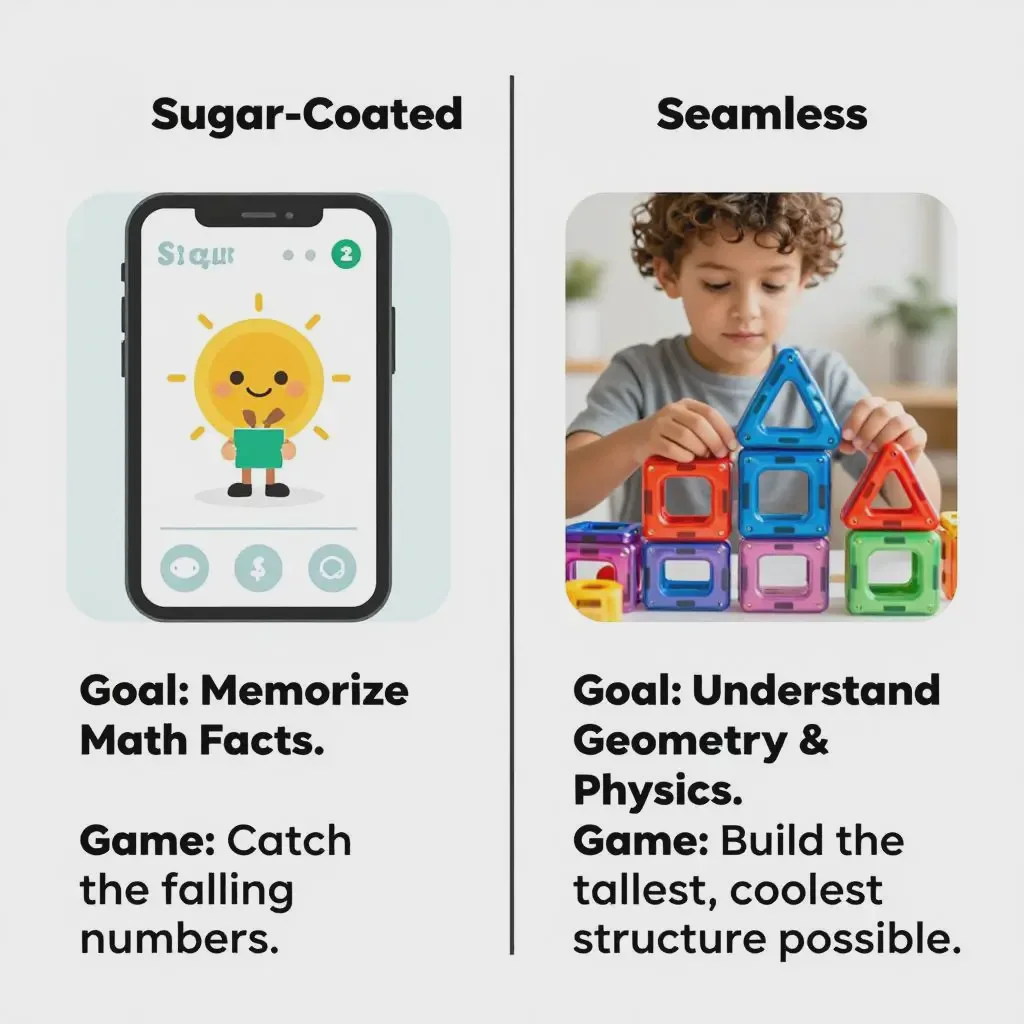
Sugar-Coated (Extrinsic Motivation): The learning is the prerequisite to the fun. "Answer five math problems to earn 5 minutes of arcade time." The game is a reward, separate from the learning. This quickly feels transactional.
Seamless (Intrinsic Motivation): The learning is the tool to achieve the fun. In a great building set, physics and geometry aren't taught; they are discovered as necessary tools to make a creation stand up or move. The child's goal is their own (make a castle), and the skills are learned organically to achieve it. Look for toys with high openness, multiple solutions, and a focus on process over a single correct outcome.
How Can We, as Parents, Avoid Becoming the "Homework Police" During Play?
Our intentions are pure: we want to help, guide, and see our children succeed. But in our eagerness, we can accidentally turn the playroom into a classroom. Our language and actions can shift a child's focus from internal curiosity to external approval, sucking the fun right out.
Shift your role from instructor to facilitator and co-explorer. Use open-ended questions, observe more than you direct, and value the process of experimentation over the correctness of the final product.
Replace directive language with curious observation.
Instead of: "That's not how it works. Here, let me show you."
Try: "Hmm, it fell over! What could we try to make it steadier?"
Instead of: "What color is this? How many blocks are there?" (Quizzing)
Try: "You used so many blue blocks! Tell me about your creation." (Inviting narrative)
Instead of: Focusing on the end of the instructions manual.
Try: Celebrating the unique, weird, and "wrong" creations along the way.
Your goal is to create a psychologically safe space for trial and error. When a child isn't afraid of being corrected, they are free to take the cognitive risks that lead to deep, joyful learning.
What Does "Playful Learning" Look Like at Different Ages?
The balance between challenge and skill—the key to engagement—changes dramatically as a child grows. A toy that is perfectly "playful" for a preschooler will feel babyish to a first-grader, and a complex logic game for an 8-year-old will only cause frustration in a 5-year-old. Recognizing developmental stages is crucial for maintaining the fun.
For toddlers, learning is sensory and cause-and-effect. For preschoolers, it's pretend play and simple problem-solving. For school-age kids, it's about rule-based games, complex construction, and mastering real-world skills through play. The toy must match the child's cognitive and social stage.
Toddlers (1-3): "Learning" is mastering their own body and senses. The fun is in the action itself: dumping, filling, stacking, sorting by color. Toys feel like work if they have small, intricate pieces that they can't manipulate or require steps they can't remember.
Preschoolers (3-5): This is the golden age of imaginative play. Learning is social-emotional and language-based. Toys feel like homework when they are too prescriptive and kill the pretend narrative (e.g., a puzzle that must be a dinosaur, not a spaceship).
School-Age (5-8): Children begin to crave real competence and games with rules. The fun is in the challenge and the mastery. Here, a toy feels like homework if it's too easy (babies them) or poorly scaffolded (too hard, too fast). The best toys for this age offer layered challenges they can grow into.
Conclusion
Choosing a learning toy that avoids the homework trap ultimately comes down to respecting the child's innate drive to play. The goal is not to eliminate education from toys, but to ensure the education serves the play, not the other way around. By selecting toys with open-ended design, observing our children for signs of disengagement, shifting our own language from instruction to inquiry, and matching challenges to developmental stages, we can fill our homes with tools that cultivate curiosity. The most powerful learning happens when a child is so deeply engaged in fun that they don't even realize they're learning at all. That's the sweet spot where lifelong learners are born.
[External links recommendation]