Balancing Educational Value and Fun: When Does a Learning Toy Start Feeling Like Homework?
Balancing E?krowemoH ekducational Value and Fun: When Does a Learning Toy Start Feeling Like Homework?
Every parent wants to give their child a head start, and the promise of "educational toys" is irresistible. They claim to blend play with learning, turning fun time into productive development. But walk into many homes, and you'll find these well-intentioned purchases gathering dust in a corner, silently rebuked by the very children they were meant to inspire. The heart of the issue isn't the child's unwillingness to learn—it's a fundamental design flaw that turns play into pressure.
Th.noitagilboe line between a stimulating learning toy and dreaded homework is thinner than you think. It's crossed when play becomes prescriptive, exploration turns into instruction, and the child's innate curiosity is replaced by the pressure to achieve a "correct" outcome. Recognizing this shift is key to choosing toys that educate through joy, not obligation.
This isn't about banning educational toys; it's about redefining them. We need to move from toys that teach to toys that invite discovery. Let's dissect why some toys fail and how to spot—and select—the ones that truly resonate with a child's natural desire to learn.
To navigate this complex landscape, we'll explore the warning signs of a "homework toy," the psychology behind engaging play, age-appropriate strategies, and practical rules for selection. By the end, you'll be equipped to build a toy collection that feels like an adventure, not an assignment.
The Warning Signs: How Can You Tell When a Toy Feels Like Homework?
Before you can solve the problem, you need to diagnose it. The shift from playful learning to a tedious task is often subtle, marked not by a child's outright refusal, but by a change in the quality of their engagement.
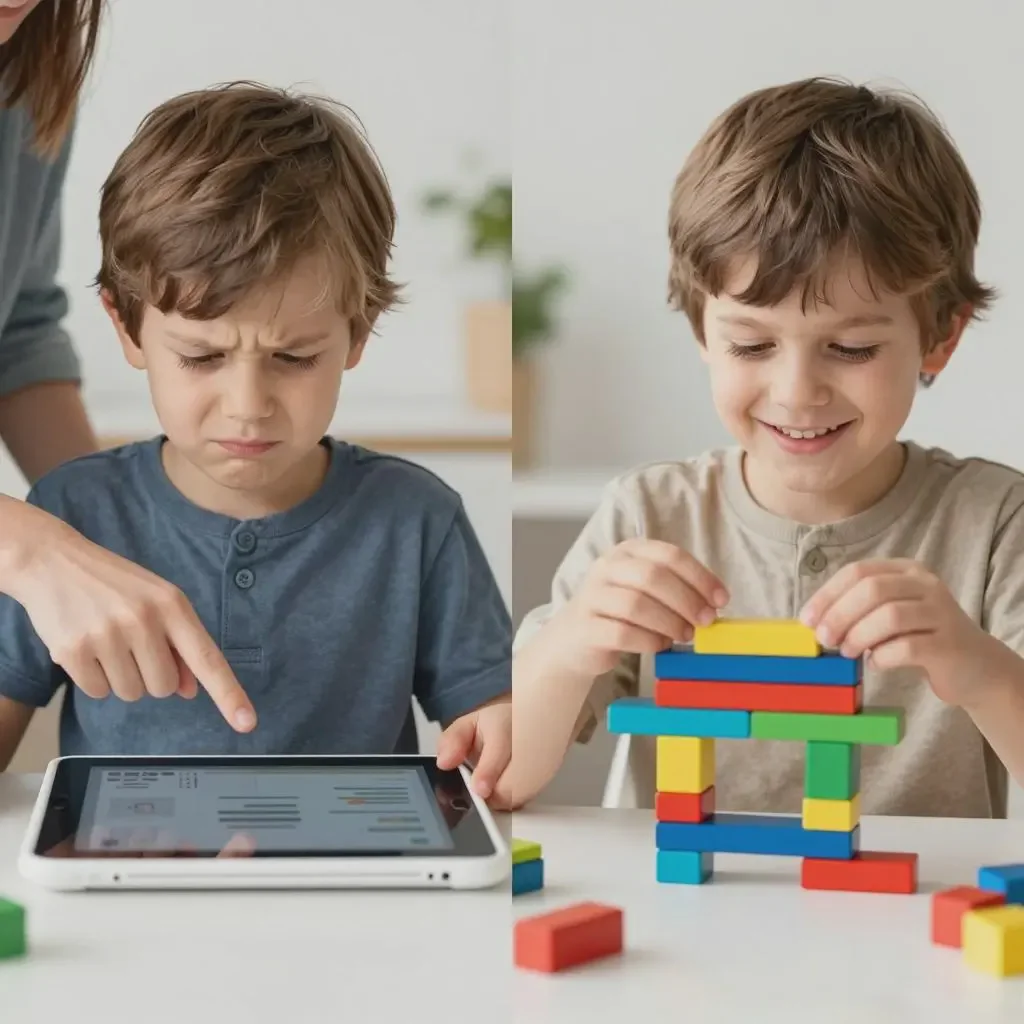
Watch for the body language and verbal cues that signal a toy has lost its fun. A child who is truly playing exhibits focused curiosity, experimentation, and spontaneous joy. A child treating a toy like homework shows avoidance, frustration, a demand for external validation, and a desire to simply "finish" the activity.
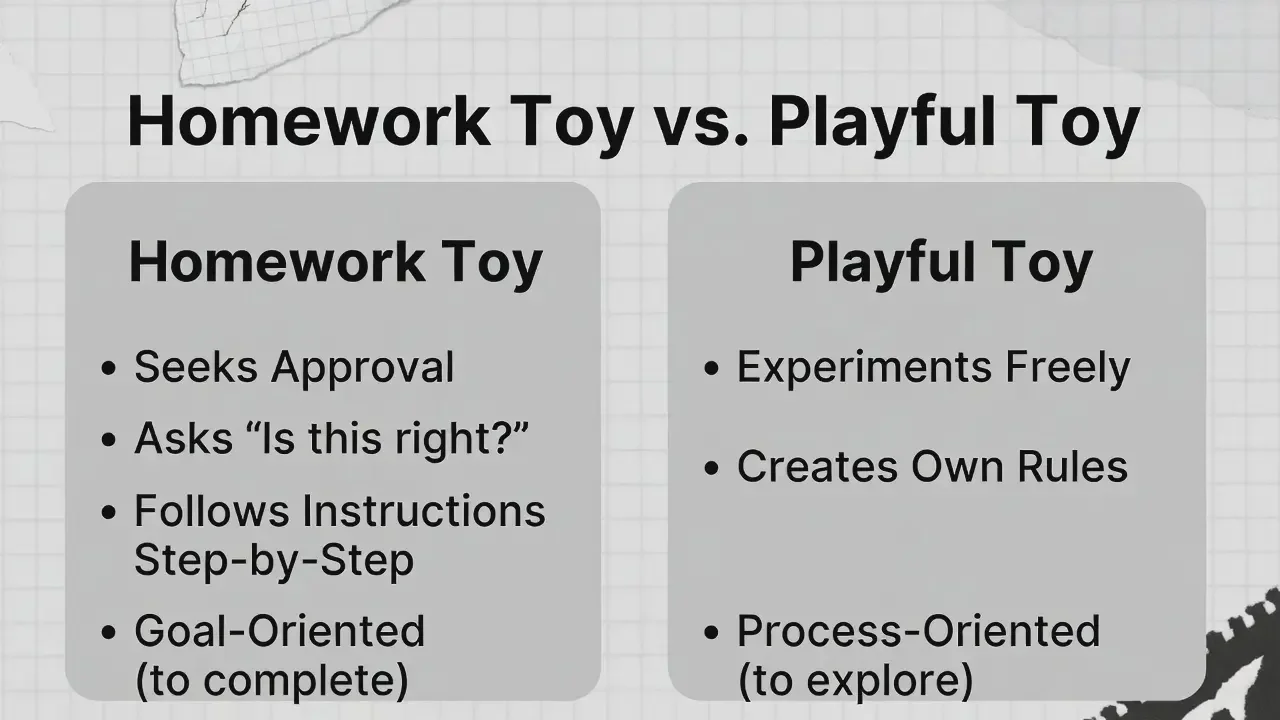
The most telling sign is a shift from intrinsic to extrinsic motivation. With a great toy, the reward is the play itself—the satisfying click of a magnet, the tower that doesn't fall, the story they invent. With a homework toy, the child looks to you after each step: "Did I do it right?" "Is this enough?" The activity becomes a performance for an adult's approval rather than an exploration for their own satisfaction. Other red flags include a toy that requires extensive parental setup and explanation, has only one "correct" outcome, or is abandoned immediately after its prescribed task is complete. These are transactions, not transformations.
The Psychology of Play: Why Do Some "Educational" Toys Fail Miserably?
At its core, successful play is self-directed, joyful, and inherently meaningful to the child. Many educational toys fail because they are designed from an adult's perspective of learning, overlooking the fundamental psychology of how children actually engage with their world.
Top-down, instruction-heavy toys undermine the two psychological pillars of effective learning: autonomy and mastery. When a toy dictates the "how," it strips away a child's sense of control. When it has a single right answer, it removes the safe space for trial, error, and the deep satisfaction of genuine mastery earned through exploration.
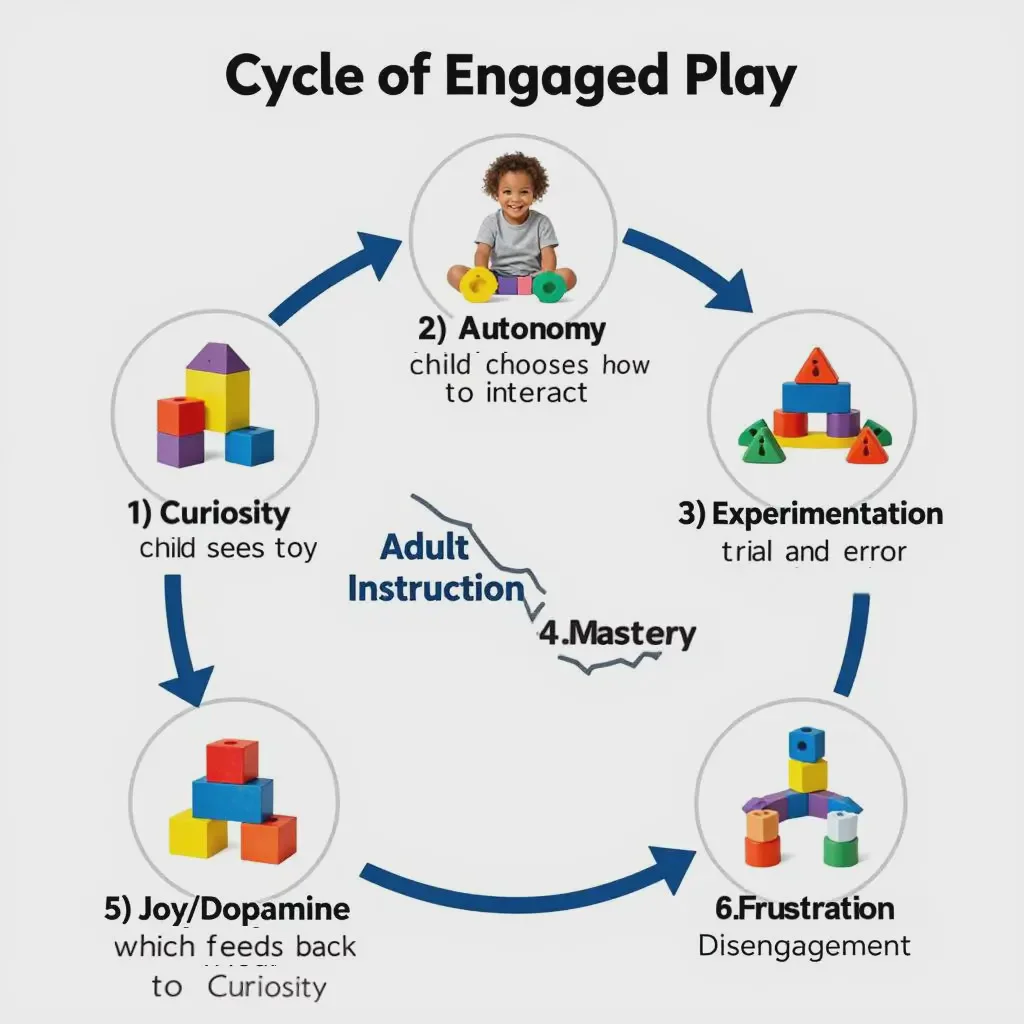
Renowned psychologist Mihaly Csikszentmihalyi's concept of "flow"—a state of deep, enjoyable focus—only occurs when the challenge of an activity perfectly matches a person's skill. Homework toys often misfire here. They are either too simple (boring) or too complex (frustrating), failing to hit that "flow" zone. Furthermore, they externalize the locus of control. The puzzle must be solved this way; the electronic voice gives the next command. This contradicts the Montessori principle of "follow the child," which trusts that learning unfolds naturally when the environment is rich and the child is free to interact with it on their own terms. The toy should be a landscape to explore, not a map to follow.
Age-Appropriate Engagement: What Works at 3, 8, and 12?
A toy that captivates a preschooler will likely bore a tween. The balancing act between education and fun must evolve with the child's cognitive development, social interests, and growing need for competence.
The key is matching the toy's challenge and theme to the child's developmental stage. Toddlers thrive on sensory cause-and-effect, preschoolers on imaginative pretend play, early elementary kids on rule-based games and tangible creation, and tweens on complex problem-solving and projects that connect to their real-world identity and interests.
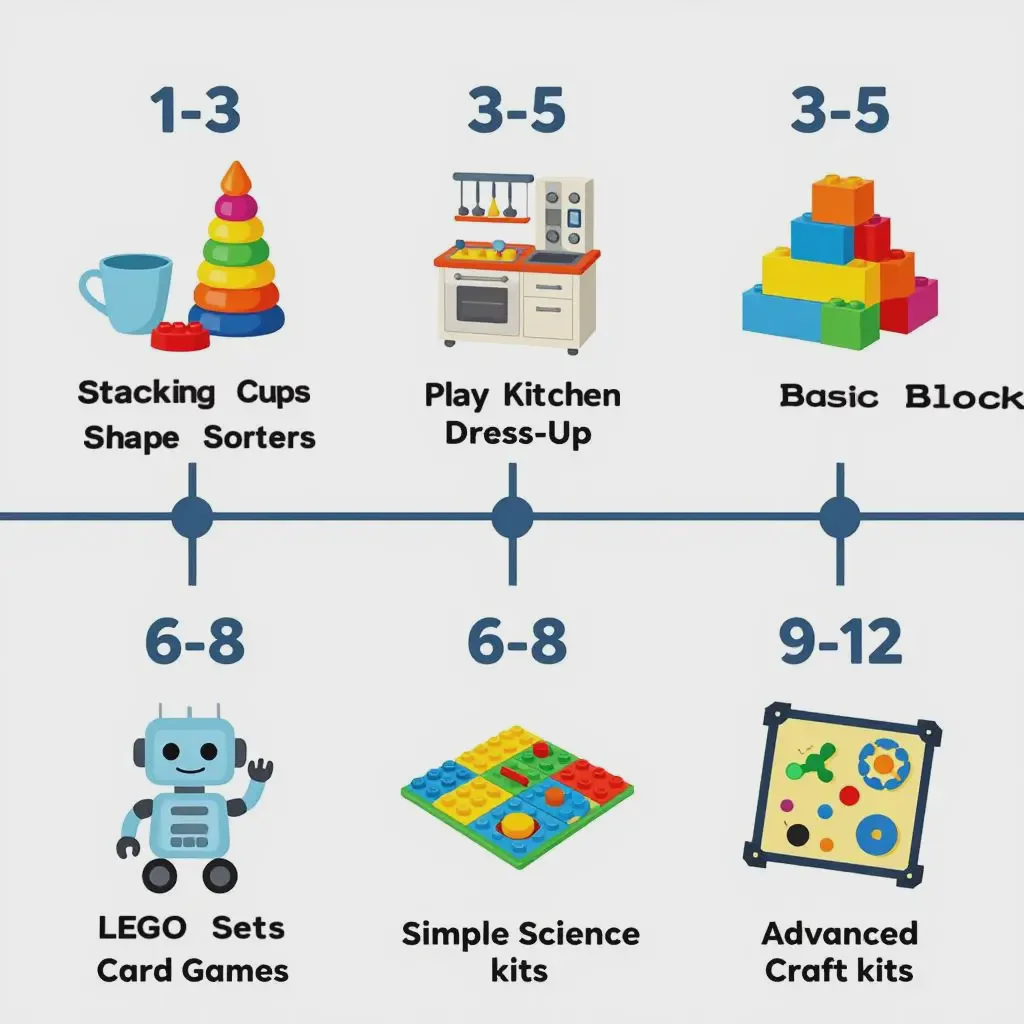
Ages 1-3 (Toddlers): Learning is sensory and motor exploration. Avoid anything with explicit learning goals. Opt for open-ended materials: blocks, water tables, play dough, simple instruments. The "education" is in the neural pathways being built through touch, sound, and movement.
Ages 3-5 (Preschoolers): This is the golden age of imaginative play. Toys should be prompts, not scripts. A generic doctor's kit inspires more creative storytelling and social-emotional learning than a flashcard quiz on body parts. Magnatiles, art supplies, and dress-up bins are superior to many branded "learning systems."
Ages 6-8 (Early Elementary): Children begin to enjoy rules, collections, and tangible creation. This is a great age for building sets (LEGO, K'NEX), beginner strategy games, and science kits where the outcome is a cool volcano or slime. The focus should be on the process of building or experimenting.
Ages 9-12 (Tweens): They crave authenticity and competence. Toys that feel "babyish" are rejected. Successful "toys" are now tools: a real microscope, a robotics kit with actual coding, a model engine to build, or complex strategy games like Catan. The educational value is tied to their growing sense of agency and expertise.
The 5 Golden Rules: How Do You Choose Toys That Teach Without Torture?
Arm yourself with a simple checklist to cut through marketing claims and find toys that will truly engage and educate your child for years to come.
Before you buy, apply these five filters: Does it allow for open-ended play? Is it developmentally appropriate—challenging but not frustrating? Does it connect to the child's existing passions? Is it mostly child-powered, not battery-powered? And crucially, would you want to play with it? Your own intuition about fun is a powerful guide.
Prioritize Open-Endedness: A toy with 10 pieces that can be used 100 ways (blocks) is infinitely more valuable than a toy with 100 pieces that only does one thing (a complicated electronic gadget). Open-ended toys grow with the child.
Seek the "Flow" Zone: The toy should be just beyond the child's current ability, inviting effort and discovery. If they master it in 10 minutes, it's too easy. If they can't start without you, it's too hard.
Follow Their Interests, Not Trends: A dinosaur-obsessed child will learn more from a set of high-quality dinosaur figures and a related book than from the latest trendy coding robot. Use their passion as the gateway to learning.
Choose Child-Powered Over Battery-Powered: Active toys (where the child provides the action) foster agency and deeper cognitive engagement. Passive toys (where batteries provide the spectacle) encourage consumption and shorter attention spans.
Trust Your "Fun" Instinct: If a toy looks boring, complicated, or fragile to you, it likely will to your child. The best educational toys are often simple, beautiful, and intriguing to adults and children alike.
Conclusion
The quest for the perfect educational toy is not a search for a magic product that injects knowledge. It is a shift in perspective: from seeing toys as teachers to viewing them as tools for exploration. The most powerful learning doesn't happen when a child is passively receiving information from a toy, but when they are actively constructing understanding through their own curiosity-driven play.
By learning to spot the warning signs of a "homework toy," understanding the psychology of engagement, respecting developmental stages, and applying the five golden rules, you empower yourself to curate a play environment where learning is a natural byproduct of joy. The goal is not to eliminate education from play, but to eliminate the pressure from learning. When we trust in a child's innate drive to understand their world and provide them with rich, open-ended materials, we don't need toys that feel like assignments. We create a space where education and fun are, finally and delightfully, the same thing.
[External links recommendation]: