Counterfeit and Low‑Cost Imitations: Protecting Brand Reputation and Child Safety
Counterfeit and Low‑Cost Imitations: Protecting Brand Reputation and Child Safety
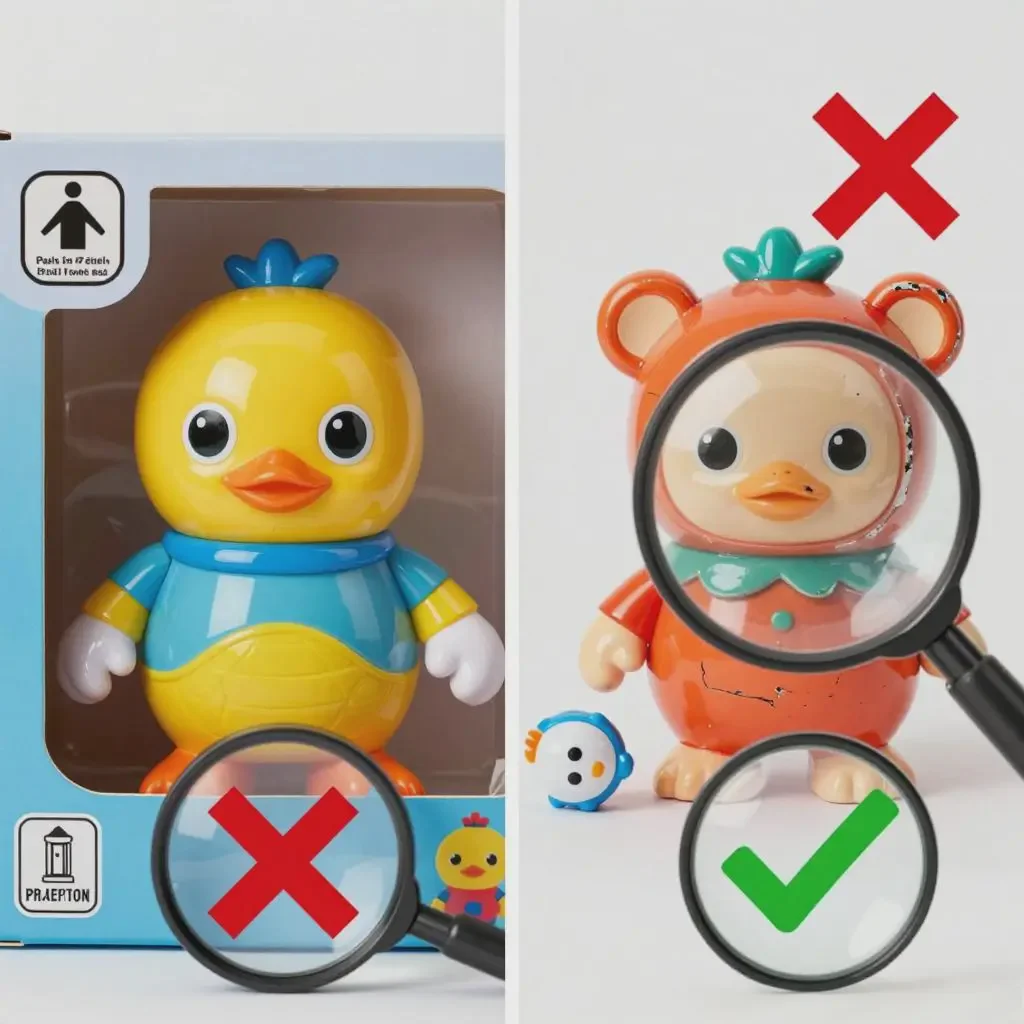
In the race for the lowest price and fastest delivery, a dangerous shadow market has flourished: counterfeit and low-cost imitation toys. These products, designed to deceive consumers with familiar branding at a fraction of the cost, represent a dual crisis. For parents, they are a direct threat to child safety, bypassing every regulation designed to prevent exposure to toxins, choking hazards, and electrical faults. For legitimate toy brands, they are an insidious attack on hard-earned reputation, siphoning revenue and, when these fraudulent products cause harm, tarnishing brand names with scandals they didn't create. The question is no longer if your brand will be targeted, but when—and how prepared you will be to respond.
Counterfeit toys are not a victimless crime of trademark infringement; they are a serious threat to child welfare and a destructive force for business integrity. Protecting against them requires a two-front strategy: robust, proactive brand defense to secure the supply chain and marketplace, and clear consumer education to empower parents to make safe choices and recognize the often-subtle signs of a fraudulent product.
Navigating this complex threat demands moving beyond simple legal takedowns. It requires a holistic understanding of the risks, the implementation of layered technological and strategic defenses, and a commitment to transparent communication. Let's build a comprehensive playbook for protection.
To effectively combat this dual threat, we must dissect it from four critical angles: the concrete safety dangers lurking within imitations, the multifaceted business impact beyond lost sales, the practical strategies for brand defense and consumer vigilance, and the essential crisis management plan for when fakes are discovered.
What's Really Inside? The Hidden Safety Hazards of Fake Toys
While an authentic toy's journey to market involves rigorous testing for chemical, mechanical, and electrical safety, counterfeit toys exist entirely outside this protective framework. Their low price is achieved by cutting every possible corner, with child safety being the first sacrifice.
The bargain price of a fake toy is a direct reflection of its hazardous composition. These products routinely contain toxic heavy metals like lead and cadmium in paints and plastics, flammable materials, poorly secured small parts that pose choking risks, and faulty wiring in electronic toys that can lead to fires or electric shock. They are physical manifestations of neglected safety protocols.
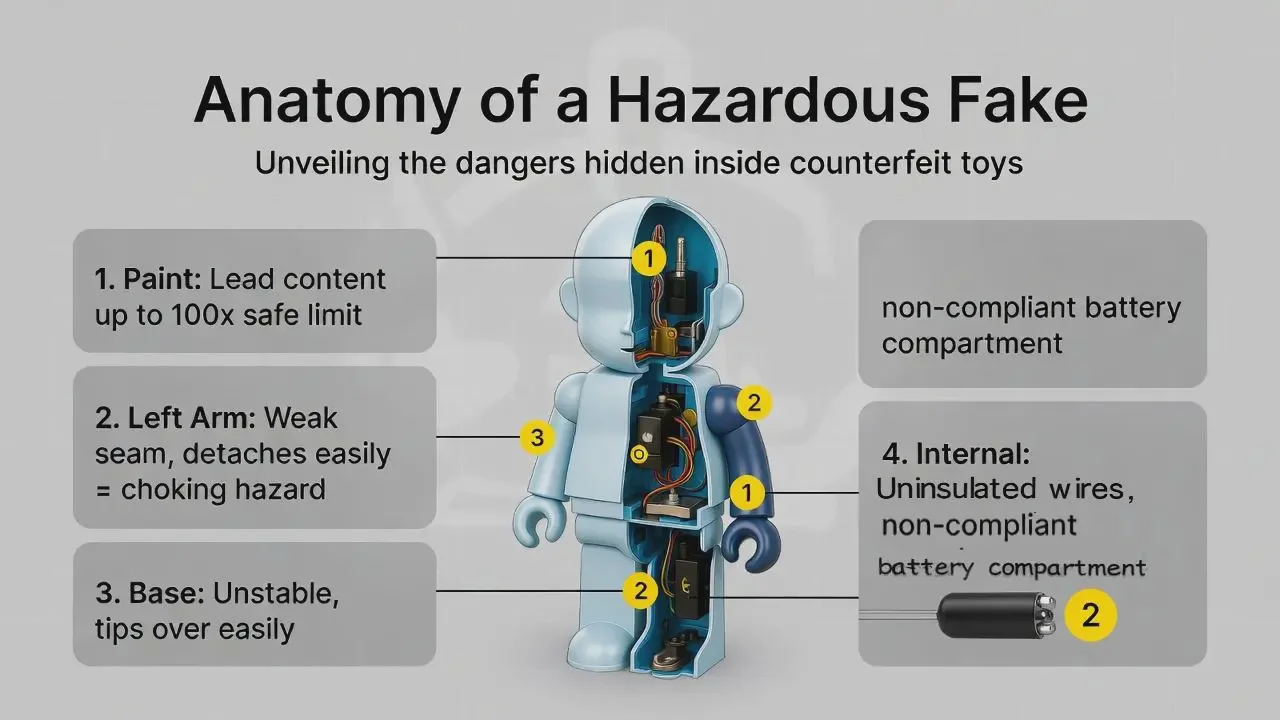
The dangers are not hypothetical. Regulatory agencies worldwide have issued recalls for counterfeit toys found with lead levels exceeding 10,000 parts per million (the US limit is 90 ppm for surface coatings). Phthalates, banned in children's products for their endocrine-disrupting effects, are commonly used as cheap plastic softeners in fakes. Mechanically, imitation toys often fail basic integrity tests—seams split under minimal force, releasing small parts, and plastic can break into sharp, jagged pieces. For parents, the visual cues are often there: a "too-good-to-be-true" price, packaging with misspellings and blurry graphics, a noticeable chemical smell, or a lack of proper certification marks (CE, UKCA, ASTM). Understanding these hazards is the first step in motivating both corporate action and consumer caution.
Beyond Lost Sales: How Do Counterfeits Erode Brand Equity?
The direct financial loss from a counterfeit sale is just the initial, visible tip of the iceberg. The true cost to a brand is a slow, corrosive damage to its most valuable asset: consumer trust and reputation.
When a child is harmed by a counterfeit toy bearing your logo, the headlines do not distinguish between the authentic and the fake. The resulting crisis of consumer confidence, erosion of retailer relationships, and long-term brand damage can dwarf the immediate revenue loss by a factor of five or more. Counterfeiting is brand identity theft with potentially catastrophic reputational consequences.
The impact cascades through every business function. Customer service teams are overwhelmed with complaints and warranty claims for products they didn't make. Sales teams face skeptical retailers who have been burned by counterfeit returns or, worse, liability concerns. Marketing efforts are undermined when brand imagery is associated with shoddy, dangerous goods. The legal and operational costs of surveillance, investigation, and enforcement form a constant drain. Perhaps most insidiously, counterfeiters often use a brand's own marketing assets—high-quality photos and videos—to sell their inferior copies, making the deception even more convincing. This multifaceted assault means that anti-counterfeiting cannot be solely a legal department issue; it must be a core business priority involving R&D, supply chain, marketing, and communications.
The Defense Playbook: What Strategies Actually Work to Secure Your Brand?
A passive, reactive stance guarantees failure. Winning the fight against counterfeits requires a proactive, multi-layered defense strategy that makes imitation difficult, discovery easy, and consumer verification simple.
Effective defense employs a "cocktail" of overt, covert, and forensic security features, combined with rigorous supply chain control and aggressive digital monitoring. From unique holograms and tamper-evident packaging for consumers to chemical taggants and microscopic markings for forensic verification, the goal is to raise the cost and complexity of replication while empowering everyone in the chain to spot a fake.
Implement a tiered approach:
At the Product Level: Integrate security into the design itself. Use unique mold textures, proprietary material blends, or embedded NFC/RFID chips that link to a secure authentication database. Simple, scannable QR codes on every unit can verify authenticity and track the product's journey.
Across the Supply Chain: Maintain airtight control. Conduct regular, unannounced audits of OEM partners. Use serialized shipping and track-and-trace technologies. Limit overruns and strictly control the distribution of branded components like packaging.
In the Digital Marketplace: Enroll in platform protection programs (Amazon's Brand Registry, Project Zero). Employ specialized monitoring services to scan e-commerce sites and social media for infringing listings. Develop standardized, evidence-rich procedures for reporting and takedown.
With Your Customers: Launch an ongoing "Buy Safe" education campaign. Create a dedicated page on your website showing authorized retailers and detailing your security features. Turn your most loyal customers into a vigilant community.
From Discovery to Action: What Should You Do When Counterfeits Are Found?
Despite best efforts, the discovery of counterfeit products is often a matter of "when," not "if." Having a clear, pre-planned crisis response protocol is essential to manage the situation effectively, minimize harm, and protect the brand.
A swift, coordinated, and transparent response is critical. The protocol should clearly define internal roles, prioritize child safety in communications, provide clear guidance to consumers, and execute legal and platform takedowns with precision. Silence or a slow, bureaucratic response can be perceived as complicity or indifference.
[sub-heading 4 featured image: A flowchart titled "Crisis Response Protocol: From Discovery to Resolution." Key decision diamonds: "1. Confirm it's a counterfeit," "2. Assess immediate safety risk," 3. Internal alert & team activation," 4. Public safety communication," 5. Execute takedown/legal action," 6. Post-crisis review & adaptation." Each step has brief action items.]
Your response plan must be actionable:
Step 1: Verification & Assessment: Immediately acquire a sample and verify it as counterfeit. Assess the level of safety risk. Is it a high-volume listing? Is there evidence of child injury?
Step 2: Internal Mobilization: Activate a cross-functional team (Legal, Communications, Supply Chain, E-commerce). Designate a single point of command to avoid mixed messages.
Step 3: Consumer-Facing Action: If a safety risk exists, issue a clear, calm Public Service Announcement. Do not shy away from the word "counterfeit." State the facts: "It has come to our attention that counterfeit versions of [Product X] are being sold. These products have not been safety tested and may contain [specific hazards]. Authentic [Brand] products can be identified by [security feature] and purchased from [authorized retailers]."
Step 4: Enforcement Action: Submit takedown notices to all relevant platforms with documented evidence. Notify customs authorities in key markets. For major operations, prepare for legal action.
Step 5: Post-Incident Analysis: Debrief. How did the counterfeiter succeed? Was there a supply chain leak? A design flaw easily copied? Use the incident to fortify your defenses.
Conclusion
The battle against counterfeit and imitation toys is a fundamental defense of two irreplaceable values: the physical safety of children and the integrity of honest business. It is a complex challenge that demands more than legal paperwork; it requires a strategic, company-wide commitment to security, transparency, and consumer empowerment.
By comprehensively understanding the severe safety hazards posed by fakes, recognizing the profound and lasting damage they inflict on brand equity, implementing a multi-layered defense system that spans product design to digital surveillance, and preparing a decisive crisis response plan, toy companies can transform from vulnerable targets into fortified guardians. The ultimate goal is to create an environment where counterfeiters find it too difficult and risky to operate, retailers are confident in their supply chains, and parents can shop with the assurance that the toys they bring home are both fun and safe. In protecting your brand, you ultimately protect play itself.